The 14th Dublin Maker is on the horizon, and it’s shaping up to be bigger and better than ever.
This year’s event takes place at Leopardstown Racecourse on Saturday 22nd and Sunday 23rd August 2026, with a full weekend of creativity, invention, innovation, and hands-on making.
If you’ve ever built something, fixed something, hacked something together, or just have an idea you want to share — this is your chance to be part of it.
Dublin Maker is entirely powered by its open call. Every exhibit, demo, and project comes from makers putting their ideas out into the world — which is what gives it that brilliant mix of creativity, curiosity, and a bit of chaos.
From electronics and repair to art, crafts, science, and the wonderfully hard-to-explain — it all fits.
What We Got Up To Last Year
Tog Hackerspace has been a community partner of Dublin Maker from the very beginning, and it’s always one of the highlights of our year.
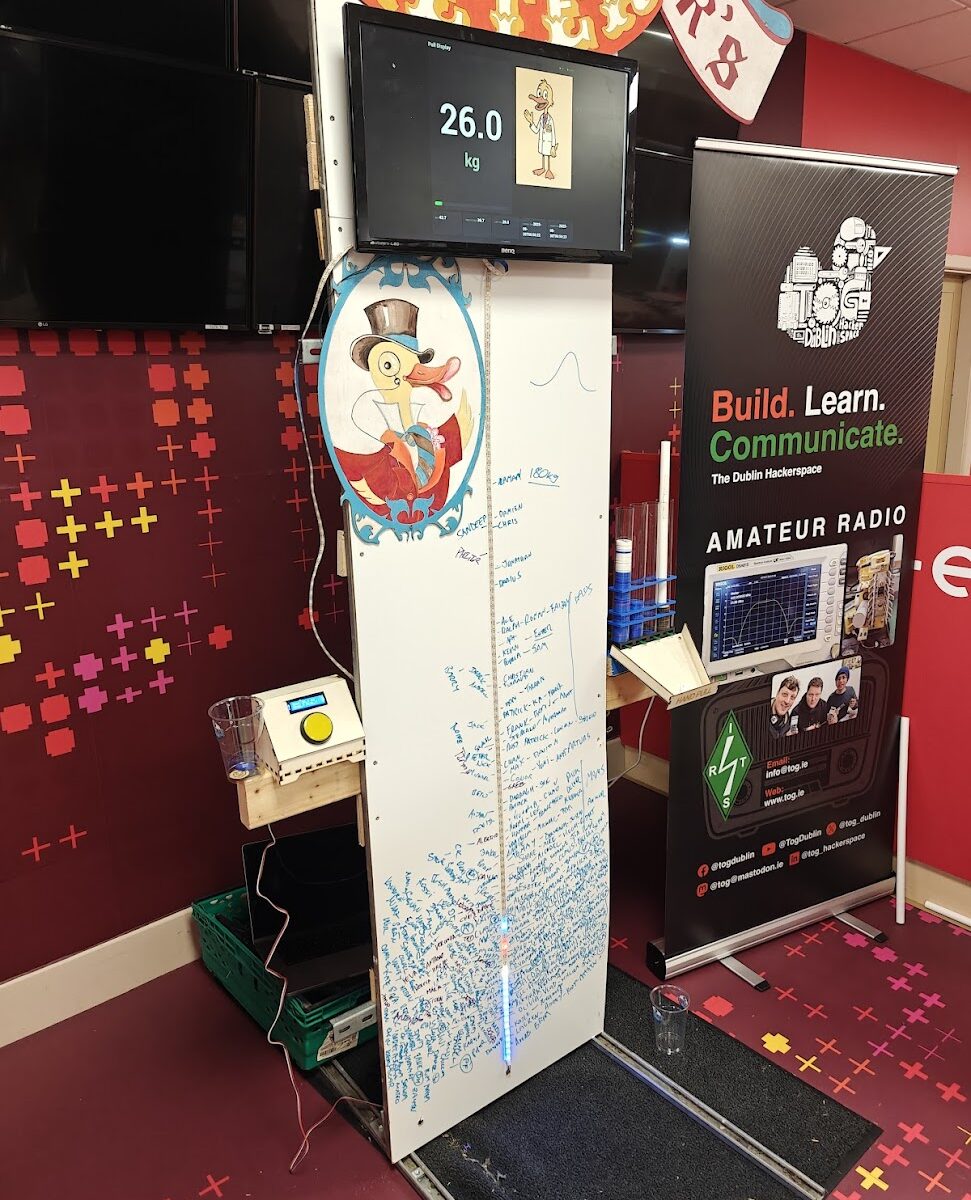
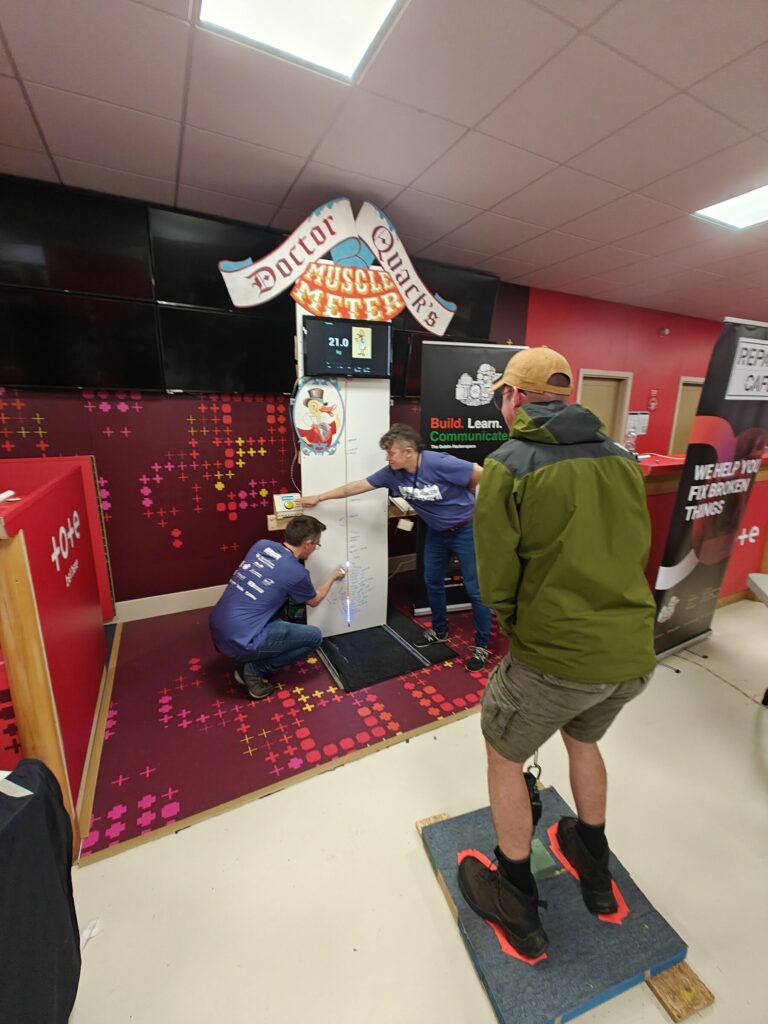
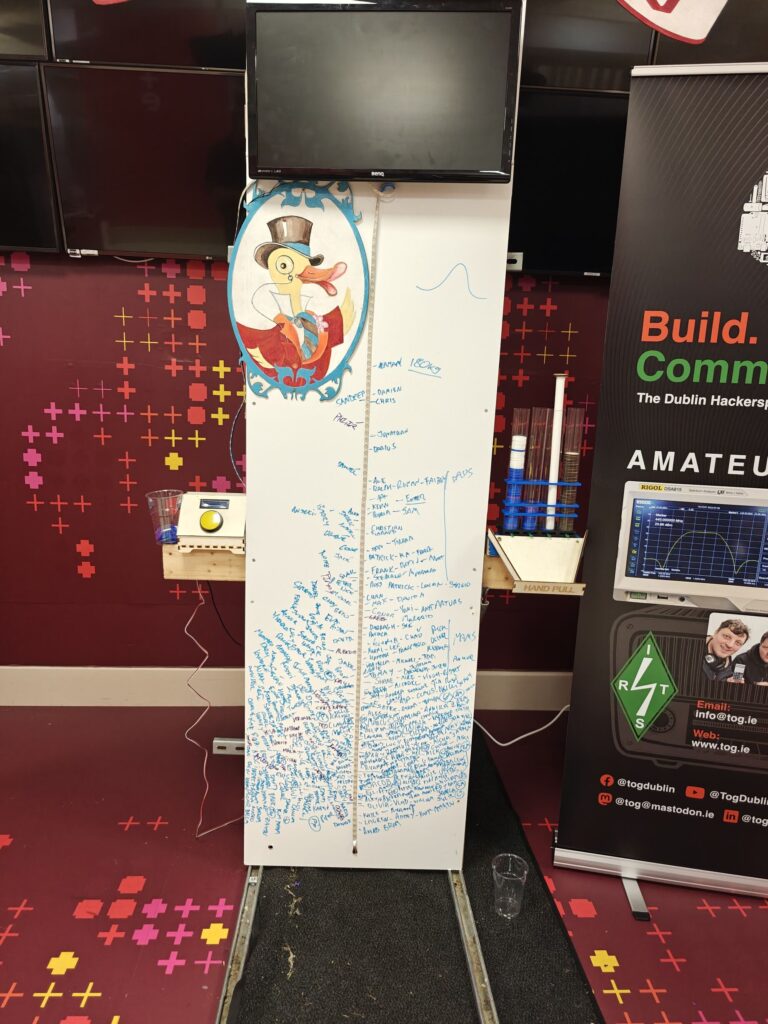
Last year we brought along a range of projects, including our Reverse Hammer Machine — a strength tester inspired by old carnival games, but with a bit of a twist. Instead of swinging a hammer, players had to pull upwards on a rope, with their strength measured in real time and displayed for everyone to see.
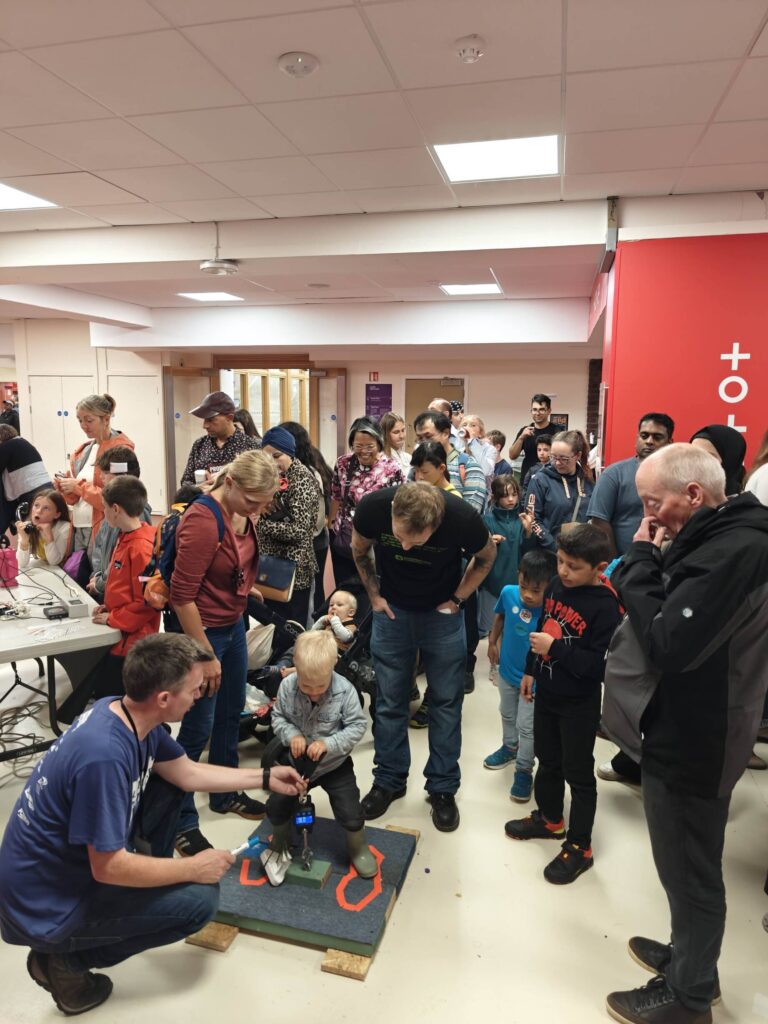
It turned into a proper crowd-puller (literally), with people lining up to compete, compare scores, and try beat their friends. The LED strip climbing as you pulled — and the numbers jumping up on the big screen — made it instantly competitive and great fun to watch.
That’s really what Dublin Maker is all about: a mix of hardware hacking, coding, design, and a bit of playful madness that gets people talking, laughing, and getting involved.
Thinking of Applying?
We’re already looking forward to this year — both to bring along new builds and to see what the wider maker community comes up with.
So if you’ve been thinking about applying, take this as your sign.
Dublin Maker is hosting a festive gift exchange for makers of all kinds! Building on the success of the 2023 Maker Secret Santa, we are bringing it back for 2025!
We loved taking part in the last Secret Santa. You can read about it here.
When you think of fairgrounds or arcades, you often picture the classic “hammer strength” game – swing a mallet, ring the bell, prove your power. For Dublin Maker this year, I wanted to flip that idea on its head – literally. Instead of smashing something down, players pull upwards against a resistance. That’s how the Reverse Hammer Machine was born.
It’s part carnival attraction, part engineering challenge, and part community experiment in building something a little quirky, a little geeky, and a lot of fun.
The Concept
The idea was simple:
Replace the hammer strike with a pulling action.
Use a Bluetooth-enabled crane scale to measure how much weight someone can pull.
Display the results on a big screen so everyone around can see the outcome.
Rather than brute force through a mallet, the machine measures grip and pull strength. It’s surprising how competitive people get once the numbers are up in lights!
How It Works
The machine looks like a cross between a fairground attraction and a maker project gone wild. Here’s what’s inside:
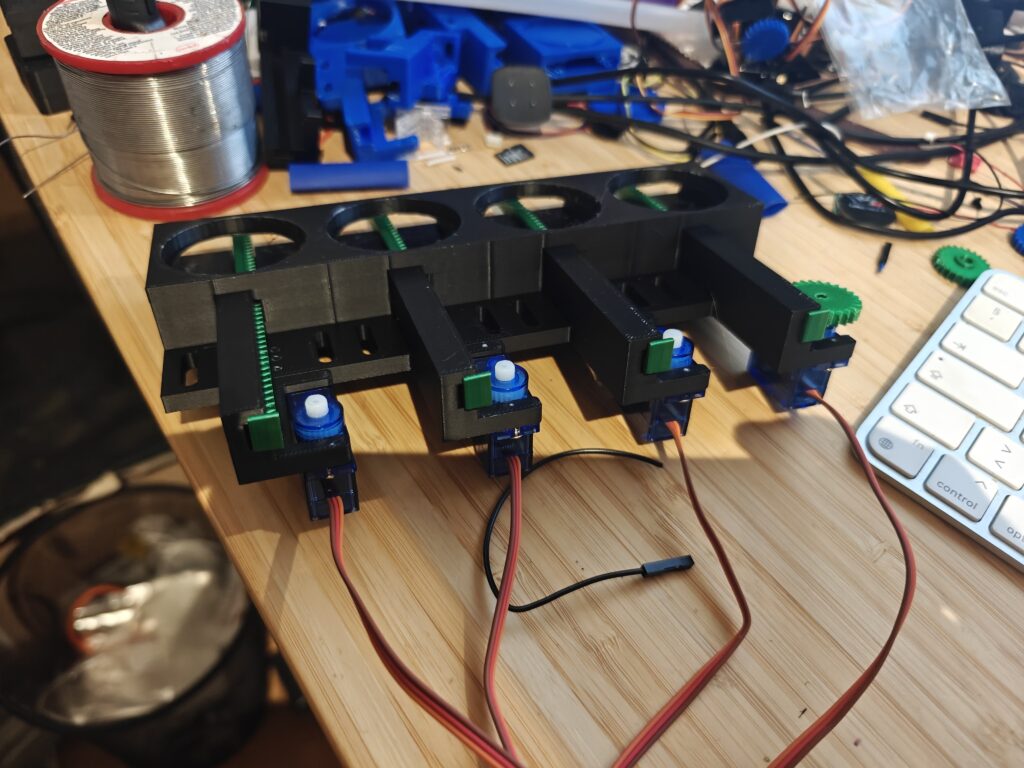
Bluetooth Crane Scales – these are normally used in warehouses or for weighing heavy loads. I hacked one into the system to register the pull force. Aliexpress special
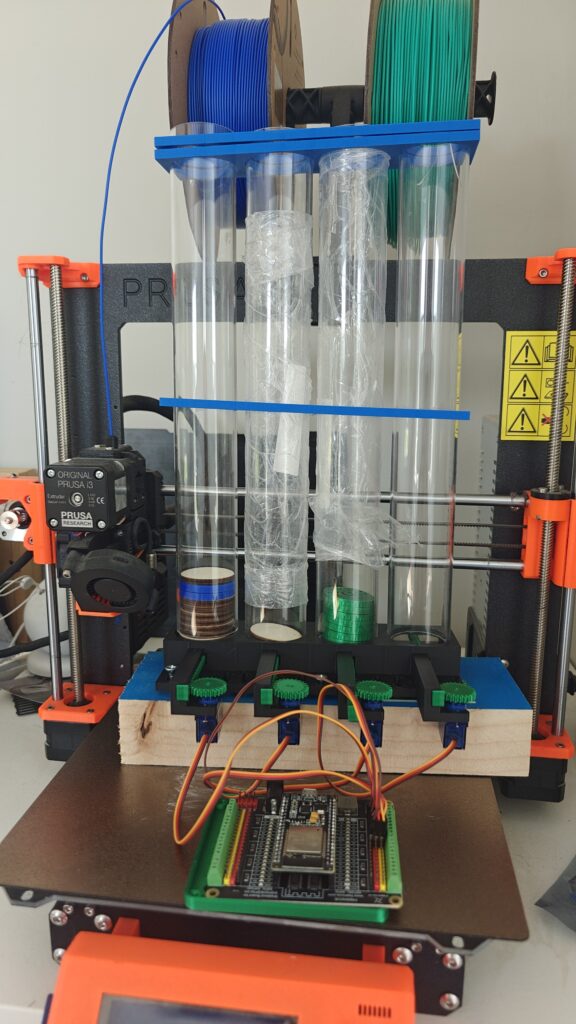
ESP32 Controller – a small but mighty microcontroller that handles the Bluetooth connection, reads the data, and passes it on.
LED Strip – mounted along the board to give a visual indicator of how much force is being applied. The harder you pull, the higher the light climbs.
Display Screen – the live weight reading is shown on a large monitor, complete with a fun duck mascot illustration for a playful touch.
Players grab the rope, pull upwards, and watch their strength measured in real time. The numbers shoot up on screen while the LED strip glows higher and brighter – instant feedback, instant bragging rights.
The Build
I built the frame tall and sturdy, with enough presence to attract attention across the room. The whiteboard-style front not only holds the LED strip but also doubles as a canvas for signatures and doodles from players.
For more photos of the build, check out our gallery.
oplus_3145730
Some key features of the build:
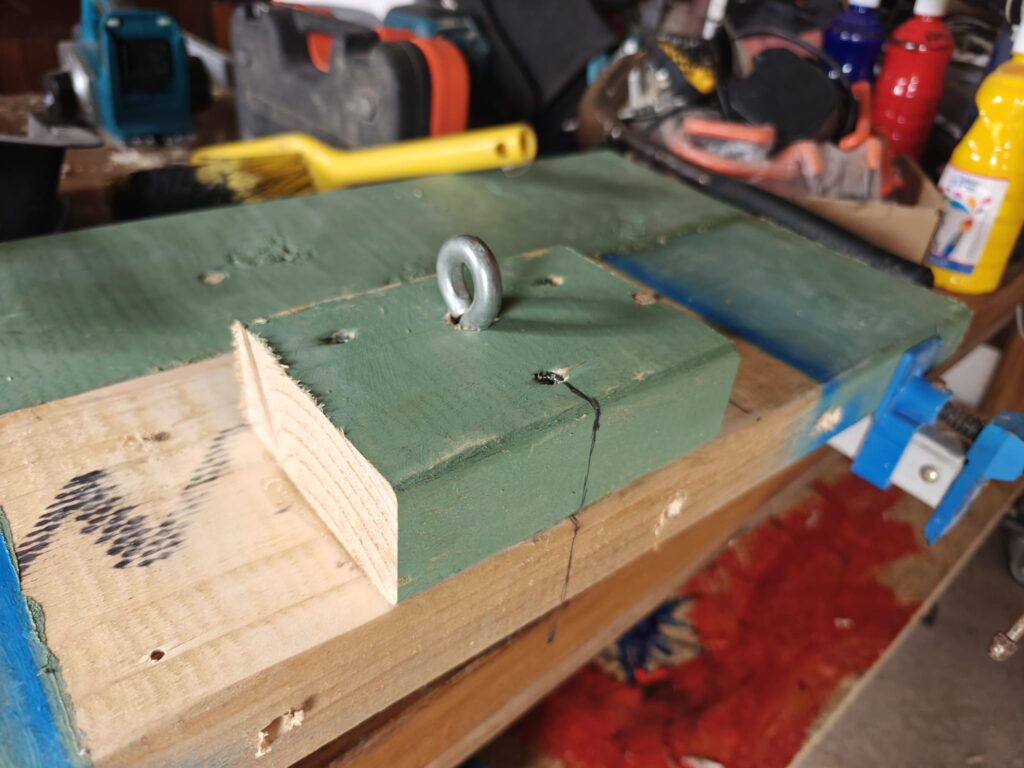
Mechanical setup: The rope feeds through a pulley at the top so players can get a good pulling grip.
Electronics box: A control panel with a button and a microcontroller sits neatly to the side.
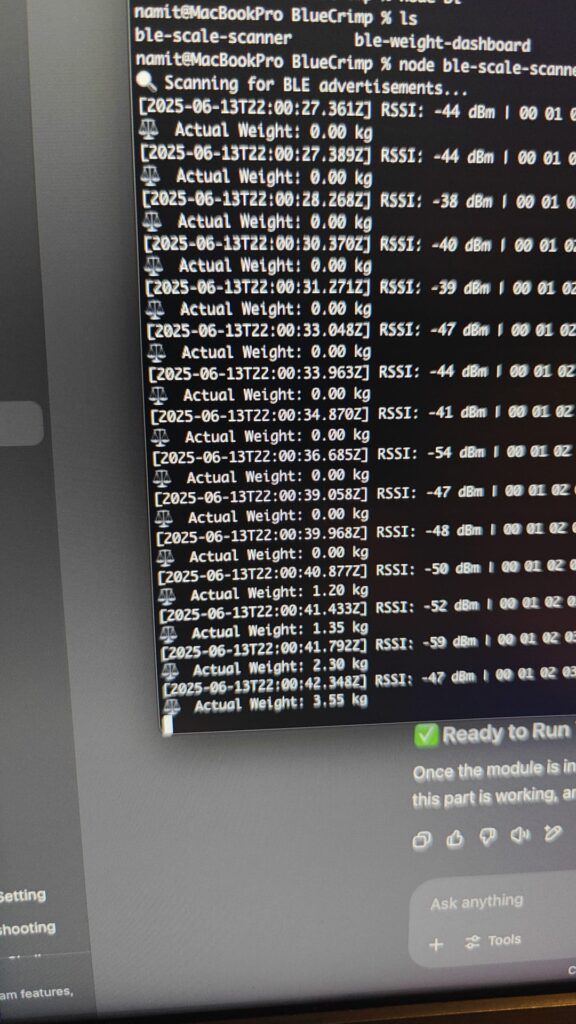
Data display: The Bluetooth scale readings are processed by custom code and displayed on the big screen with graphics.
The artwork – a cheerful duck in a top hat – was added to keep things light-hearted and tie in with the playful Dublin Maker spirit.
On Show at Dublin Maker
The Reverse Hammer Machine made its public debut at Dublin Maker, where visitors of all ages lined up to test their pulling power.
oplus_11534368
Lessons Learned
As with any maker project, there were a few quirks and challenges along the way:
Bluetooth quirks – the crane scale wasn’t exactly designed to be hacked, so getting stable data required persistence.
User safety – people can pull harder than expected, so making sure the frame was strong enough was a priority.
Showmanship – it’s not just about the electronics, it’s about making it fun and inviting to play and the competition of competing against family and friends.
By the end of the day, the board was covered in names, the LED strip had seen plenty of action, and the duck mascot had overseen countless strength contests.
Why Build It?
The whole point of Dublin Maker is to share creativity, curiosity, and the joy of making. The Reverse Hammer Machine isn’t just about strength – it’s about turning an idea into something physical that makes people smile.
It blends hardware hacking, coding, design, and a touch of carnival silliness into one interactive exhibit. Best of all, it gets people talking, laughing, and competing in the spirit of fun.
oplus_11534368
What’s Next?
I’d love to refine the project further:
Add a leaderboard system that stores top scores during the day.
Integrate sound effects for dramatic impact when someone hits a new record.
Maybe even design multiple “difficulty modes” with adjustable resistance.
The great thing about projects like this is they never really finish – there’s always another upgrade waiting to happen.
Bringing It All Together
The Reverse Hammer Machine shows what can happen when you take a familiar idea and twist it. By hacking together a Bluetooth crane scale, some microcontrollers, and a splash of creativity, you end up with something that feels both retro and futuristic.
It’s a reminder that engineering doesn’t have to be serious – sometimes the best projects are the ones that make people grin.
Dublin Maker is back! 🎉 This year it’s taking place at Leopardstown Racecourse on Saturday 30th & Sunday 31st of August 2025, running from 10 am to 6pm on Saturday and 10 am to 5 pm on Sunday. Best of all – it’s completely free to attend.
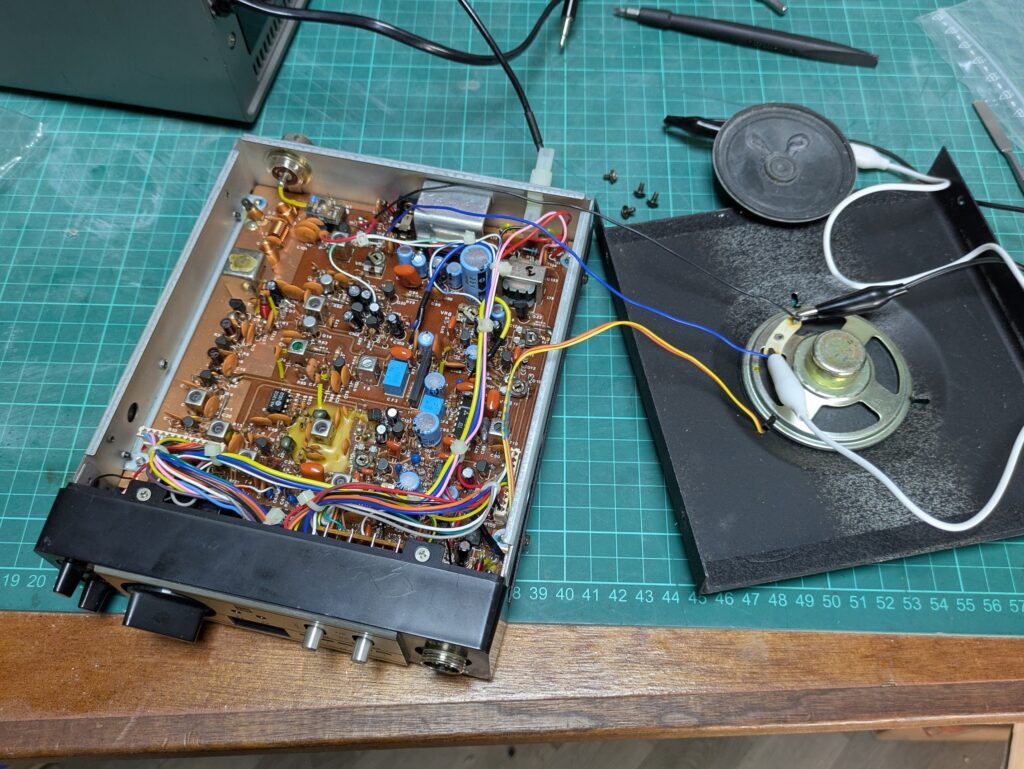
Tog Hackerspace is delighted to be both a community sponsor of the festival and to have our own stand packed with projects from our members. We’ll be showcasing everything from interactive carnival-style games you can try out to amateur radio demos, and plenty more hands-on creations from our makers. It’s the perfect chance to see what our community has been up to and maybe even get inspired to make something yourself.
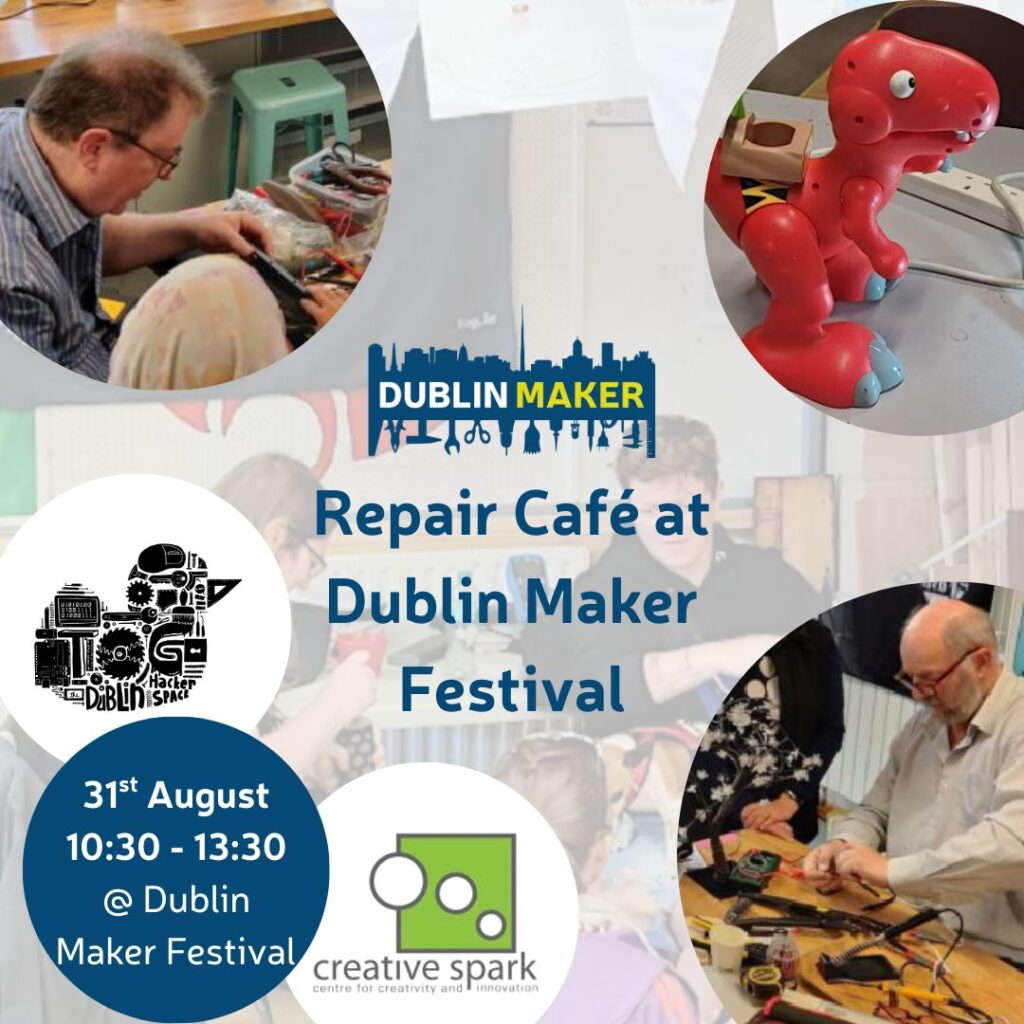
Repair Café at Dublin Maker
We’re also bringing a special edition of our Repair Café to Dublin Maker on Sunday, 31st of August, from 10:30 amto 1 pm in collaboration with Creatie Spark.
Do you have broken items at home – clothes, small appliances, toys, electronics? No need to throw them away!
Bring them along and our team of skilled volunteers will help you fix them. We’ll have tools, materials, and plenty of expertise on hand. Together we can give your items a new lease of life, save you money, and keep waste out of landfill.
At our Repair Café you can:
Learn essential repair techniques from our expert makers and volunteers
Discover the joy of fixing things and reducing waste in a collaborative, community-focused environment
Connect with others who are passionate about sustainability and the maker movement
If we can’t fix your item on the day, we’ll do our best to advise you on sourcing spare parts or the best recycling options.
What can you bring?
Clothes and accessories
Toys
Small electrical appliances and electronics (PAT testing available)
Small furniture
… and lots more!
Dublin Maker is always a highlight of the year – a huge celebration of creativity, invention, and making. We’re thrilled to be part of it again and can’t wait to meet you at our stand or at the Repair Café.
👉 Mark the dates in your calendar: Saturday 30th & Sunday 31st August, Leopardstown Racecourse.
Do you have broken items at-home – clothes, small appliances, toys, electronics?
No need to throw them away! Save your things from the landfill and your wallet from having to replace them.
Bring them to our repair café and learn how to fix them together with our volunteers. We have tools, materials, space to work on your item, and repair experts who will help you with your repair.
We have a special edition of our repair cafe that will take place at this year’s Dublin Maker.
Dublin Maker is a free to attend, community run event, which will be held on Saturday August 31st & Sunday September 1st 2024 in Richmond Barracks from 10 am until 6 pm.
Dublin Maker takes the form of a “show and tell” experience where inventors/makers sourced through an open call, will have an opportunity to showcase their creations at individual booths in a carnival atmosphere.
Makers range from tech enthusiasts to crafters, educators, tinkerers, hobbyists, engineers, artists, science clubs, students, authors and commercial exhibitors. They are of all ages and backgrounds, coming from all over Ireland and beyond.
Our Repair Cafe takes place on Sunday, the 1st of September from 10:30 – 13:00 at Richmond Barracks.
Each year the Dublin Maker festival comes around and our members Jeffrey Roe and Christian Kortenhorst want to take part. They have been to many maker festivals and collaborated over the years.
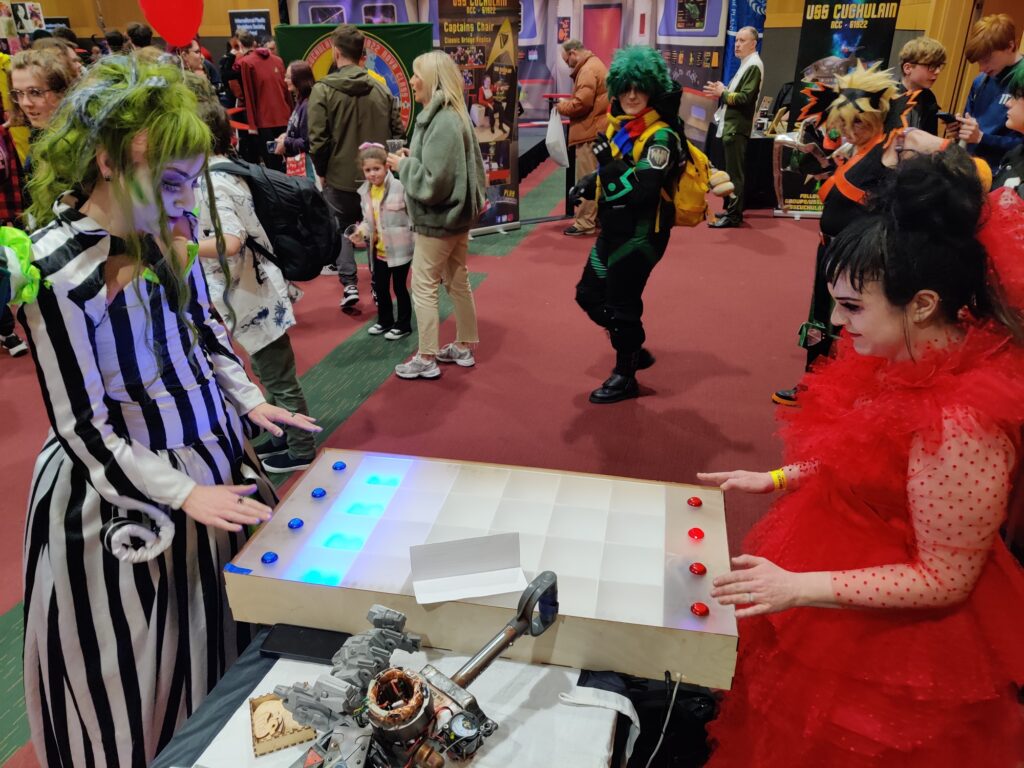
Christian likes to make big things with tools and Jeffrey likes to make things with technology and electronics. They tend to come together on their love of interactive games. While wandering around EMF camp last year they came across the work of We Throw Switches and their flux game
The goals of the project:
Two-person interactive game
Fit on a table
Be portable
Simple game with no need for instructions
Be ready in three weeks
Eary on, it came clear we would be using arcade style buttons, and addressable LEDs to meet the project deadline of only a few weeks.
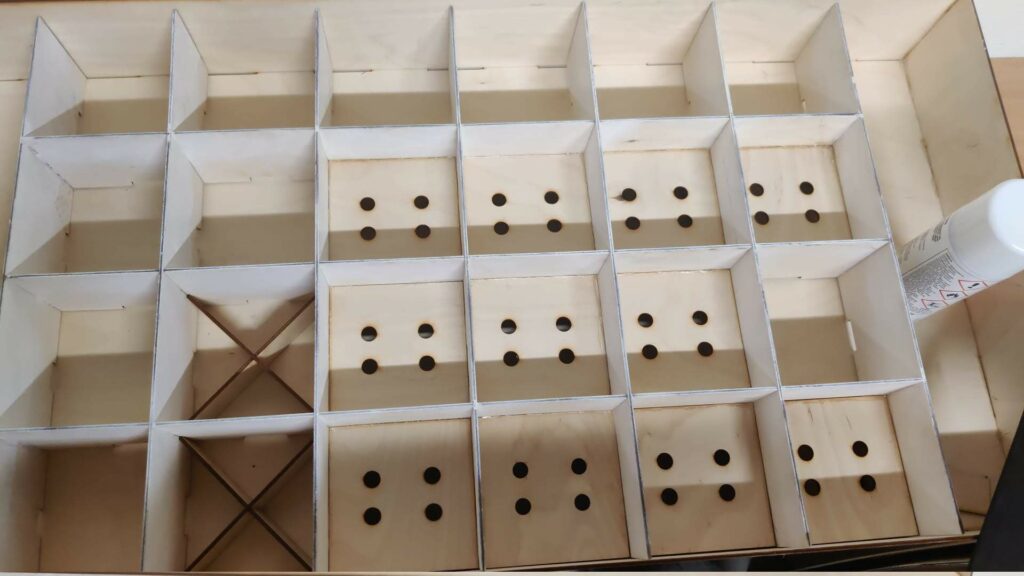
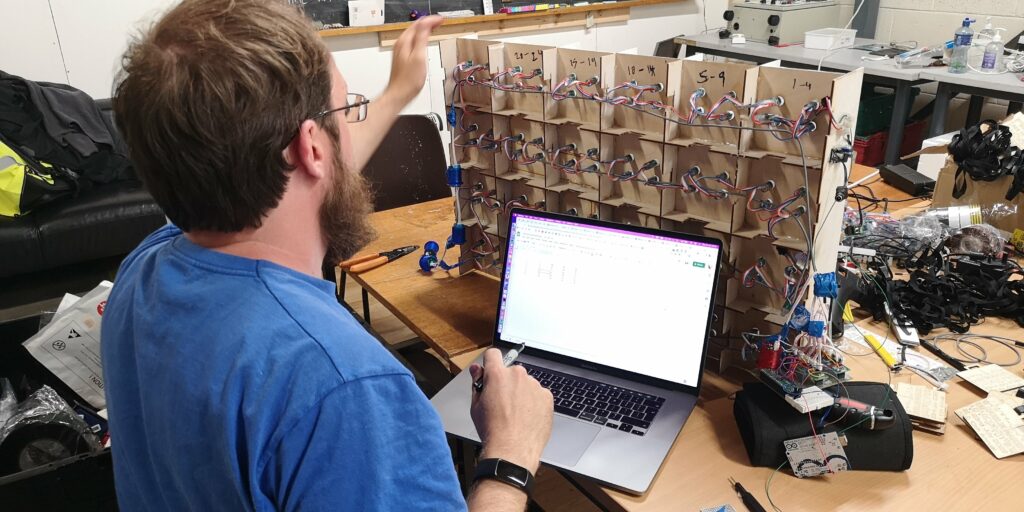
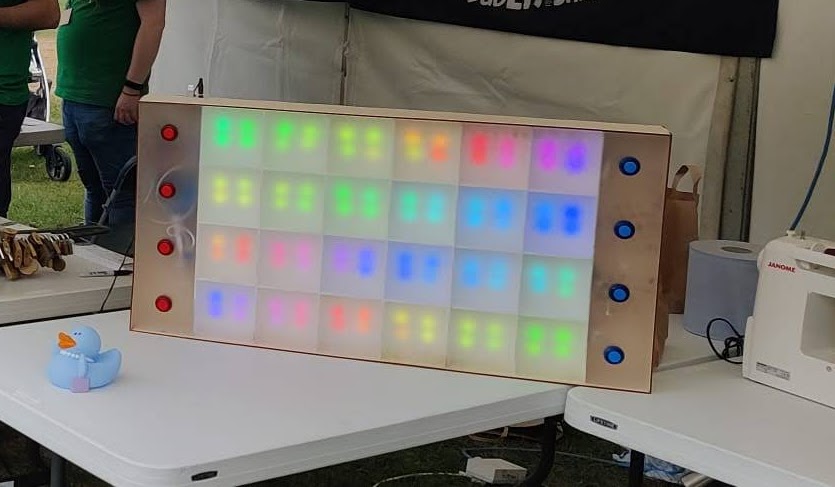
Christian got started working on the box. He create an LED display that was 4 by 6 “pixels”. Each pixel would be made up of 4 addressable LEDs. Two stripes of 50 LEDs would be used and due to the wiring layout, some would be hiddle and just covered in tape.
Doubts started to come to the project team. Would these LEDs work in direct sunlight? Remember the goal is to use the game in an outdoor daytime festival. Christian came up with the idea to paint everything white and Jeffrey said let’s bump up the current to make the LEDs brighter.
Now for the brain of the game. Jeffrey started out with the idea of using the USB controller that comes with buttons. How hard could it be to use a Raspberry Pi Pico and a USB host library?
It turns out that with Jeffrey on the team running Dublin Maker there is not enough time to learn new things for projects. We quickly switched back to using the reliable and known Arduino. In order to make the game responsive all eight buttons would be required to have their own hardware interrupt.
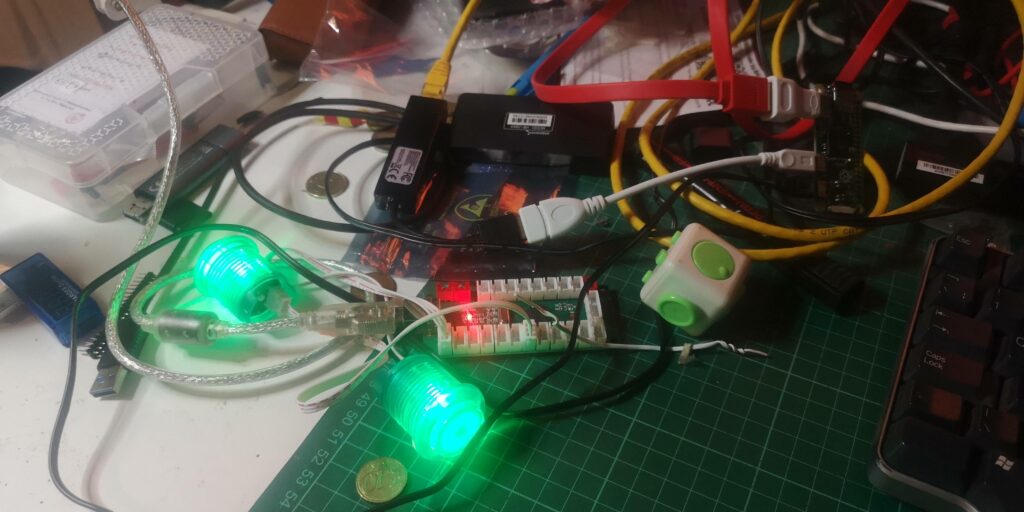
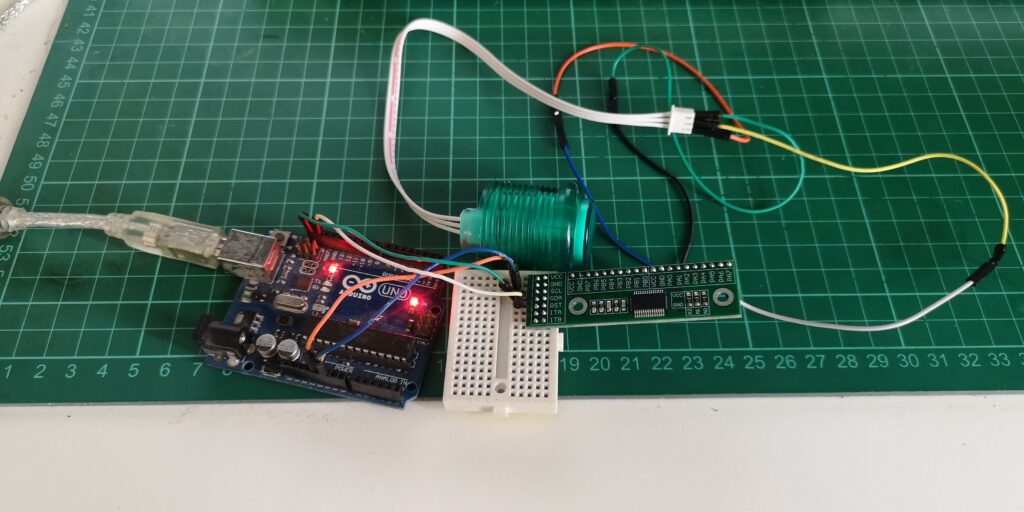
He started to use an GPIO expainder over I2C. This device allows for lots of interrupts. We started to build out a little board that would take the connector from the buttons and power the LEDs strips. The video below shows testing an interrupt to turn on the LED in the button when the button is pressed.
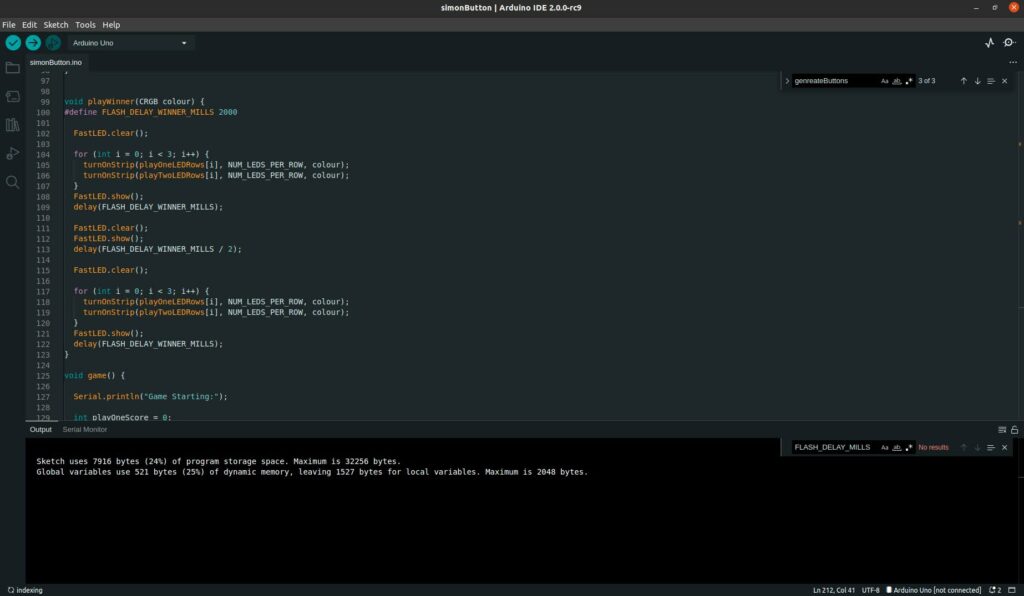
The code started to come together with a few late-night sessions but the interrupts didn’t seem to work as expected. Due to the way, the buttons are wired, the LED and the button share a pin and it’s only controlled by three pins. This causes the interrupts not to trigger when the LED is turned on.
Unfortunately, we did not meet the deadline of the event and never fixed the problem before the Dublin Maker event. We coded up a bit of a demo on the LED display but was not interactive.
The project did not end there. Another big public event was only a few weeks with Dublin Comic Con Summer edition. During a few late-night coding sessions, Jeffrey came up with a new way to check the inputs of the buttons without using hardware interrupts but still be reactive. The code just checks the status of the expected two buttons to be pressed over and over so there is little delay.
The game was unleashed to the visitors of comic con, it was a hit. People loved playing it once they got going. We did kind of miss the other goal of making the game portable as it ended up a little big.
You can check out more f the photos from the build in our gallery.