In May, Jason Pettiaux and I had the chance to travel to Chemnitz in Germany as invited guests for Open European Lab Day at FabLab Chemnitz. Jason is a long-standing European maker and open source advocate, and was the other invited guest for the visit. The trip came about through the Vulca Network, which helps connect makers, hackerspaces, FabLabs and community workshops across Europe. It turned into much more than a single workshop, with visits to makerspaces, museums, research institutes, a radio club, and even a bit of hiking and amateur radio along the way.
It was a lovely reminder of how strong and varied the maker community is across Europe, and how much we can learn from visiting each other’s spaces.
Friday: Arriving in Chemnitz
I travelled over on Friday and met up with Jason and the local FabLab Chemnitz team. Maik Jähne and Babette Sperling were our main hosts for the trip and gave us a brilliant welcome. It was great to finally meet people in person after the usual run of emails, planning messages and travel arrangements. There is always something nice about arriving into a new city through a maker connection, as you immediately get a sense of the local community and the people who make things happen.
Chemnitz itself has a strong technical and industrial history, which made it a very fitting place for a weekend of making, workshops and community activity.
Saturday: Open European Lab Day at FabLab Chemnitz
Saturday was Open European Lab Day at FabLab Chemnitz, with lots of people coming through the space to see what was happening, meet the team and take part in hands-on activities.
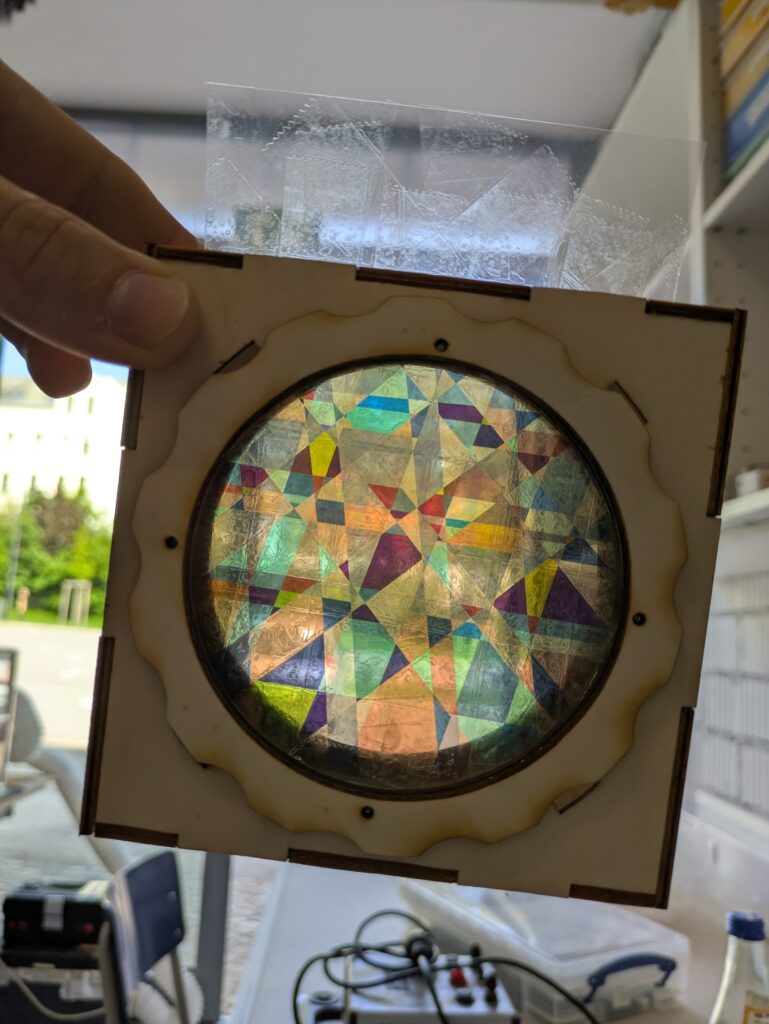
I ran a workshop called Hidden Colors, where we built polarisation viewers and explored the colours hiding in everyday materials. Using layers of clear tape, plastics and polarising filters, participants could see patterns and colours appear that are normally invisible to the eye. It is a simple but very satisfying mix of science, making and “let’s try it and see what happens”.
The workshop started with a bit of the science behind polarisation, then moved into building the viewers from laser-cut parts. Once everything was glued together, we experimented with layers of tape to create different colours and patterns. The results were really beautiful, with some pieces looking almost like stained glass.
A big thank you to FabLab Chemnitz for hosting the workshop, to Maik and Babette for the warm welcome, and to the Stadtfabrikanten team for making the day happen.
Event details:
https://stadtfabrikanten.org/en/article/open-european-lab-day-fablab-chemnitz-09052026
Photos from FabLab Chemnitz:
https://www.tog.ie/gallery/nggallery/album/fablab-chemnitz
Saturday Evening: Museumsnacht and Chemnitz
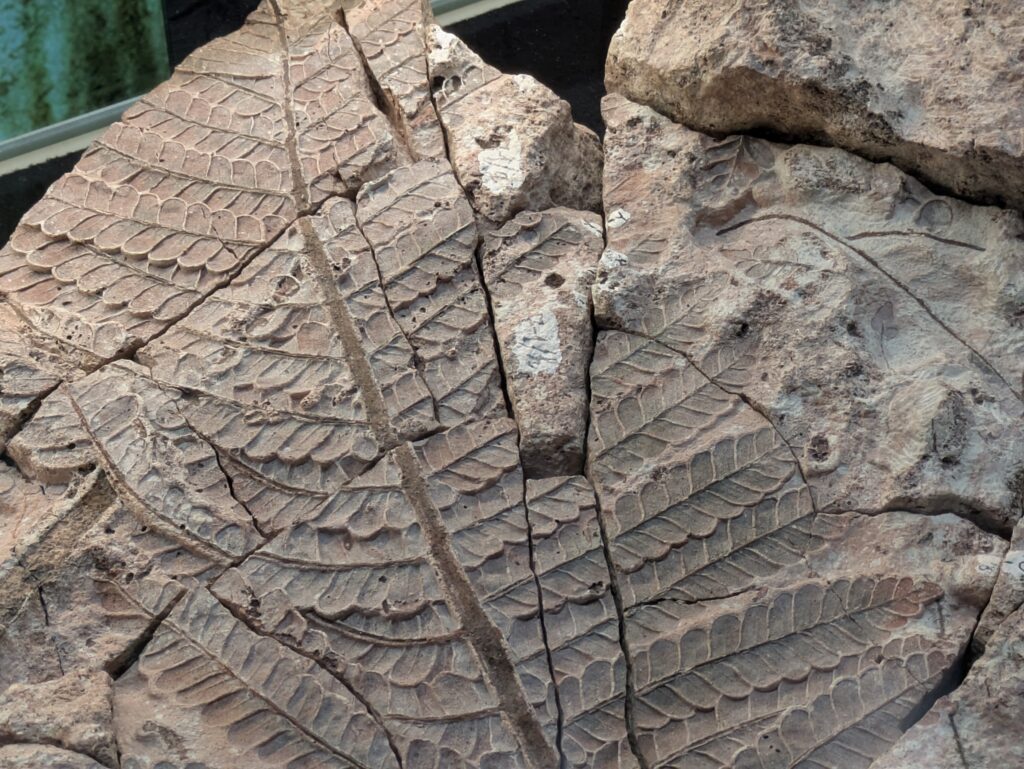
After the FabLab day, we also got to explore a bit more of Chemnitz as part of the city’s Museumsnacht. We visited the Museum für Naturkunde Chemnitz, including a look at the natural history exhibits and some very impressive fossils.
It was a great way to round off the day: a makerspace full of hands-on activity, followed by a city-wide museum evening celebrating culture, history and science.
Photos from Chemnitz, Europatag and Museumsnacht:
https://www.tog.ie/gallery/nggallery/album/chemnitz-europatag-und-museumsnacht
Sunday: Hiking in Saxon Switzerland
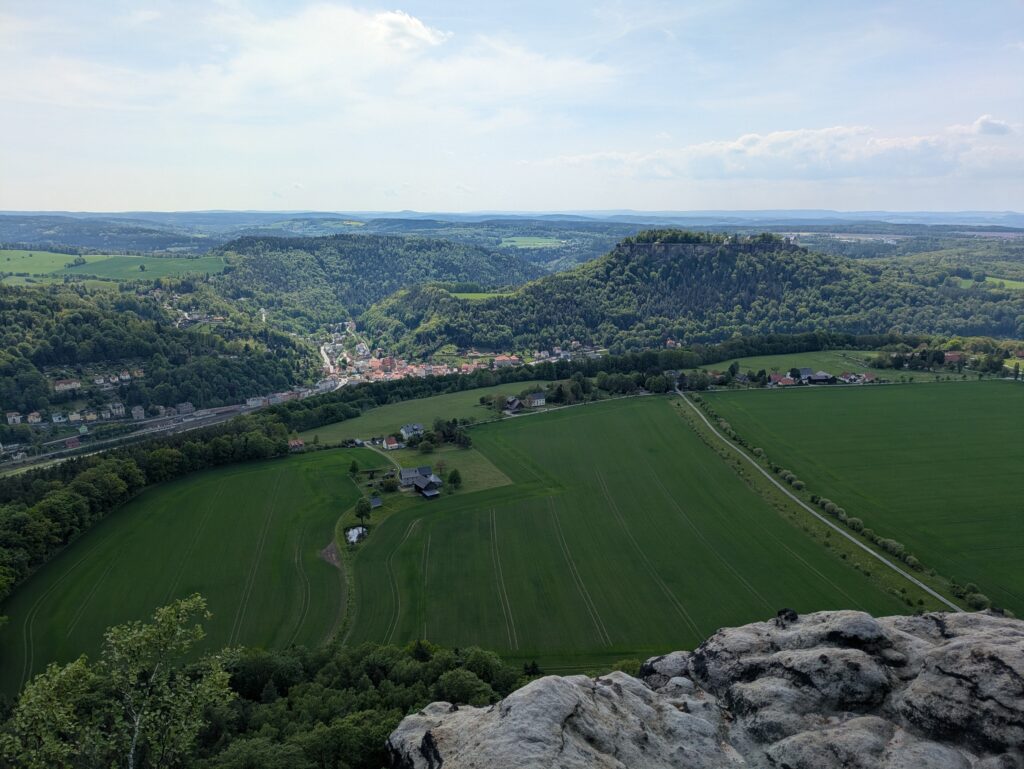
Sunday was a chance to see a different side of the region. We headed out hiking in Saxon Switzerland, climbing up to Lilienstein. The local pastime seemed to involve hiking to the top of a hill and finding a bar, which is a tradition I can fully support.
The landscape was stunning, and it was a good reminder that these trips are not just about buildings and equipment. They are also about the conversations in between, the shared meals, the walks, and getting a feel for the place around the maker community.
Photos from Lilienstein and Saxon Switzerland:
https://www.tog.ie/gallery/nggallery/album/lilienstein-sachsische-schweiz
Monday: Dresden Makerspace Tour
Monday was a full day in Dresden, visiting a range of makerspaces and community workshops. Maik, who is Manager of Networks and Collaborations at SLUB Makerspace and a member of several other spaces in the region, guided us through a packed day of visits. Each space had its own character, and there were plenty of ideas to bring home to TOG.
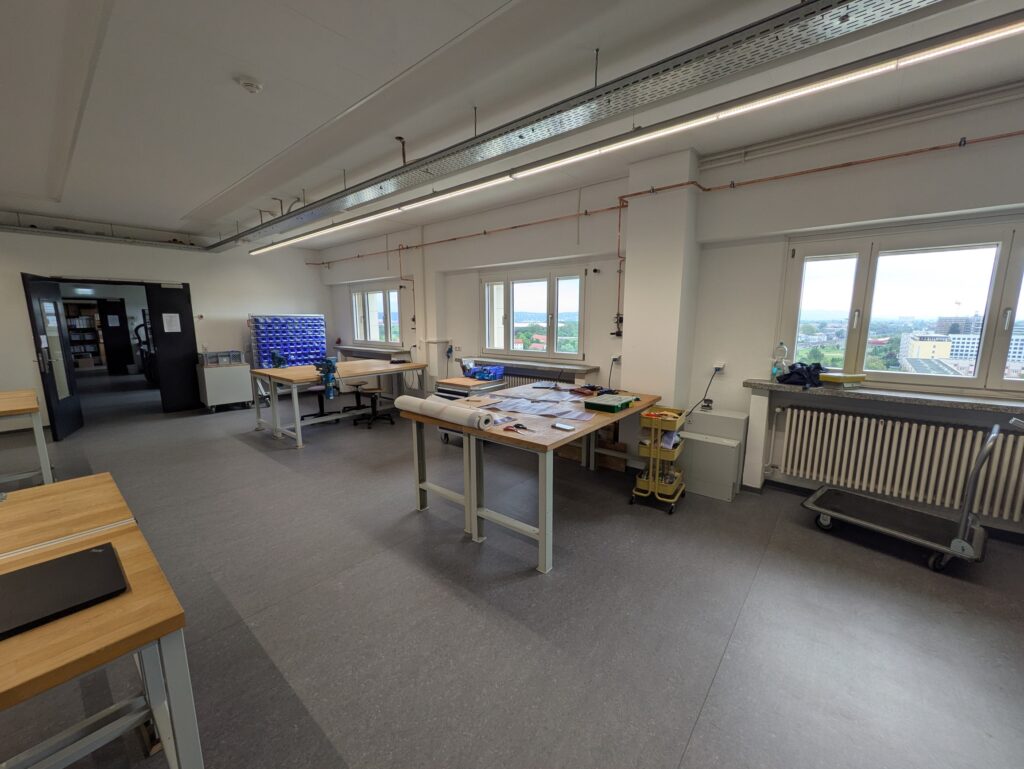
We started with a tour of LabX / HTWD Makerspace, where we learned about their open-source hardware programme and hardware prototyping projects. It was interesting to see how making, education, and applied research come together in a university setting.
Photos from LabX / HTWD Makerspace:
https://www.tog.ie/gallery/nggallery/album/labx-htwd-makerspace
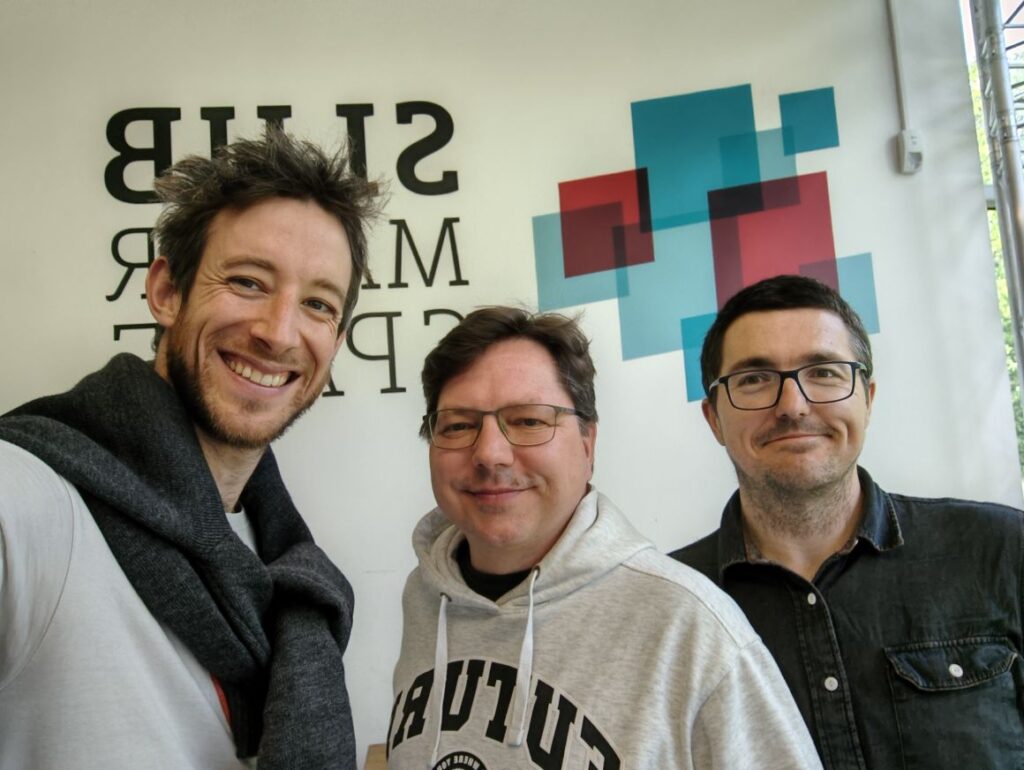
We also visited SLUB Makerspace, based in the central library in Dresden. It was a great example of a public institution supporting hands-on learning, digital fabrication and access to tools.
Photos from SLUB Makerspace:
https://www.tog.ie/gallery/nggallery/album/slub-makerspace
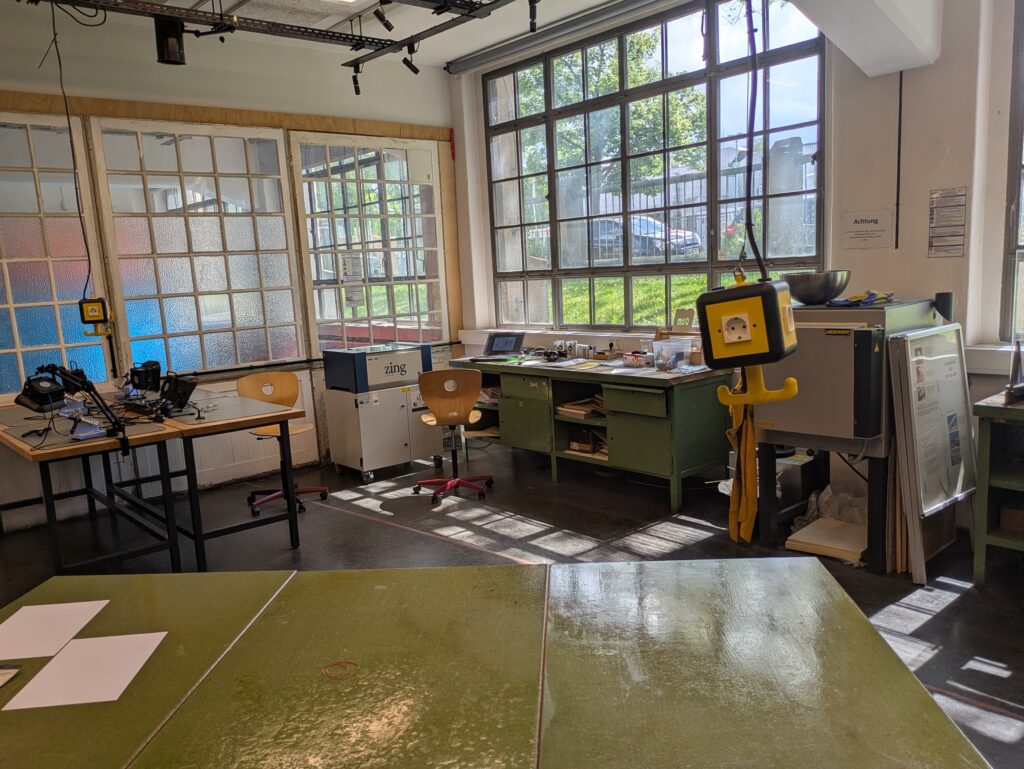
One of the highlights of the day was the Technische Sammlungen Dresden. It is hard to describe just how good this visit was. Holger gave us a tour and explained not just the exhibits, but how the museum thinks about public engagement and how its makerspace is interwoven into the museum.
Photos from Technische Sammlungen Dresden:
https://www.tog.ie/gallery/nggallery/album/technische-sammlungen-dresden
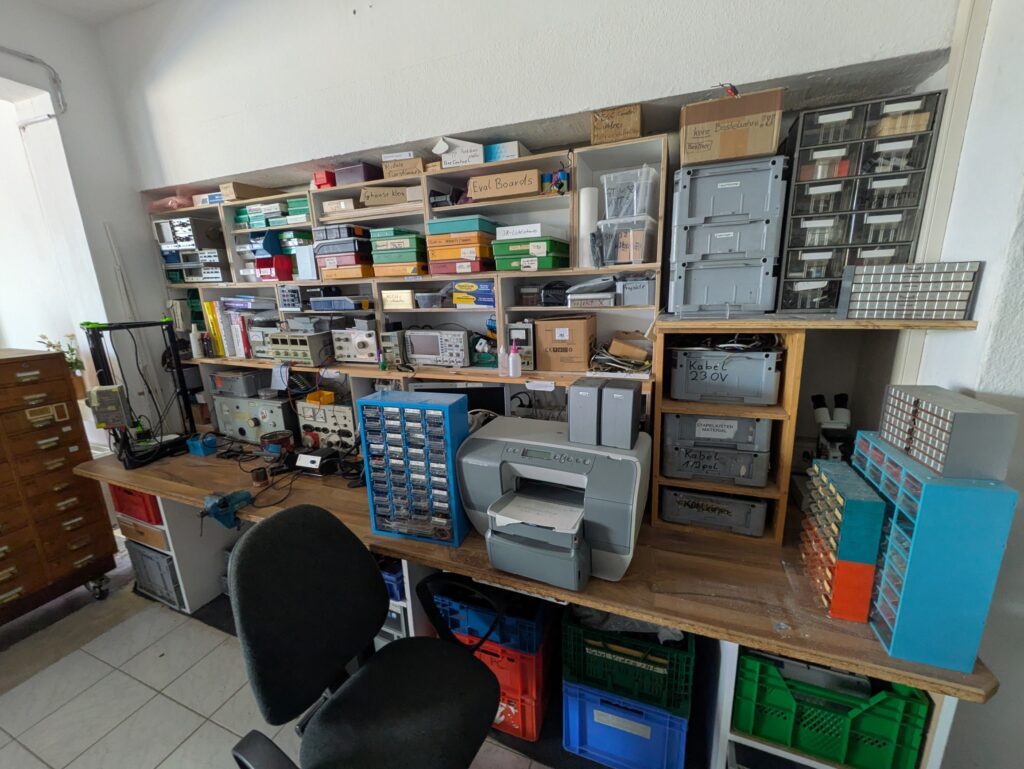
The last tour of the day was Konglomerat, which felt the closest to TOG in spirit. It was a mature, community-led space with lots of practical ideas around layout, signage, storage and how to help people navigate a busy shared workshop. I will definitely be taking some of their signage ideas back with me.
Photos from Konglomerat:
https://www.tog.ie/gallery/nggallery/album/konglomerat
Tuesday: Engineering Research, Radio and Rain
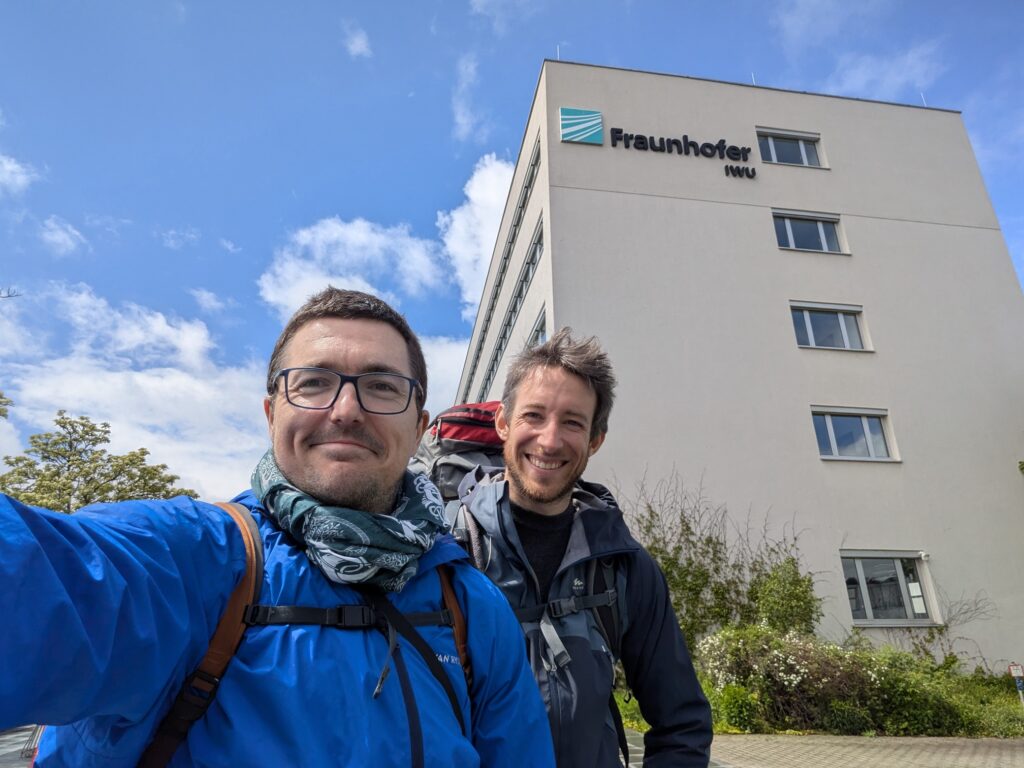
On Tuesday, Jason Pettiaux and I were kindly given a tour of the Fraunhofer-Institut für Werkzeugmaschinen und Umformtechnik IWU by Maximilian Stange. It was incredible to see the scale of engineering research taking place there. I have never seen such a concentration of applied engineering research in one place before. Sadly, no photos from inside, but it was a real highlight of the trip.
Later in the day, I tried a bit of amateur radio with a Parks on the Air activation in Chemnitz. The weather was not exactly on my side, and I ended up doing radio under an umbrella in the rain. Still, it is always fun to try to get on the air from a new place.
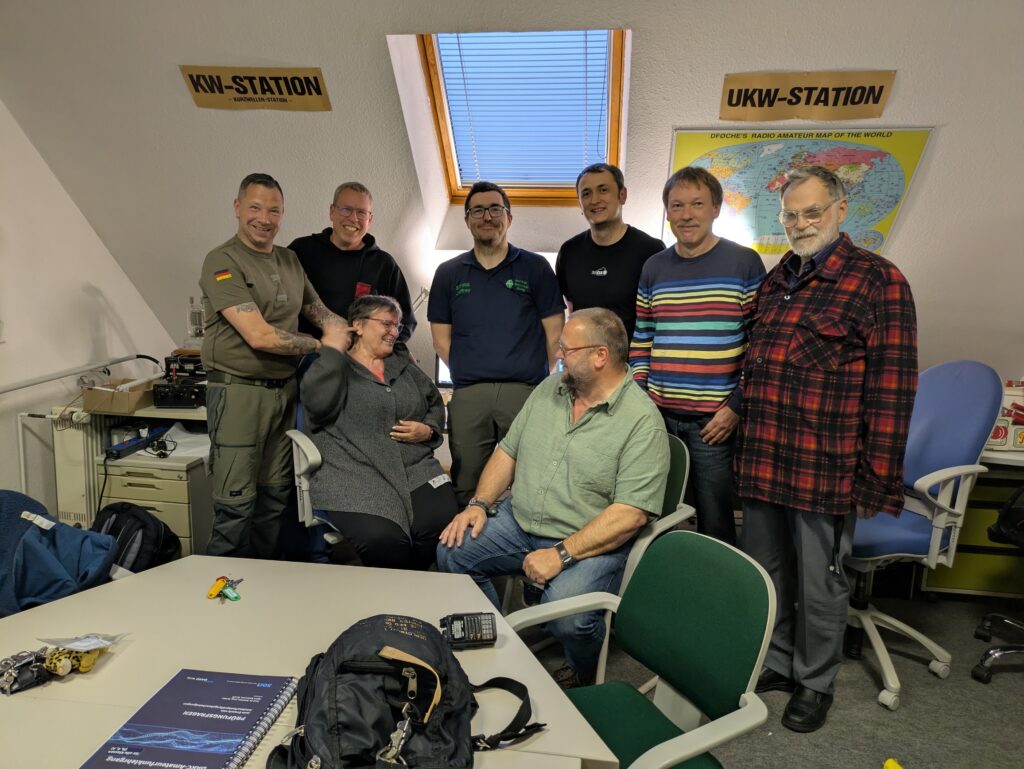
That evening, while Jason had a break from the maker tour schedule, I visited the Chemnitz-Süd ham radio club. The club is active across a wide range of activities, including International Lighthouse and Lightship Weekend and Linux Days. I had the chance to meet members, hear about their projects, and share a bit about amateur radio activity in Ireland.
Thank you to Jens DB5JH, Mario DM5AHA, Carsten DG0JCG, Jürgen DL4JWU, Wolfgang DL5WSC and Veiko DM9TT for their generous welcome and hospitality.
Photos from the radio visit in Chemnitz:
https://www.tog.ie/gallery/nggallery/album/radio-in-chemnitz-chemnitz-sud
Wednesday: Berlin, Brandenburg Gate and a Cat Café
On Wednesday, I took the train to Berlin. I tried another short Parks on the Air activation near the Brandenburg Gate, which sounded like a great idea in theory. In practice, the rain and the high noise floor made it a bit more challenging, and after around 90 minutes, I had only managed four contacts.
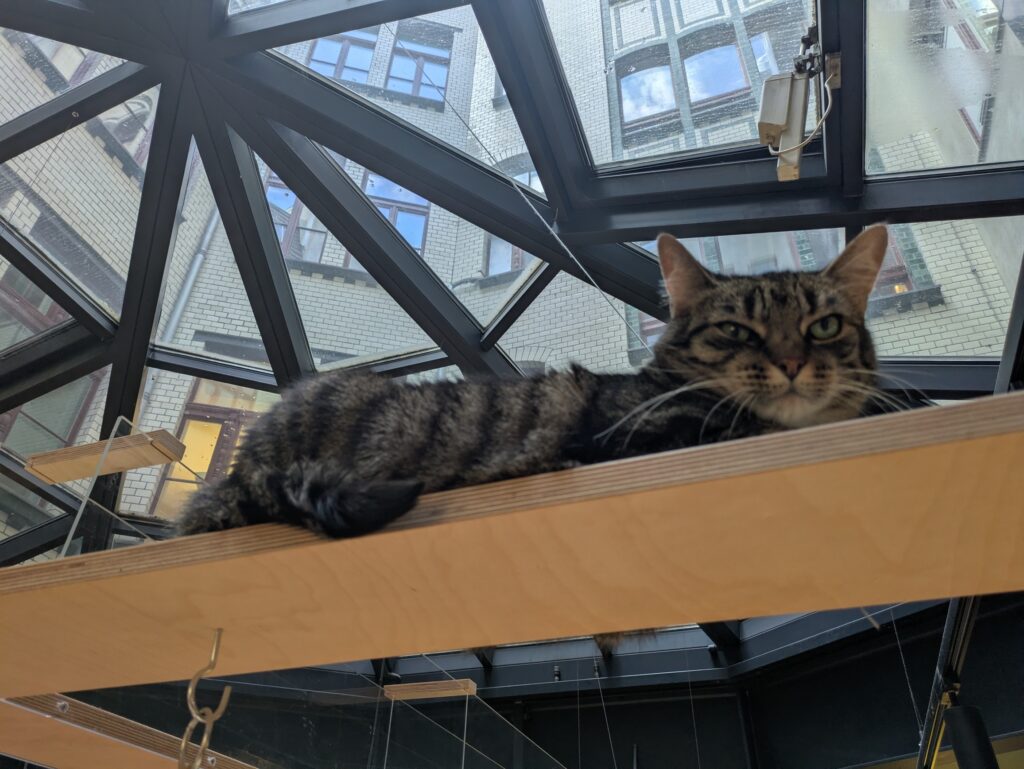
At that point, lunch won over the radio. I ended up meeting an old friend and visiting a cat café, which was not a bad way to finish the trip at all.
Reflections
This trip was a brilliant mix of making, science, community, engineering and radio. The workshop at FabLab Chemnitz was the starting point, but the value of the trip came from all the conversations and visits around it.
I came home with a head full of ideas: how other spaces explain themselves to visitors, how museums can work with makerspaces, how public libraries can support hands-on learning, and how maker communities across Europe face many of the same challenges around tools, space, volunteers, storage and welcoming new people.
A big thank you again to FabLab Chemnitz for hosting, to the Vulca Network for making the connection possible, to Maik Jähne and Babette Sperling for looking after us so well, and to everyone who took time to show us around, share their work and make us feel welcome.
Maker travel is always a good reminder that while every space is different, the spirit is very familiar: people sharing skills, opening doors, fixing things, building things, and making room for curiosity.