It was Tuesday Open Night at TOG, and once again there was an interesting bit of equipment sitting on the electronics bench.
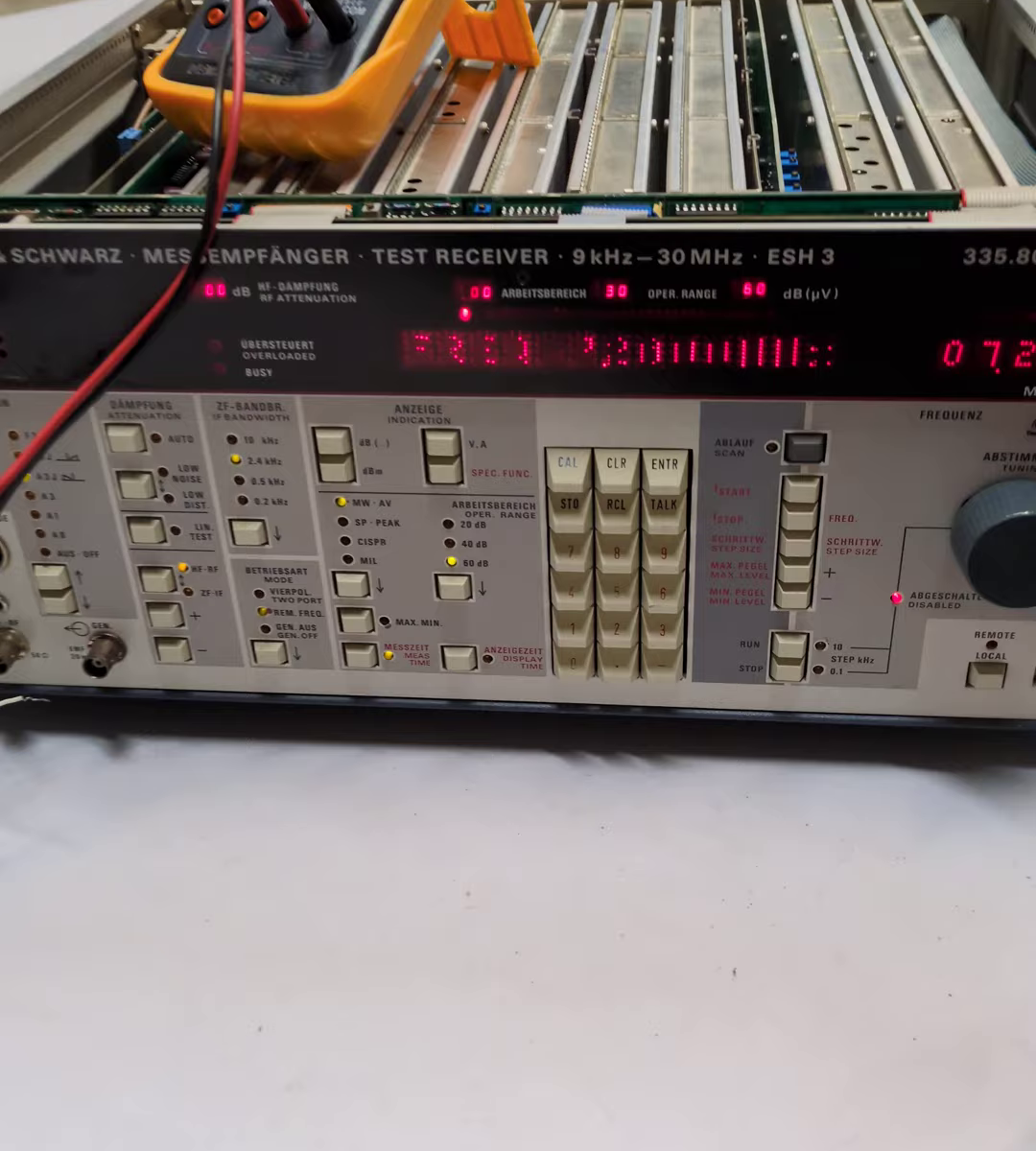
This time it was a Rohde & Schwarz ESH 3 test receiver, part of a recent donation from Testwall. It covers frequencies from 9 kHz to 30 MHz and was designed as a serious piece of test equipment rather than an ordinary radio receiver.
As you may know, TOG also has an amateur radio club, with the callsign EI0TOG. A radio receiver like this is complete overkill for simply listening to amateur radio, which naturally meant that it caught our attention.
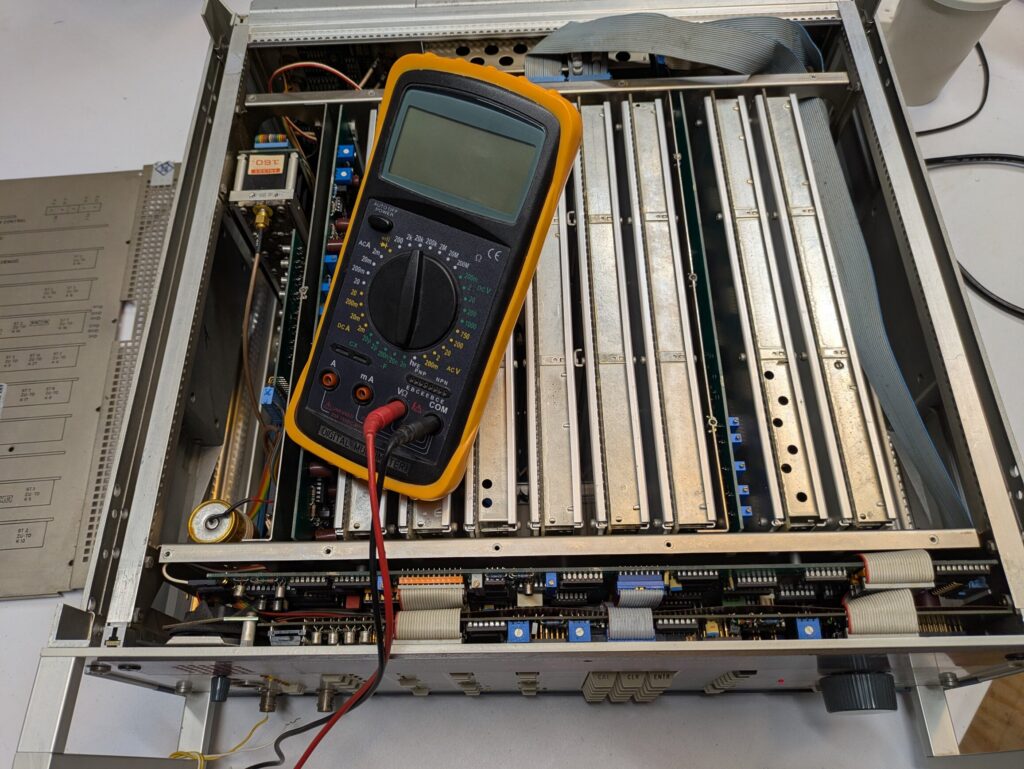
We did what any group of makers would do: we took it apart.
After plenty of poking around, checking voltages and trying to understand the collection of boards inside, we found a few blown fuses, some jammed buttons and a wire from the power supply that appeared to be stopping the unit from turning on when it was plugged in.
We disconnected the troublesome wire, replaced the fuses and tried powering it up again.
There was no magic smoke. Instead, we had lights!
It is not completely repaired yet. The receiver still displays an error message when it starts and is unhappy about some of its calibration settings. That did not stop us from wanting to find out whether it could receive anything.
We connected a length of wire as a very makeshift indoor antenna and tuned to the 40-metre amateur radio band, around 7 MHz. At first, we were not hearing very much. That was hardly surprising given our poor antenna, its position inside the building and all the electrical noise around the space.
Then a station from Italy came booming through the speaker. They must have been putting out a good signal to overcome our antenna arrangement and all the other things working against us.
After a little more experimenting with the front panel, we figured out enough of the interface to select single-sideband reception and tune around properly. Despite its remaining faults, this old piece of test equipment was receiving amateur radio again.
It was a great example of repair and of bringing something back to life rather than simply throwing it away.
We would still like to understand what the ESH 3 was originally used for and how to operate all of its test and measurement functions properly. Does anyone remember using one of these when it first came out, or know their way around this kind of equipment?
Even if we never manage to use every specialised feature, the amateur radio enthusiasts at TOG will find some use for it. Who knows, with a proper HF antenna connected, it might even become genuinely useful.