Reviving a 20+ year old mini-DV camcorder

camcorder revival

This Canon mini-DV camcorder was bought new, sometime around 2002 / 2003. Even then however, the writing was on the wall for tape-based video recording. Mobile “feature” phones of the time were already starting to have better and better cameras, and the price of USB sticks and memory cards were falling rapidly while increasing in capacity.

In 2005, the camcorder was connected to a PC via its FireWire socket. Many of the video clips were pulled over onto the PC. In the transfer process however, the metadata from the clips including the timestamps were not copied. It’s impossible to tell today when the clips were taken. So the plan was to fire up the camcorder and see if the clips could be copied again, or even the date stamps transcribed manually.

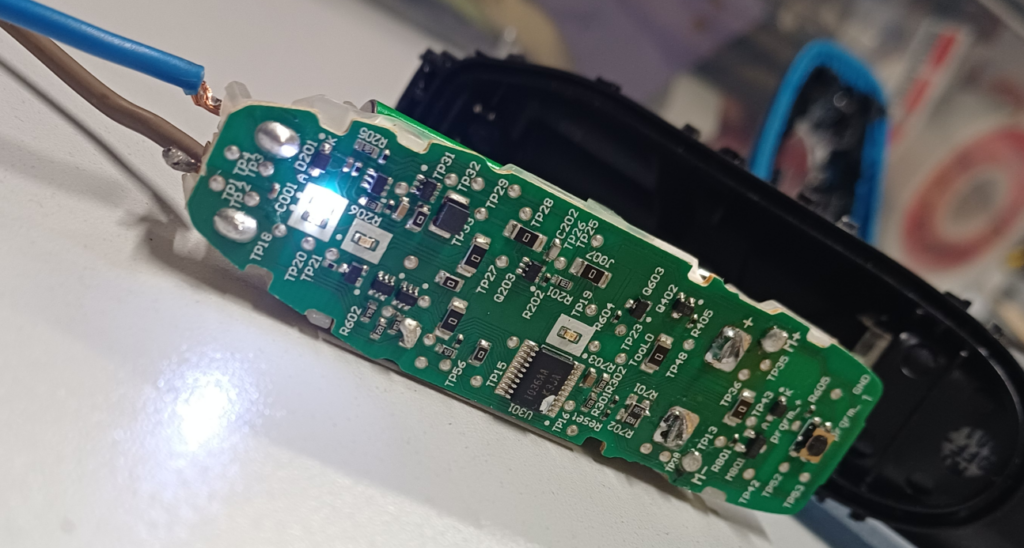
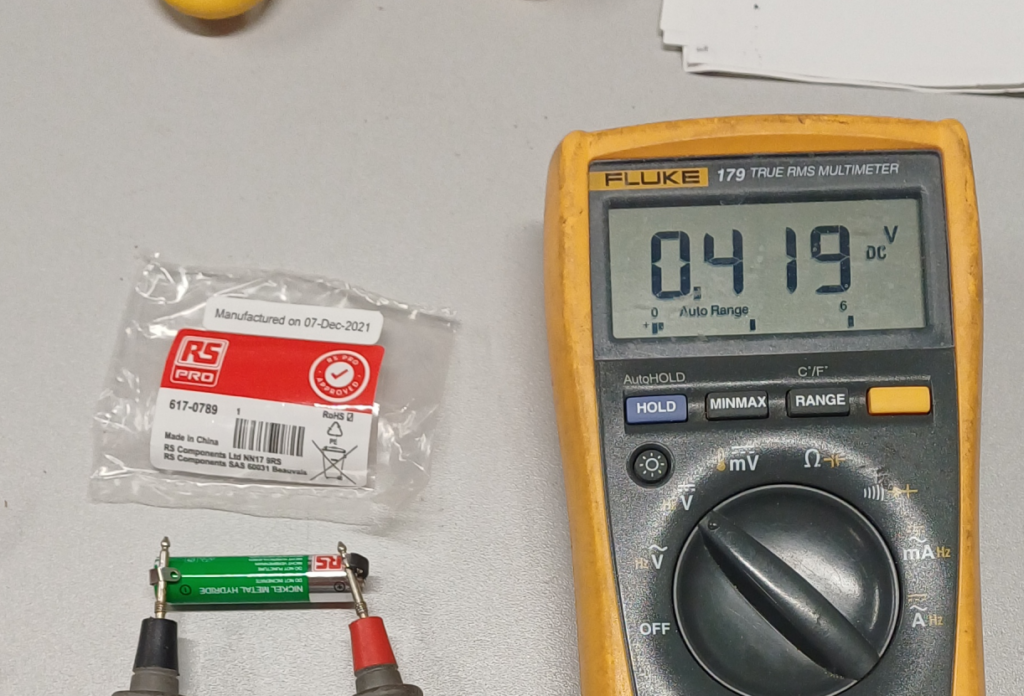
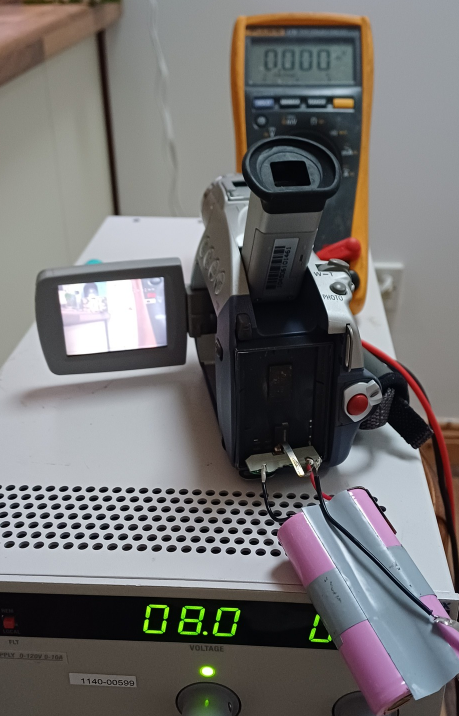
First and most obvious thing was that the battery was stone dead. Popping the battery case open, there were two lithium cells in series and both were absolutely dead….. zero volts. We replaced the two cells with two 18650’s, but the battery pack output was still zero. A little trick we’ve learned, and one that we put to use several times at our repair cafe this week, was to charge the pack briefly which seems to wake up the onboard BMS. After doing this, the pack was now outputting almost 8 volts.

Now the next hurdle. Would the thing actually switch on and work? 20 years is a long time for electrolytic capacitors, and rubber belts and drive wheels turn to a sticky goo over time.

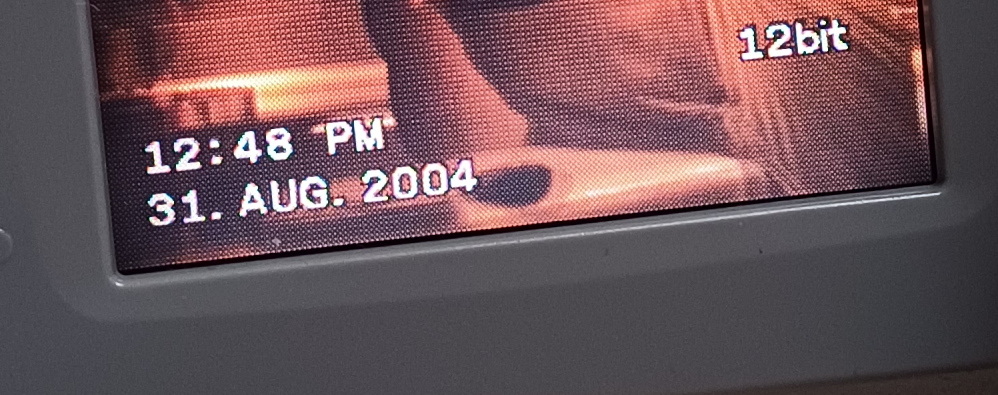
Snapping the battery into place and switching on, amazingly the thing came to life! The pop-out video screen was alive, but the look-through viewfinder seemed to be dead. Next test was to see would it accept a tape. It did, and the tape threaded up okay. Pressed play and the thing worked! You can see the timestamps on the clips from 2004!

If you have any mini-DV tapes that you want to check, or you like tinkering with this kind of stuff, come and see us in the space any Monday or Tuesday evening. There’s always something interesting going on.

More Philips Boombox Tinkering

new AA cells

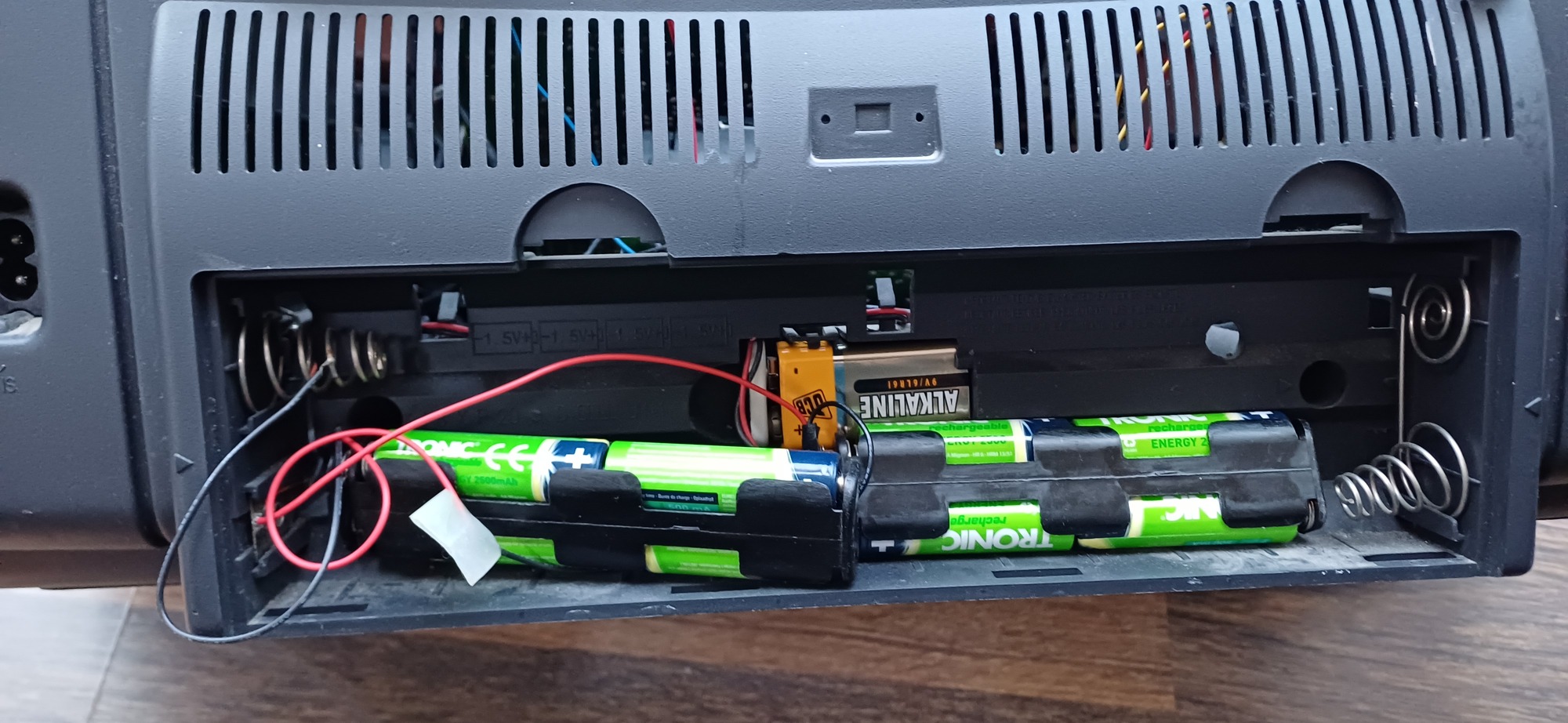
Having recently fixed the Philips boombox CD player, we decided to review the battery compartment mod, done at least 20 years ago, and still working.

The original idea was to fill the battery compartment with 8x rechargeable D cells and arrange that they would be constantly trickle-charged while the mains lead was plugged in. The battery compartment’s positive terminal was connected via a current-limiting resistor to the power supply section of the PCB. This trickle charges the cells at about 10mA. This is enough to charge them up over a few days, but not enough to cook them.

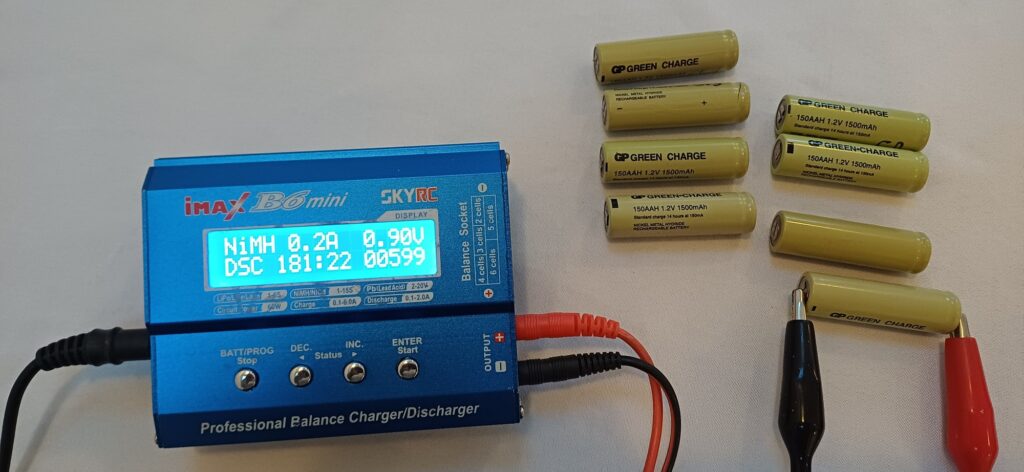
Good quality branded rechargeable D-cells are relatively expensive…. about €10 a pop for a ~10Ah cell, so it’s about €80 to fill the battery compartment. Given that the thing is not used that often on battery, this was a bit much. So instead, 8x AA cells were used in holders, and soldered to the existing connections in the battery compartment. The cells were NiMH made by GP and rated at 1.2V, 1500mAHr. This mod was done, we guess sometime around 2000.

So today, ~25 years later, new cells were fitted and we measured the capacity of the original cells. Discharging at 200mA to a cutoff voltage of 0.9V, the original cells tested at 599mAHr…. about 40% of their original nameplate capacity. The new cells fitted are from Lidl and are rated at 2500mAHr.

Another “Miracle” Repair

CD Mechanism

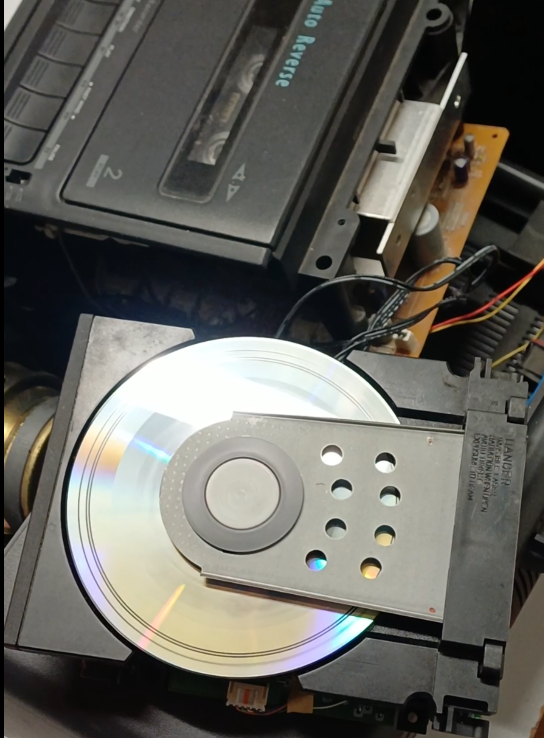
OK, so not quite as old as that 1970s tape recorder that we fixed last week, but a 1996-vintage Philips AZ8640 Radio-Tape-CD boombox. The CD had stopped working, but the tape and radio were still fine.

Opening up, these things are not meant to be easily disassembled. They tend to be built from the inside out, with not much thought about future disassembly or serviceability.

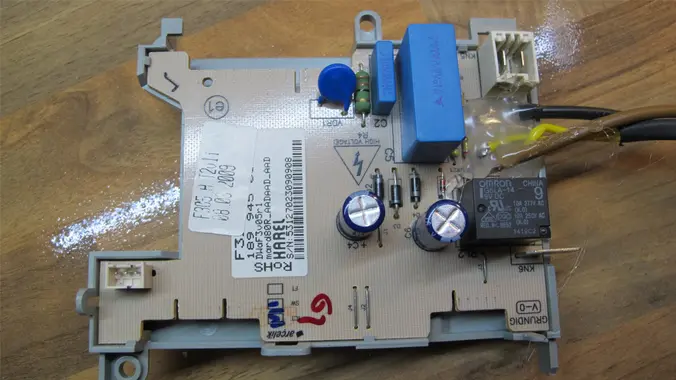
When we fix old electronics, there are a few “usual suspects”, which quite often give us a fix. Old electrolytic caps are one…. they dry out after a decade or two of service. Another is bad connections or solder joints.

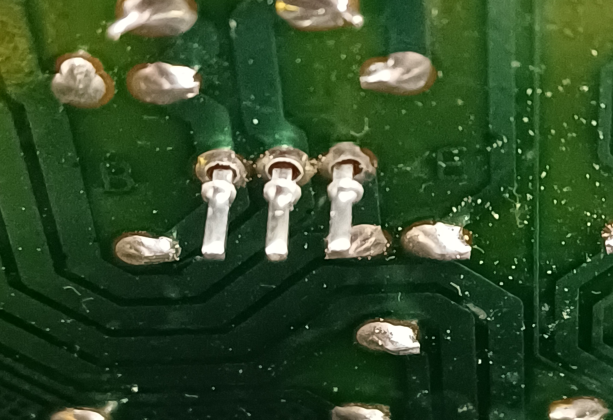
Solder joints, cracked or so-called “dry”, can be hard to see sometimes. Wiggling the component legs can help you see them, or simply re-touching all joints with fresh solder can do the trick. This one was quite spectacular, however.

A 3-legged power transistor that supplies power to the CD mechanism, looks like it had moved on its heat sink, and the 3 solder joints had completely detached from the PCB. Re-soldering the 3 joints brought the CD back to life. The transistor looks like it’s held to the heatsink by a spring clip rather than a screw. Perhaps the spring has failed. It’s very hard to see, and it’s a nightmare to remove the circuit board to check.

Failed Joints

Interestingly, the transistor, a BD236, is still available new from Farnell at €0.72! Here’s hoping for another 30 years of service.

Ebike BMS Upgrade

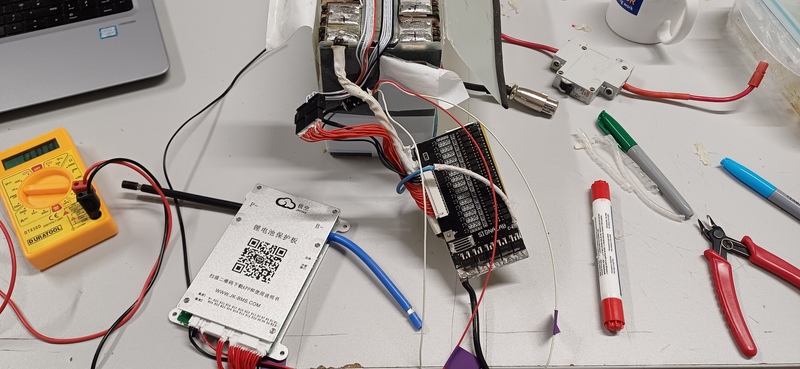
An ebike battery from 2012 has given great service, but the balancing of some individual cells in this 16S Lithium Iron Phosphate battery started to take much longer than others. Eventually, some cells would not balance at all. Each cell has its own “channel” on the battery management system (BMS). A red LED on the BMS should illuminate when the cell comes up to full charge.

On closer examination, some of the sense wires to individual cells were found to have become disconnected. These were resoldered which brought some improvement, but still balancing was not happening consistently. Some damage and corrosion on the BMS circuit board was then found. In the world of ebikes, things have moved on quite a bit since 2012. So it was decided to replace the stock BMS with an up-to-date Bluetooth enabled one.

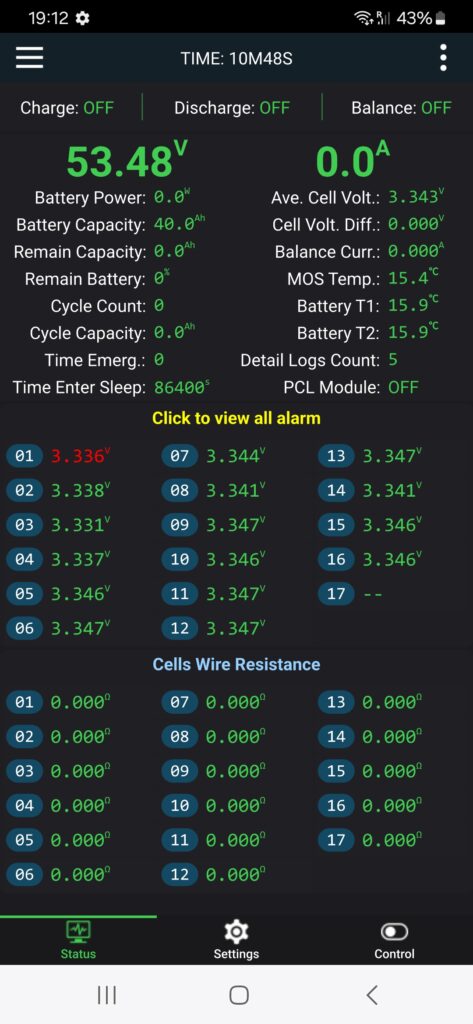
A “JK” BMS was chosen, which seems to be a popular brand from various online forums. The one page “manual” that came with the BMS isn’t the best, and would probably get a “could do better” if it was a school or college project. Thankfully, with a bit of help from a number of YouTube channels, the BMS was fitted ok and started up. With the matching smartphone app installed, it’s cool to see all the individual cell voltages in real time and the balancing happening before your eyes.

If you’d like to see these kinds of fixes and mods that we get up to, drop in to our Monday night Electronics or Tuesday Open House.
 

Electronics Night is Back!

With the Covid situation easing, we are re-starting our regular Electronics open evening in the space. This is one of our longest-running regular events. It has been a regular feature of our calendar since the early days of TOG. It takes place fortnightly on Monday evenings. Check our events calendar on this blog, Meetup and our social media for the next date.

These evenings are free to attend for members and visitors alike. No booking is necessary. Just turn up! Everyone from absolute beginner to experienced is welcome. These evenings are not classes or tutorials, rather a very friendly informal evening.


We have a wide range of people who come. Some are absolute beginners who do not even work or study in these areas but are interested to know more. Others have something that they are already working on. We almost always have some first-time visitors, and we always give them a tour of the space.


Come in with your Pi, Arduino, or whatever you have. Bring your laptop. Maybe you want to make something, solder, breadboard or use our electronic gear. Maybe you have some vague ideas and just want to get started, but you’re not sure how to. Or maybe you’re just curious……if so, it’s fine to come along and just see what others are doing. Hope to see you on the night.

During Covid, we moved into our new space in Bluebell. The space and our electronics room are still works in progress. If you would like to get even more involved and have the full use of our space, we would be delighted to have you as a full member. Membership brings many benefits.

We are located behind Mr Price and the Bright Lights store on Kylemore Road. There is lots of parking available. Hope to see you some Monday evening.

Tog Activities in September

Dublin Culture Night:  This year’s Culture Night happens on Friday 20th September and Tog will be open to allcomers from 6 pm to 11 pm. We’ll be showing off our 3D printers, the laser cutter, the CNC, and whatever else is in the workshop. Seb will be showing what the Wave Hackers get up to, there will be lock picking and electronics projects demonstrations and tours of the space.

Sustainability Hackathon. For European Sustainability Week (14th to 28th September, sustainability means it lasts longer), TOG is hosting a free community hackathon on Saturday 21st September. Feel free to work on any projects you want, but try and have a sustainability theme. Repair something that is broken instead of throwing it out or make use of recycled materials. Feel free to stay around for our social evening. Bring a project and your laptop. Starts at 10 am, runs until the Open Social starts.

Electronics and Micro Controller Night: every other Monday aspiring and inspiring electronics wizards come together to create amazing things with LEDs, single-board microcontrollers, Arduinos, Raspberry Pi’s (well what IS the plural, then?) and other electronic gear. We have a room full of components and parts for beginners and experts alike, and there is a wealth of expertise available. This month we’re open Monday 9th and Monday 23rd September, 7 pm to 9 pm. Please bring your own laptop, we don’t have a supply.

Would have added a more interesting image, but WordPress is being a bit awkward today.


CAD Night: Bring a project for the 3D printing machine (Prusa Mk 3) or our Lasersaur laser cutter, Krzysztof and Louise will show you how to solidify your ideas in plastic. Or wood. Every other Wednesday, September 4th, September 18th, from 7 pm to 9 pm, bring your own laptop.

Open Social: The Open Social is when we throw open our doors to anyone who wants to check out where these wonderful projects happen. This month’s event will be on Saturday 21st September, for members and non-members alike. Bring food or drink to share, or try our famous pizzas as baked in the equally famous pizza oven, weather permitting. From 7 pm onwards, until the last person leaves.

Craft Night: We have a profusion of materials and machines to cater for crafters and makers from novice to expert. Try your hand at embroidery, knitting, sewing, screen printing, woodwork, crochet, whatever takes your fancy. Our newest acquisition is a leather sewing machine – that’s a machine for sewing leather – which should be up and running soon. Same night as CAD night, Wednesday September 4th and September 18th, 7 pm to 9 pm.

Lock Picking: Conor runs Lock Picking night, in which he demonstrates how to open a bewildering variety of padlocks, handcuffs, practice locks, bicycle locks, even the occasional car clamp – and passes these skills on for free. If you’re wondering how you’re going to free your bike when you’ve dropped the keys down the drain, come along. Mondays, on the 2nd, 16th and 30th September, from 7 to 9 pm.

Coding: This runs on the same night as Lock Picking. If you’re looking for a space to work on your side project, bring your laptop and plug it in. We supply wifi and (some) expertise. Monday 2nd, 16th, 30th September, from 7 to 9 pm.

Wikipedia Editing: Rebecca will show you how to edit the world’s biggest collaborative venture, the Wikipedia. Bring a laptop and add share your knowledge with the world, for pizza and the joy of knowledge. Last Wednesday of the month, 25th September.

The Science Fiction Book Club: We are all interested in the Future, and every month the Science Fiction Book Club argues about what we are going to read next. But before that, we argue about what we have already read, and this month we are reading Drone State by Tom Hillenbrand. Cake is available.

Team Bodge: Most Wednesday afternoons Team Bodge assemble to disassemble, prod, poke, and sometimes coax back to life all manner of electronic gear picked up at car boot sales or found in the attic. Bring along your non-working electronics and marvel as James, Brendan and Krzysztof restore them to working electronics. Members only, usually from 3.30 pm onwards, watch the mailing list for times and dates.