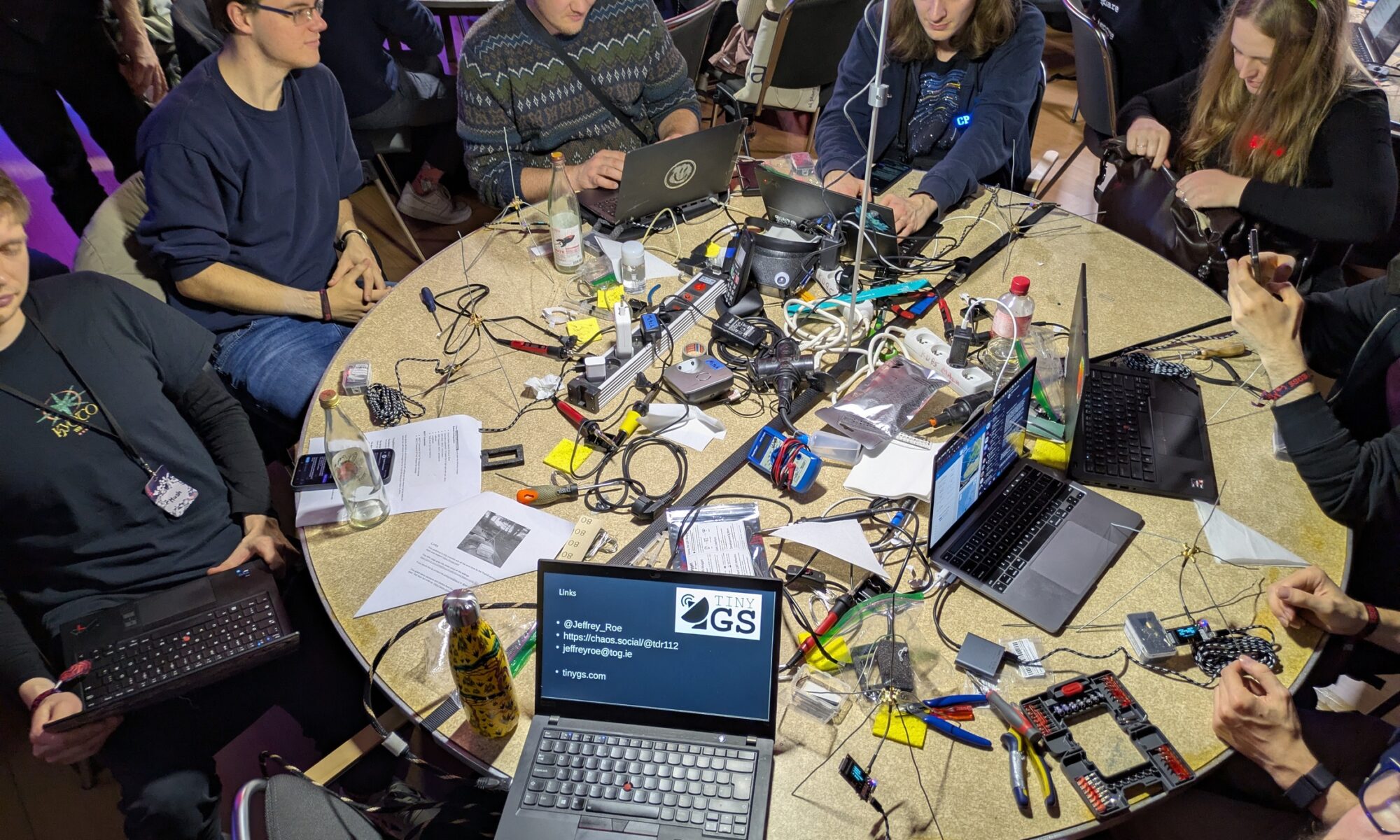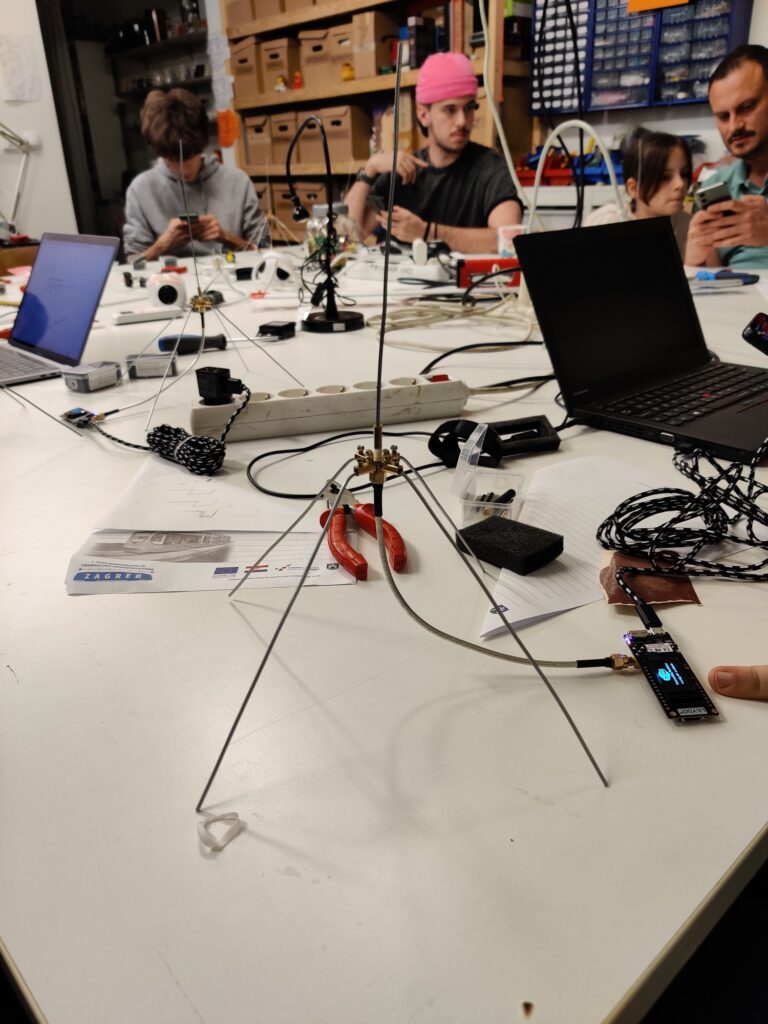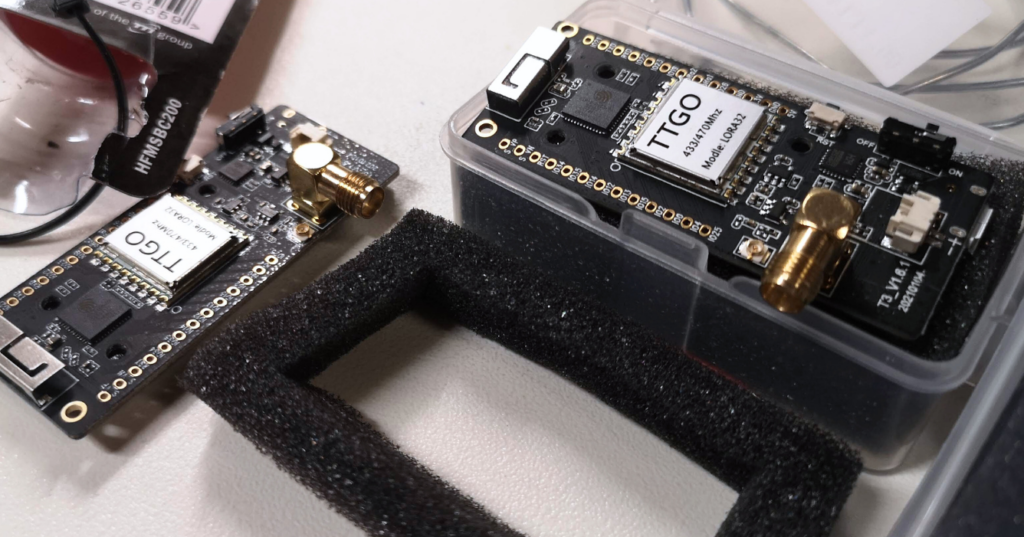
Building a TinyGS Station Workshop

Space is fun. Receiving data from space is even better.

TinyGS is an open community-run network of Ground Stations distributed around the world to receive and operate LoRa satellites, weather probes and other flying objects, using cheap and versatile modules. https://tinygs.com/

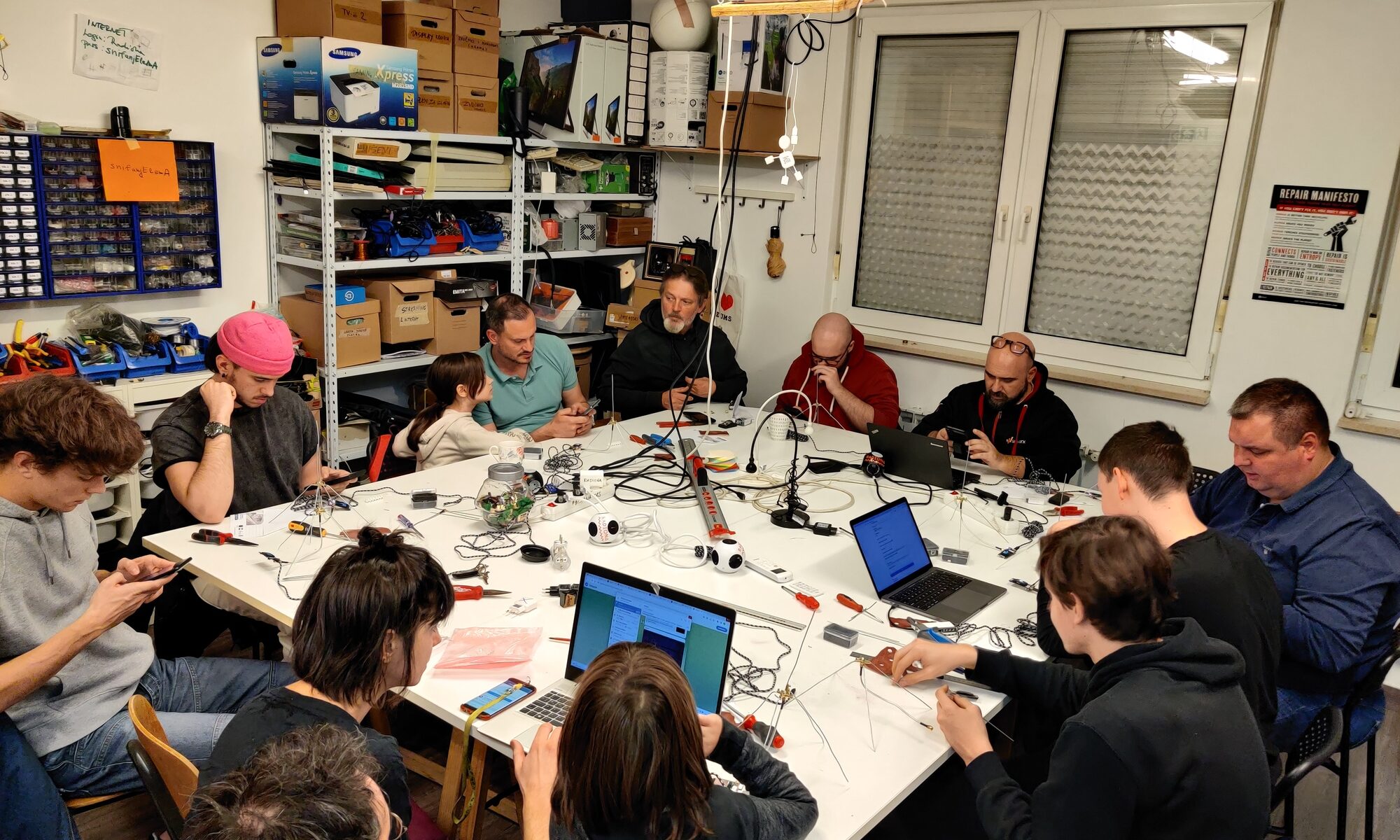
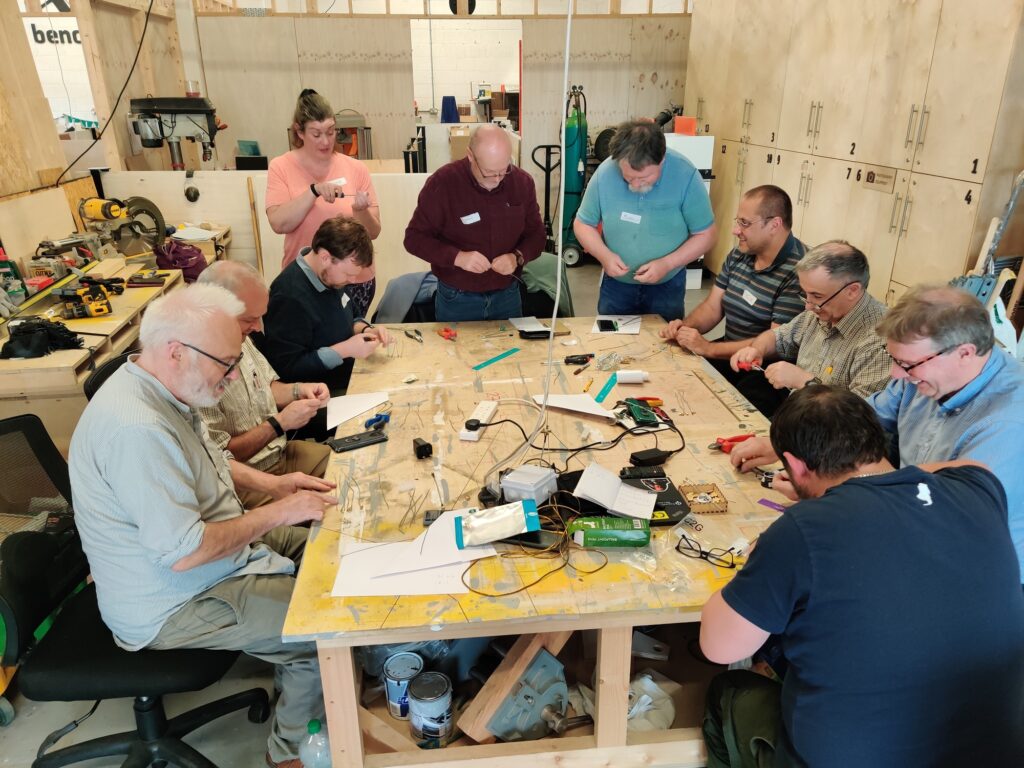
This hands-on workshop will cover building, programming and setting up your own TinyGS station.

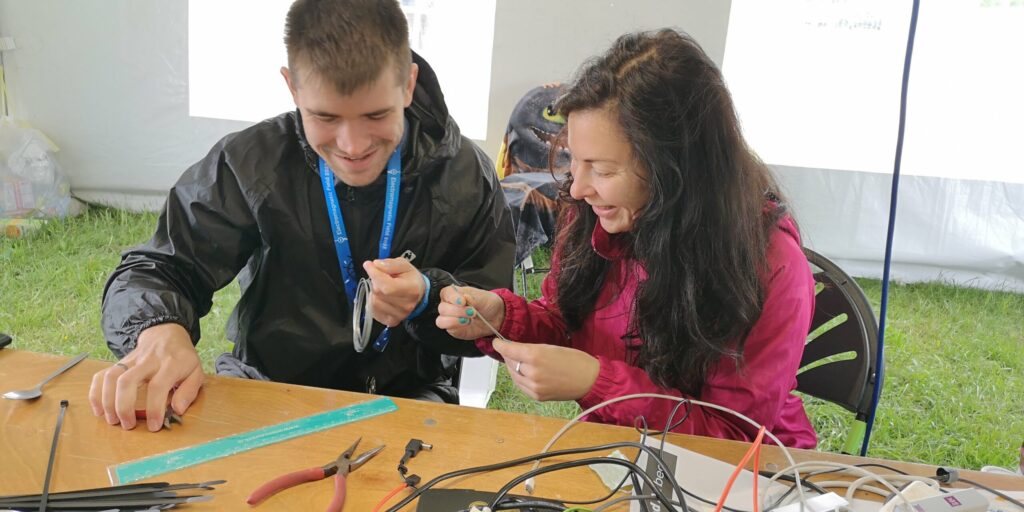
Participants will build their very own quarter-wave ground plane antenna, and base station to take home. All they have to do is plug the box into a USB charger.

This workshop is perfect if you want to get started building your first antenna and get started in the world of radio.

No amateur radio license is required to operate the station, only if you wish to send data to space.

TinyGS workshop at EMFcamp

Event Date: Saturday 17th September 16:00 – 18:00

Event Cost: €65 plus Eventbrite fees

Max Eight Participants

Booking Link: https://www.eventbrite.ie/e/building-a-tinygs-station-tickets-410608209207

Participants are required to bring a WiFi device like a phone or laptop to configure and a Telegram account.

This workshop is facilitated by our own Jeffrey Roe and with help from Gary.

You can read more about the building a TinyGS project on our blog https://www.tog.ie/2022/02/building-a-tinygs-station/

All visitors are welcome to stay at the event of the workshop for Tog’s Open social night https://www.meetup.com/tog-dublin-hackerspace/events/286494552/

A journey of repair – Dynatron SRX 26

Let’s go on a journey of repair with Jeffrey. We have a Dynatron radio model SRX 26. I think it’s from the 1970s. The radio came from Henry which has been in his family since it was new. Unfortunately it has been waiting on me to repair it since September 2020.

I started off by wiping all the dust I have let fall on it. It is a crazy heavy thing. The best way to start is to have a good look over the radio. The point is to find any problems with the cable and to check it is safe before ever plugging it in. It also seems to be missing its record player cartridge (the needle).

The radio lead and fuse are the next places to check. It is using an older style of plug that should be replaced at some point. The fuse and lead are fine. Now for a power-on test. the unit is not showing any signs of life.

Now to take it apart and show everyone’s favourite part the insides. There looks to be other historical repairs carried out. If you look at the above image on the left-hand side.

An internal mains fuse looks very “crusty”. After taking it out it’s clearly blown. There are also two more fuses that are blown. The type of fuse is nicely labelled on the radio but I had none in stock. A short walk down to RS and picked up a bag of replacement fuses.

It came alive! Well it turns on anyway. The next step to try and find some suitable audio leads to test the sound. I only had a headphone adaptor but soon was getting sound from the radio but with a lot of hisses.

To overcome the hiss, I attacked all the knobs with some switch cleaner. You take off all the knobs and spray in the fluid. Give the knobs a good turn, backwards and forwards to work in the cleaner.

The last job was to mount the speaker port that was loose in the cabinet. Unfortunately without that type of lead, I could not test it. 

Check out the radio in action in the video above. The radio seems to work fine with headphones. The turntable needs a cartridge but that is a job for the radio owner. If you would like to see more photos of the repair check out our gallery.

Building a TinyGS Station

Space is fun. Receiving data from space is even better. Below is a project built by our own Jeffrey Roe.

TinyGS is an open network of Ground Stations distributed around the world to receive and operate LoRa satellites, weather probes and other flying objects, using cheap and versatile modules.

The first step of the project is to load the software onto the TTGO LoRa32 V2. The TinyGS project provides a cross-platform flashing tool. It is then a very simple program to flash the firmware onto the microcontroller. The project then makes use of a Telegram bot to set up your station, issues you a username/password. If you wish to enable data transmission to the satellite you must have an amateur radio licence.

The main motivation for this project was to try out building my own antenna. A quarter-wave ground plane antenna is a great first project for people interested in radio. It requires only a small amount of tools. A youtube video from Andreas Spiess pushed me to think this was possible.

The first step of the antenna is to know the length of the radials(the bits on the side) and the monopole(the bit coming out the top). If you go along to this website, it has a handy calculator. We are trying to build a 433 Mhz for our purpose. I started out cutting up lengths of wire that I think is used for fencing. Sanding the ends of the wires to ensure an electrical connection.

Using the insides of terminal blocks, I connected the radials to an SMA Female Chassis Panel Mount. It made the build much easier. But the holes on the panel mount are just a little too small for the screws from the terminal blocks. I drilled them out a little to make enough room.

My brother helped to make a wooden plate and a little stand for the project. This allowed our outdoor testing as seen above. The next step was to bring the project outside and see would we receive any data. I was a bit unsure how the project would work out, so I had bought two units and one commercial antenna. The plan was to set them up in the back garden to test if my first antenna was up for the challenge of receiving data from a satellite in space.

The above photo shows both units in action. The unit on the right is our homemade antenna. They are on top of my washing line, held on with clamps in my back garden. It is in an urban back garden surrounded by houses. I had to wait around an hour for the first pass of a satellite.

The above is a side by side of the data received from both ground stations. The one on the left has the commercial antenna and the one on the right is my shiny new homemade antenna. I was very proud to see it working and even picked up an extra packet in the process. The data came from a CubeSat called Norby. You can read this paper about its build.

As darkness fell, so did the experiment end. Both units have now come into the house. I am still running my homemade unit on a windowsill until I get a chance to build an enclosure for it. Another task is to test out the antenna performance with a NanoVNA tool a member has loaned me. For more project photos check out our gallery. You can view the data the station is receiving online in real-time. https://tinygs.com/station/EI7IRB_2@747769602

If you are interested in taking up Amateur Radio as a hobby come along to this webinar. Amateur Radio – A Life Long Technical Hobby. A special Engineers Week event hosted by the Electronic and Computing division in Engineers Ireland and South Dublin Radio Club. It will feature me and Adrian Connor. Join us on March 10th.

Athlone Community College Calling ISS, Over

Athlone Community College has a once in a lifetime opportunity to make contact through amateur radio with the International Space Station (ISS) on 7th December 2020 at 2:50 pm.
Students from ACC will have about 11 minutes to put Athlone on the astronomical map as they make contact direct with the ISS while it orbits our planet at a speed of 27,600km/hr. This once-in-a-lifetime opportunity is part of the Amateur Radio on the International Space Station programme (ARISS), which will see students from Athlone Community College speaking with U.S. Astronaut Shannon Walker onboard the ISS.

The event will be live-streamed on YouTube starting around 1:30 pm on Monday, December 7th. Watch for the live stream at: https://youtu.be/viVQBI4WzKs Contact with space station is about 2:50pm-3:00pm

Working with the students and staff of Athlone Community College will be Daniel Cussen our member the ARISS Radio Technical Co-ordinator. He will build, test and oversee the operation of the temporary “mission control” radio station EI1ISS. Daniel commented “I am thrilled that ACC has been chosen for this event. I am extremely passionate about amateur radio and technology and I am so excited to share my passion with these students and to inspire them to follow in my footsteps”

Find our more at https://www.ariss.org/upcoming-contacts.html

Italian Astronaut to launch into space this week, then talk to Irish students from the space station

TOG members have been busy helping to organise a school contact using Amateur Radio between two schools and the International Space Station as it passes over Ireland.

The event is organised as part of ARISS, which is a working group that helps schedule live link ups using Amateur Radio Equipment on board the ISS.

While demand is high, and the waiting list long, TOG has been working for more than three years to get a date.
We have a possible date now of October 2017, and we are working on getting the radio equipment ready to bring to the schools so we can make the link up happen.

These events use radio to allow a live link up between six and twelve minutes long as the orbiting space station passes over Ireland.
The ISS is in low earth orbit which means its relative position over the ground constantly changes and it orbits the earth every 94 minutes.
It travels at 27,600 kilometres per hour about 400km above the ground in a micro gravity environment.

The ARISS group organises live link ups squeezed in between the astronauts very busy schedules, between scientific experiments.
The events give the students the opportunity to ask questions to Astronauts currently on board the ISS, and enable the astronauts to take a few minutes from the daily tasks of completing check lists, and running experiments.

We expect the Astronaut that will be available to speak to the students in October 2017 will be Paulo Nespoli.
This Italian born astronaut has been to space twice before. He is due to launch again for Space on July 28th 2017 and all going well, will be scheduled to speak with Irish students in October.

We will have more information closer to the event, but if you want to watch Paulo launch in his rocket follow this link:
https://www.nasa.gov/multimedia/nasatv/#public
Coverage starts 15:45 Irish Time/14:45GMT/10:45 Eastern Time on July 28th 2017
Launch Scheduled 16:41 Irish Time/15:41GMT/11:41 Eastern Time on July 28th 2017
ISS Expedition 52-53/Soyuz MS-05 Launch Coverage includes video B-roll of the crew’s launch day pre-launch activities at 11 a.m. ET;

You make like to view the inside of the space station as available on street view.

https://www.google.com/streetview/#international-space-station/

The Amateur Radio equipment is located in the Columbus Module, while there is more equipment in the service module.

This event is in conjunction with ARISS, European Space Agency, South Dublin Radio Club, Cork Radio Club and many other volunteers and partners included below


http://www.ariss-eu.org/

http://www.irts.ie
http://www.southdublinradioclub.ie
http://www.geocities.ws/ei5crc/menu.htm

http://cork.etb.ie/
http://www.sfi.ie/
http://esero.ie/
https://www.bco.ie/
http://nationalspacecentre.eu/
https://en.wikipedia.org/wiki/Paolo_Nespoli
https://en.wikipedia.org/wiki/Soyuz_MS-05

http://www.esa.int/ESA

https://spaceflight.nasa.gov/home/index.html

https://en.wikipedia.org/wiki/International_Space_Station