BOTA, POTA, a Rally Stand, and a President

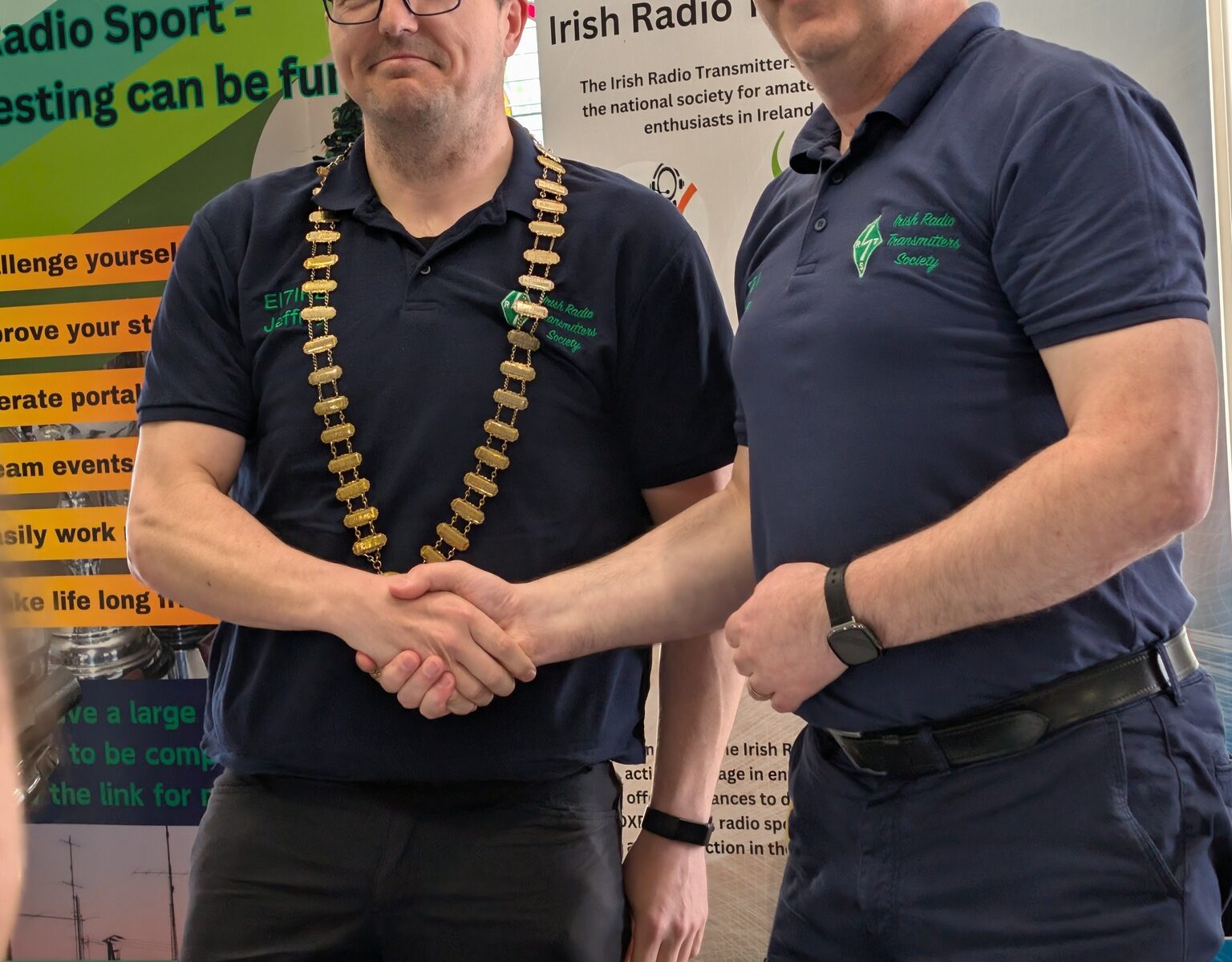
Big congratulations to our own Jeffrey Roe, EI7IRB, who was elected President of the Irish Radio Transmitters Society at the AGM in Shannon last weekend.

We are very proud to see one of our members taking on this role. TOG has long been a proud radio club and a member of the IRTS, so it was extra special to be there in person for the weekend and see it happen.

There was more good news for TOG too, with Daniel McDowell, EI8ICB, and Ana Cañizares, EI5IXB, also elected to the IRTS committee. It is brilliant to see TOG members helping shape the future of amateur radio in Ireland.

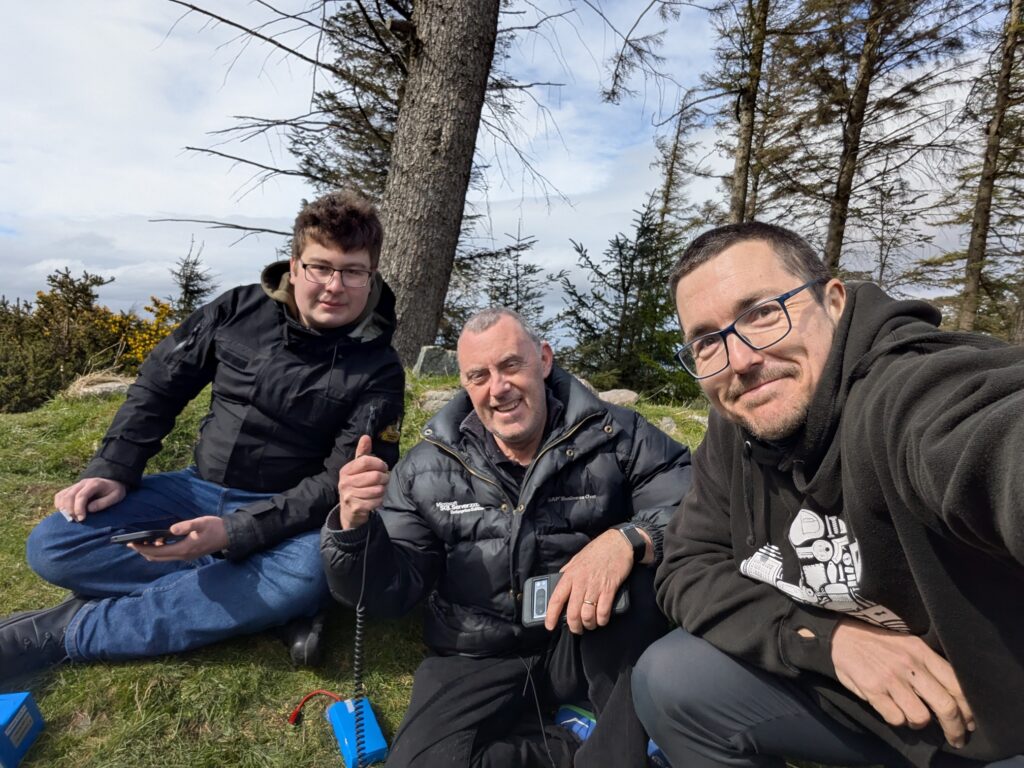
We had a great time at the AGM weekend in Shannon. As well as the AGM itself, there was loads going on across the weekend. We took part in Bunkers on the Air, chatted to lots of people from our stand at the rally, and had the chance to catch up with radio friends from around the country. On the way back from Shannon, our members even squeezed in a Parks on the Air activation, because one radio activity in a weekend is never enough.

Weekends like this are a nice reminder of what amateur radio is really about: communication, technical curiosity, meeting people, and having a bit of craic along the way. It was great to see so much activity, enthusiasm, and community spirit packed into one weekend.

You can check out more photos from the trip here:
IRTS AGM weekend gallery: https://www.tog.ie/gallery/nggallery/album/irish-radio-transmitters-society-93rd-agm-weekend
BOTA at Shannon Airport gallery: https://www.tog.ie/gallery/nggallery/album/bota-shannon-airport

Congratulations again to Jeffrey, Daniel, and Ana. We are looking forward to seeing what the year ahead brings for the IRTS and for amateur radio around Ireland.

TOG at HamCon Belgium 2026

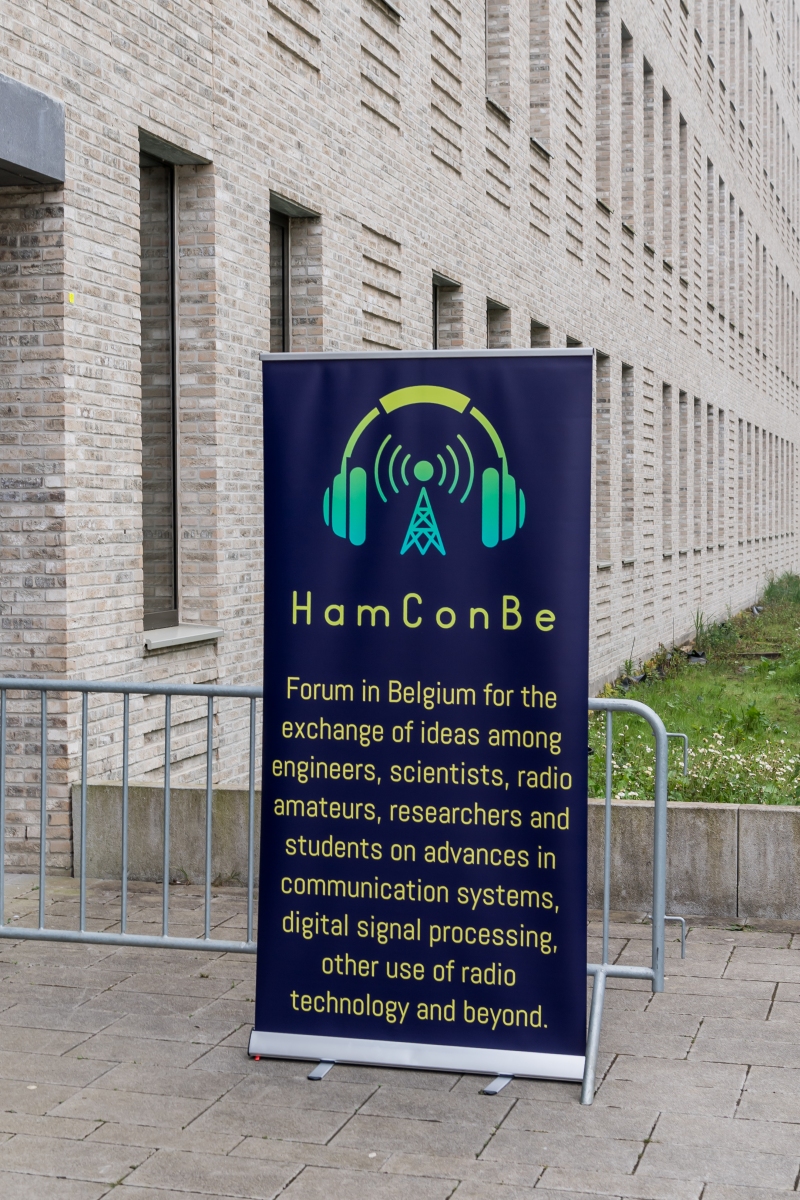
TOG is heading to Belgium next month for HamCon Belgium 2026, a day packed with talks, workshops, demos, and plenty of radio chat.

Our own Jeffrey Roe EI7IRB will be part of the programme with two sessions on the day. He’ll be running a Satellite Ground Station Workshop, showing people how to build and get started with a TinyGS setup, and later giving a DMR Workshop for anyone curious about digital radio and how to get on the air.

It looks like a great event, with talks and activities covering everything from TETRA and DAPNET to meteor science, antennas, PCB design, and more. If you’re into amateur radio, digital modes, satellites, or radio tech in general, there’s loads to dig into.

If you’re thinking of making the trip, have a look at the full programme and event details here: https://hamcon.be/

Toilets on the Air at 39C3 (TOTA)

You might have heard of Parks on the Air (POTA), Summits on the Air, or maybe even Bunkers on the Air. Radio amateurs love combining the hobby with an excuse to go and visit somewhere.

But what about Toilets on the Air?

Yes. Toilets.

Let me set the scene

Picture this: around 16,000 people in Hamburg, Germany, all packed into a massive conference centre for the 39th Chaos Communication Congress (39C3), a four-day hacker conference running 27–30 December 2025.

It’s the middle of winter. The venue is huge. There’s reinforced concrete everywhere. You can be walking for ages just trying to get from one hall to another… and if you have a handheld radio in your pocket, you’ll start wondering how well anything is going to get through all that building.

Which brings us to…

TOTA — Toilets on the Air

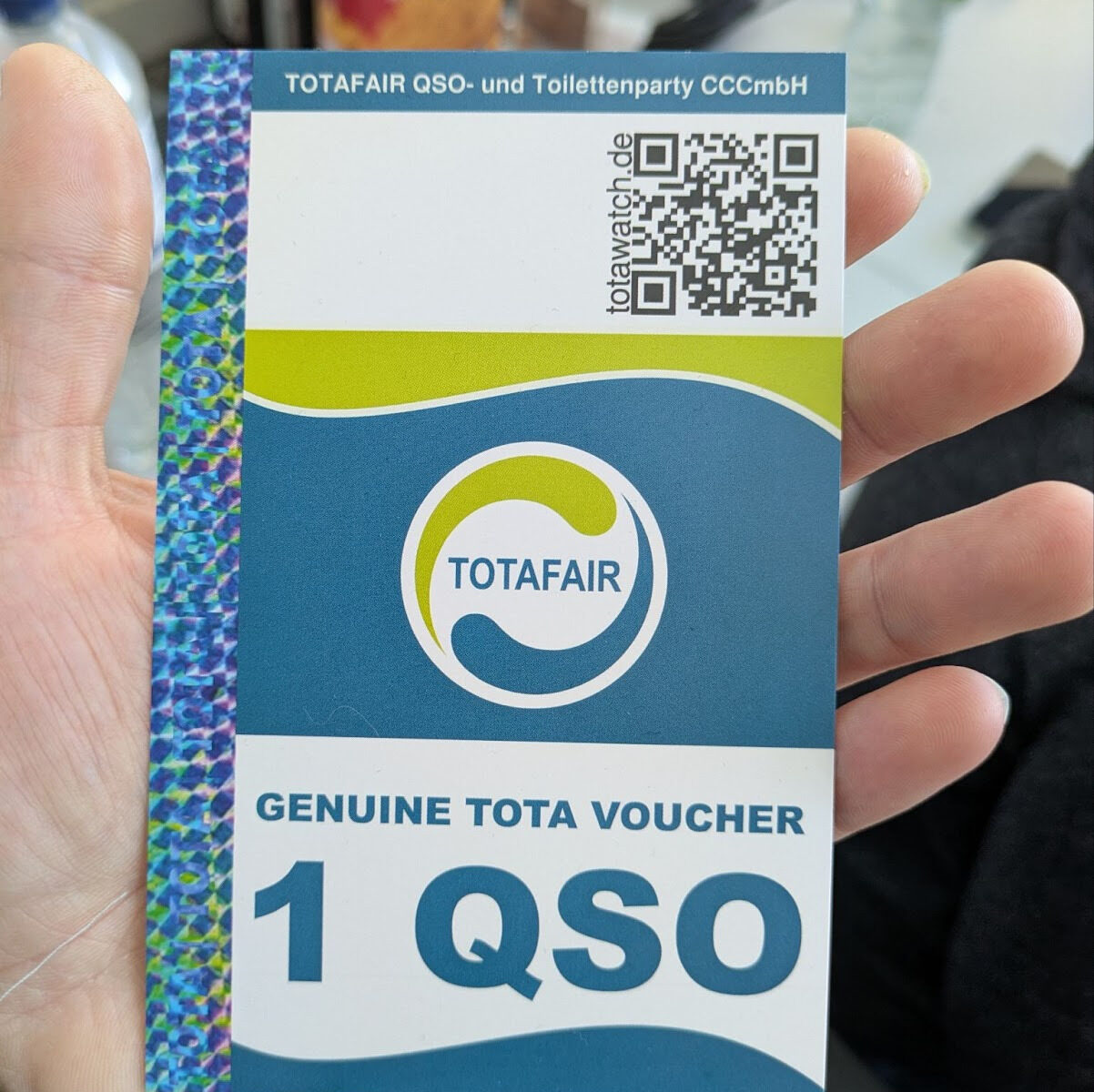
TOTA is a small (and slightly ridiculous) activity that’s been running at 39C3 for a few years now. The idea is simple: it’s a gentle “contest” / training exercise to help new radio amateurs (and anyone curious) learn basic operating. https://totawatch.de/

And don’t worry, you’re not asked to make contacts from inside the toilet itself. The rules are pretty clear: stand a few metres from the door, don’t block anyone, and always respect privacy.

It’s meant to be good fun, not weird.

Modes

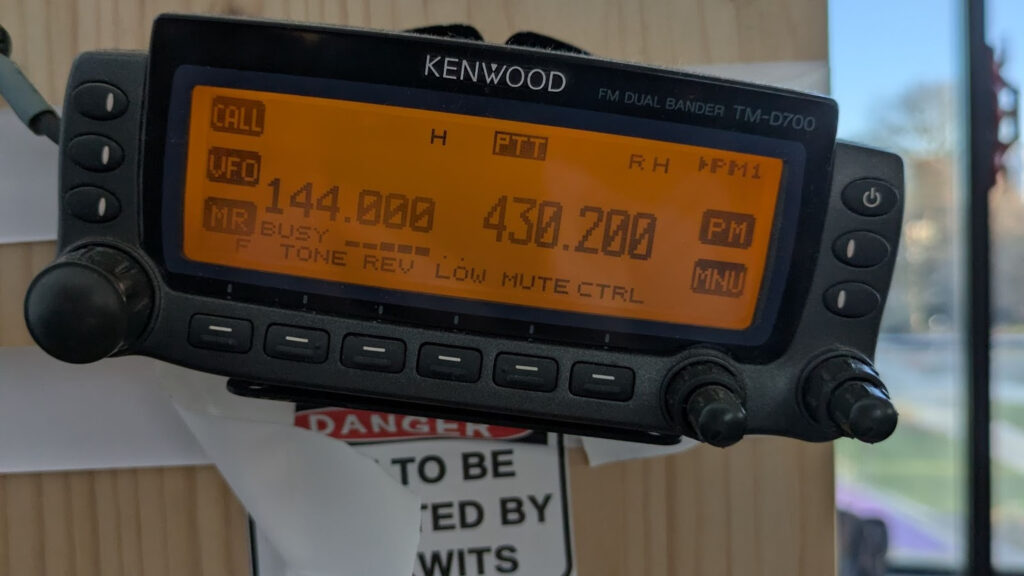
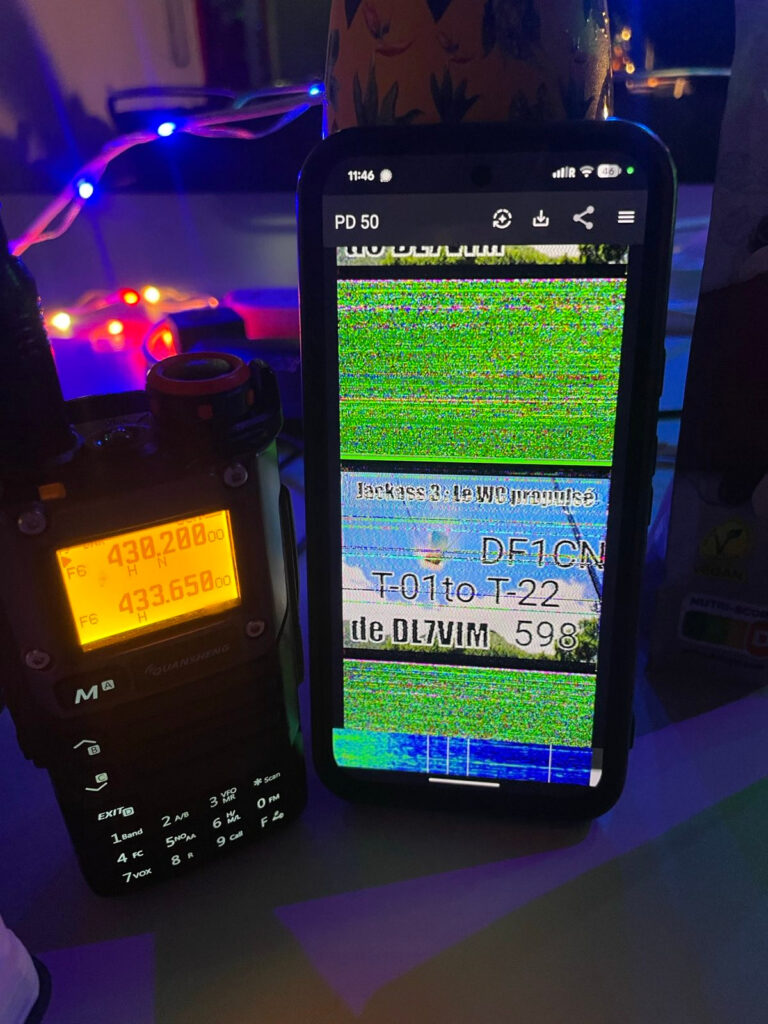
  • FM: 430.200 MHz
  • SSTV: 430.200 MHz
  • CW: 432.032 MHz
  • DMR: Brandmeister TG26223

Activators, Hunters, and T2T

Like the other “on the air” things, you’ve got:

  • Activator — the person at the reference (in this case, a toilet location) who calls CQ.
  • Hunter / Chaser — the person answering.

And then there’s Toilet-to-Toilet (T2T), when two activators manage to work on each other while both are at their own reference locations. Ridiculous, maybe.

My bit of TOTA (DL/EI7IRB)

I was busy giving three workshops during the first few days of the congress, so I only got in on the action on the last day.

I took on the role of a hunter, answering plenty of calls as I wandered around the conference with my Quansheng.

But only making voice contacts… where’s the fun in that?

Of course, there was SSTV.

So there I was, operating as DL/EI7IRB, with a handheld radio and a smartphone held up to the speaker, trying to decode images from the tones. It’s a very “CCC” way of doing it with minimal setup, lots of messing, and it somehow kind of works.

There’s a Mastodon bot collecting the SSTV images people received during the event. If you want to go down the rabbit hole and see loads of them, here’s the link:

https://social.darc.de/@tota

Closing Thoughts

I was nowhere near the top of the leaderboard, but I had a great time. TOTA isn’t really about big numbers or fancy stations. It’s about getting people comfortable on the air, having a laugh, and learning a few things without anyone taking it too seriously. Maybe you will see TOTA at the next conference you go to. 

For more photos from 38c3 check out our gallery https://www.tog.ie/gallery/nggallery/album/39c3

TOG heading to Shannon for the IRTS AGM Weekend

We’re packing up a few projects and heading west for the IRTS AGM Weekend in Shannon on Saturday 18th and Sunday 19th April.

This year’s 93rd AGM weekend is being hosted by the Limerick Clare Amateur Radio Club, and it looks like it will be a great weekend of radio, chats, workshops, technical talks, the rally, and of course, the AGM itself.

On Sunday, TOG Hackerspace will have a table at the rally where we’ll be showing off some projects from the hackerspace, chatting about what we get up to, and catching up with radio friends from around the country. If you’re around, please do drop over and say hello. We always enjoy talking radios, making, workshops, and the odd slightly mad project.

We’re also delighted to see TOG members Daniel McDowell EI8ICB and Ana Cañizares EI5IXB among the nominees for the IRTS committee in the upcoming AGM, with our own Jeffrey Roe EI7IRB standing for the role of President. TOG Hackerspace wishes them the very best, along with all of the other candidates putting themselves forward.

Because one radio outing in a weekend is never enough, a few of us will also be in Shannon on the Friday evening to try our first-ever Bunkers on the Air Ireland activation. The plan is to activate the Shannon Airport defence artillery sites B/EI-0151 and B/EI-0152.

EIBOTA is the Irish branch of WWBOTA, an amateur radio activity built around activating historic bunker sites, so it feels like a very fitting way to kick off the weekend. If you’d like to join us for the bunker activation on Friday, get in touch with us in advance. It would be great to have a few more people along for the fun.

It should be a lovely weekend all round, with a bit of portable operating, a bit of history, plenty of radio chat, and a chance to bring TOG on the road again. Fair play to the Limerick Clare Amateur Radio Club for hosting it, and we’re looking forward to seeing plenty of familiar faces in Shannon.

For the full weekend details, have a look at the official IRTS AGM page and the LCARC AGM weekend page.

POTA on Easter Monday from Ticknock

We’re heading out for another Parks on the Air activation on Easter Monday, 6 April.

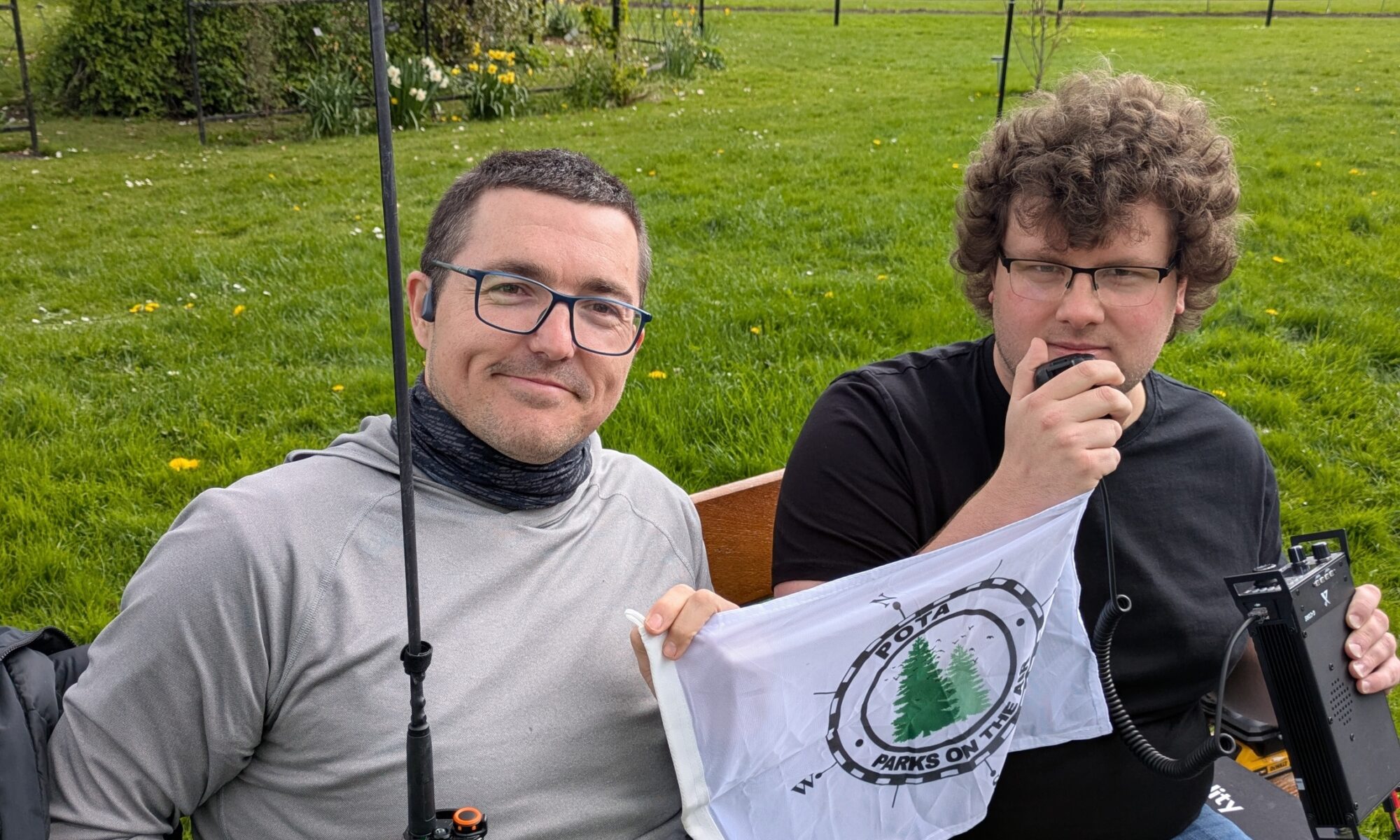
If you have not come across POTA before, it is all about bringing amateur radio into the great outdoors, setting up in a qualifying park, and making contacts from the field. We did a quieter test run on Bull Island recently and it went well, so this time we are opening it up to the wider TOG community and the public. You can see a few photos from the last outing here.

We will meet at 10:30 am at the Ticknock café and then head off to find a good place to set up and operate. The activation will take place from Ticknock Forest in the Dublin Mountains, and we expect to be on air for around two hours. You can read more about the area on the Dublin Mountains website.

You are very welcome to come along, help out, and even have a go on the radio using the club callsign EI0TOG. Jeffrey Roe, EI7IRB, will be leading the activation.

Jeffrey is planning to cycle out, but there is parking nearby too. And if radio is not really your thing, or you do not want to stay for the whole activation, Ticknock has plenty of walks so you can still join us for part of the outing.

After the POTA activation, there are also the IRTS 70cm Counties Contest and IRTS 2m Counties Contest running, so anyone who wants to keep the radio fun going is welcome to do that too.

As always, this one is weather-dependent. If the conditions are awful, we will give it a miss rather than spend another Monday getting soaked.

If you are thinking of coming along, please let us know. We hope to see some of you there in person or hear from you on the bands.

DMR: A Learning Journey

This article first appeared in Echo Ireland and was written by Jeffrey Roe.

The following is less of a how-to and more of a journey of me learning about DMR and getting started.

DMR, what is it?

Digital Mobile Radio (DMR) is a digital radio standard for voice and data transmission in non-public radio networks. It’s different from the analogue radios some of you might be more familiar with. It doesn’t transmit using FM in the traditional sense, but uses a digital signal.

DMR has a few tiers, and the technology originally targeted the commercial market (around 2012). It works a bit like a phone network, with every radio having its own ID, and it can even support sending SMS over the network.

With a few rule changes in 2014, the FCC paved the way for amateur radio use. The widespread availability of Raspberry Pi hotspots helped DMR use to explode, making it easy to bridge a handheld radio onto talkgroups across the internet. RadioID (RadioID.net) looks after the coordinated DMR identification numbers for hams.

The radio that started it all

Now, back to my story. During the summer of 2025, I was gifted a Tytera TYT MD-390 DMR handheld radio (new old stock). The fellow Tog member who gave it to me had plans to get into radio, but life got in the way.

I was interested in trying it out because it claimed IP67 waterproofing, which sounded perfect for cycling trips. At the time, I knew nothing about DMR, but that radio kicked off the journey.

A tip from Tog and a firmware rabbit hole

During one of the monthly social nights in Tog Hackerspace, I got chatting about this new-to-me radio. Daniel EI8ICB made some great suggestions. It turned out he had used the same model before. To convert it for amateur radio use and make things a little easier, he suggested I look at MD380 Tools: https://md380.org/

This firmware patch adds some very useful features, such as promiscuous mode, USB logging, and Morse code narration. The big plus, though, is the callsign database you can load onto the radio.

The downside? The firmware flashing can’t be done via the cable in the box. It requires a custom USB-to-accessory connector. Daniel, being well ahead of me on this one, already knew the pinout and sent me a wiring diagram.

Making The Cable

I had some leftover parts from an SSTV project, including some connectors from AliExpress. I thought this would be an easy evening job, but it wasn’t to be.

After tracing the wires with a multimeter, it turned out the connectors I had didn’t match the pins I needed. I didn’t want to wait weeks for replacements, so I went digging around Tog’s electronics room to see what we had on hand.

The male USB connector was an easy find, and so was the 3.5 mm jack, but I had to dig deep in the “jack pile” to find a 2.5 mm jack. In the end, I cut up what looked like a custom cable from an old digital camera. A little soldering and heat-shrink later, I had a working cable.

MD380 Tools in practice

It’s possible to install and compile all the tools required to build the firmware patch, but the project also provides a VM image. Think of a VM as a program that runs a whole operating system inside your laptop. In this case, a Linux environment with everything pre-installed and ready to go.

With VirtualBox installed on my Ubuntu laptop, flashing the radio was straightforward. More importantly, it proved my soldering worked, and I now had a much more ham-friendly handheld.

Hotspots: Getting on the network

DMR radios work best when they can reach other DMR radios. You can do this via a DMR repeater. You can see what’s around Ireland on the IRTS gateway page: https://www.irts.ie/cgi/gateway.cgi

But none were near me. The next best thing is an MMDVM hotspot. You can think of these as a bridge from RF to the internet, and back again.

A fellow Tog member( Conor EI9JYB) was also interested in DMR, so we turned to AliExpress and ordered a couple of hotspots. I picked one intended to pair with a Raspberry Pi Zero, an inexpensive single-board computer I already had a few of.

In the meantime, thanks to the power of Mastodon, someone offered me another TYT radio after seeing me talking about soldering my own cable. Brilliant. That gave both of us a reason to get stuck into DMR together.

The kits arrived and needed a bit of soldering, so off I went to visit Kilcock on the bike for a day of cycling, soldering, and radios.

A little tangent here: we even called into the Sunday 2 m news using a heavy 10 W handheld. I had to climb up on a wall to be heard, but it was a fun way to start the day.

Hotspot Software

The default software for many MMDVM hotspots is Pi-Star:  https://www.pistar.uk/

I loaded it onto the Raspberry Pi Zero, but the problems started quickly. I found the whole thing very slow and not particularly straightforward to use.

After a few YouTube videos, the internet suggested I try a newer project that’s actively developed: WPSD: https://w0chp.radio/wpsd/

WPSD promised easier setup and more features, but it didn’t support my very old Pi Zero. It needed more RAM and processing power. It did support the Raspberry Pi 3, and I had a few of those lying around from a donation to Tog.

Installation was much smoother, and the interface made more sense. It also guided you through registering on RadioID and BrandMeister.

With everything set up, my Raspberry Pi cases wouldn’t fit because of the SMA connector, but Dremel made light work of that problem.

Radio programming

Now, the journey wasn’t over yet. I still had to configure the handheld with contacts and talkgroups.

The usual programming option for my analogue handheld, CHIRP, was out of the question because it doesn’t support DMR radios. I turned to qDMR for Linux: https://dm3mat.de/software/qdmr

Next question: who to call for a first test? I asked in the Online Amateur Radio Club Discord (https://www.oarc.uk/) if anyone would take a call. Thanks to Robin M0JQQ for answering my request.

With their DMR ID in hand, I used qDMR to configure the radio and was ready for my first QSO on DMR.

It worked \o/

Wrapping up

Thanks for reading my story if you got this far. I’m hoping to explore more of what DMR has to offer over the coming months, and you might even see a follow-up article.

In the meantime, you can find my radio and cycling adventures on Mastodon:
https://chaos.social/@tdr112

For more photos of the build, check out our gallery. https://www.tog.ie/gallery/nggallery/album/dmr-radio-project