Sharing TOG’s Citizen Science Story

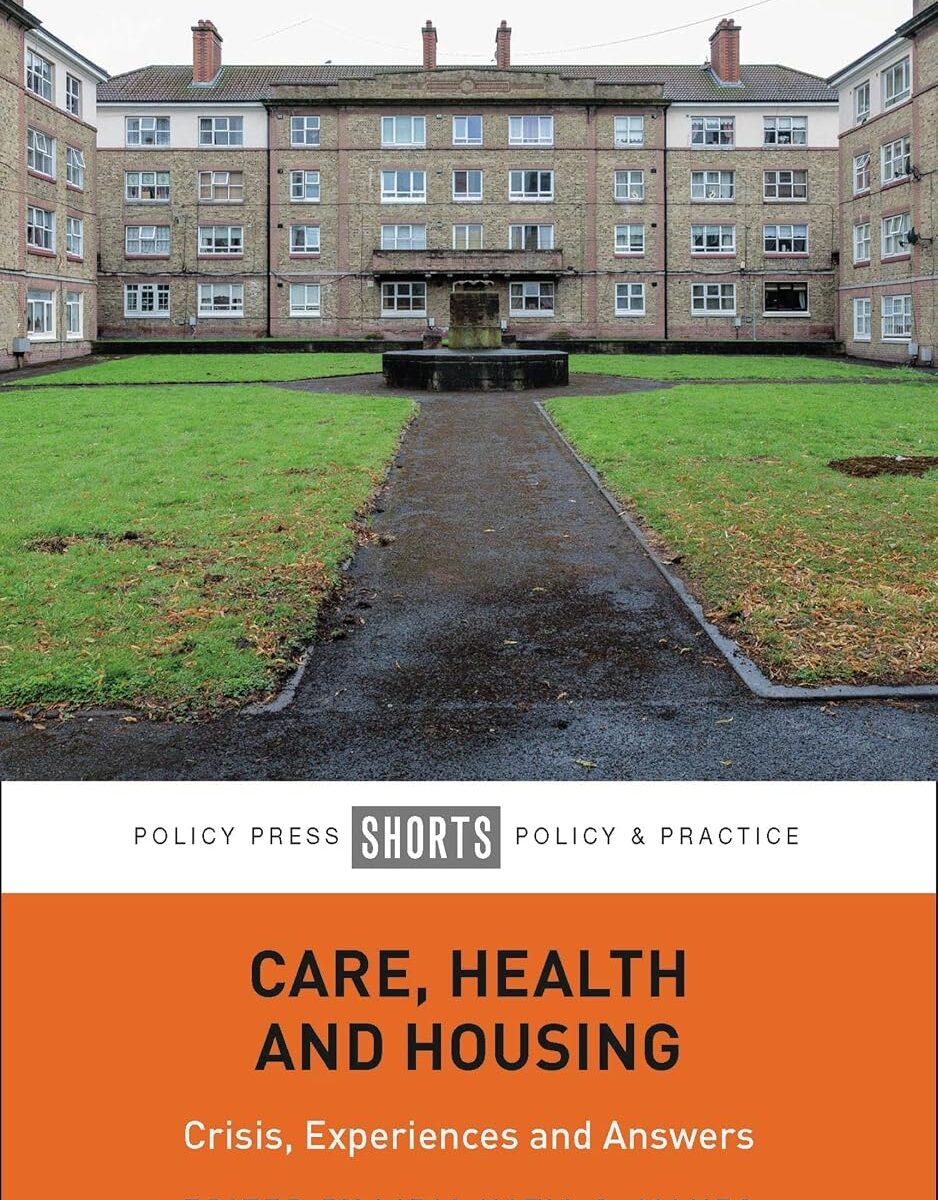
We’re delighted to congratulate TOG member Jeffrey Roe, who has co-authored a chapter with Jack R. Lehane in Care, Health and Housing: Crisis, Experiences and Answers.

Edited by Lidia Katia C. Manzo and published by Policy Press on 28 September 2026, the book explores the connections between housing conditions, health and care. TOG’s citizen science workshops are part of that story.

Jeffrey and Jack’s contribution is Chapter 8, “Grassroots citizen science and indoor air quality networks: tools for understanding inadequate social housing conditions.” It looks at how affordable sensors and community involvement can help people understand conditions in their homes and gather evidence to support calls for improvements.

For Jeffrey, it all started with a citizen science workshop. Sharing the practical work we were doing led to conversations about housing and health, an invitation to contribute, and eventually this collaboration.

If you have taken part in one of our air quality workshops, some of the chapter will feel familiar. It describes people coming together to assemble their own sensors, learn how they work and share environmental data. There are also photographs from TOG workshops, showing participants building enclosures and putting their devices together.

Over the years, we have brought these activities to different communities, including our work with the Abbeyleix Climate Action Project and our Build Your Own Air Quality Sensor workshop for Science Week. Participants learn practical electronics skills while contributing to a shared understanding of the air around them.

The chapter connects that hands-on learning with a wider question: how can communities use the knowledge and tools they build together to improve the places where they live?

It’s lovely to see work that starts around our workshop tables become part of a book. Congratulations to Jeffrey and Jack, thank you to Lidia for bringing the publication together, and thanks to all the volunteers and participants who make these workshops possible.

The whole book is open access, so you can read it online for free. You’ll find Jeffrey and Jack’s chapter on pages 147–164. A paperback edition is also available.
TOG Repair Café at BuzzFest in Phibsboro

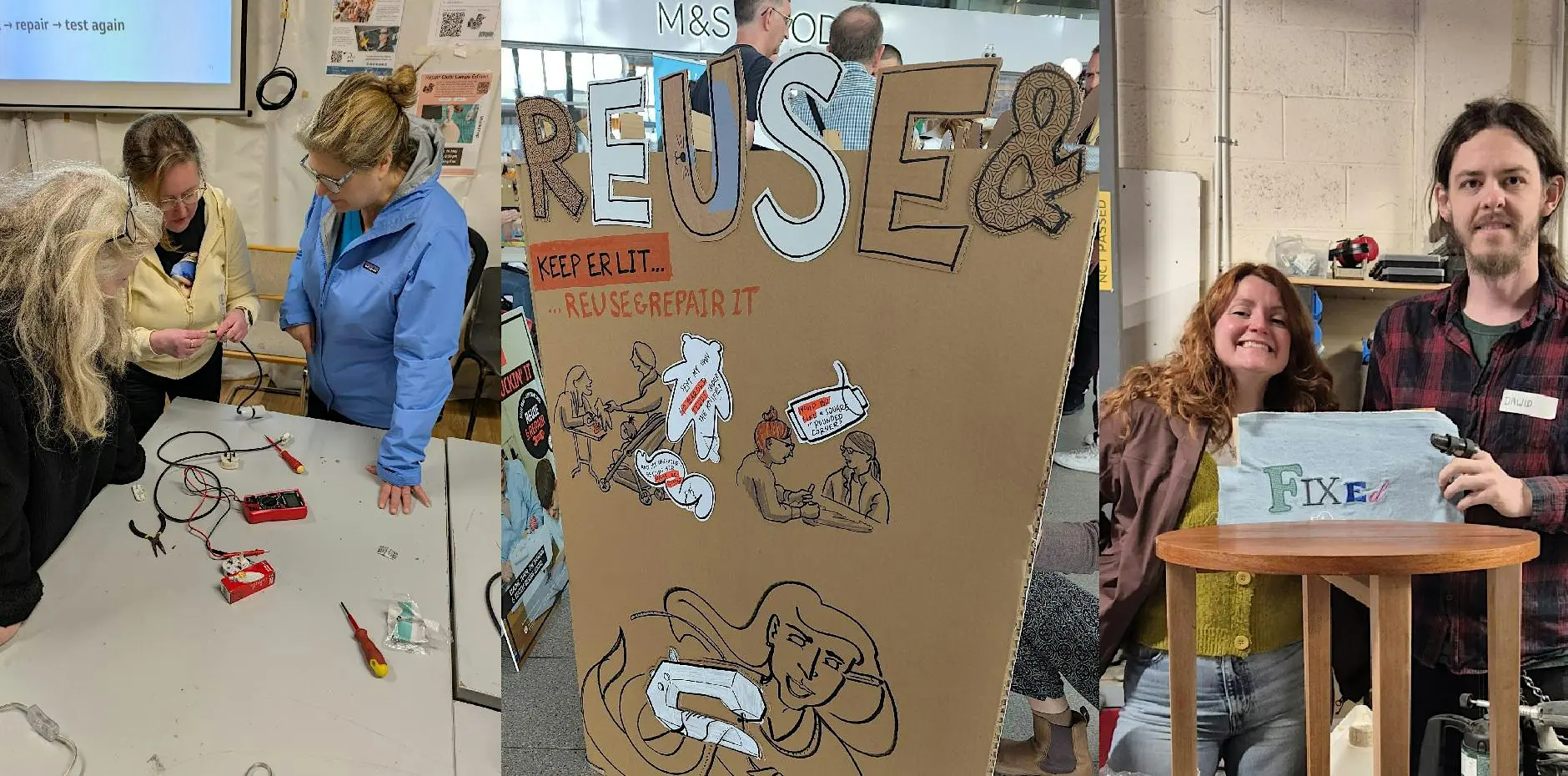
We’re taking the TOG repair tools to Phibsboro this Saturday, 3 October, for BuzzFest.

BuzzFest is Phibsboro Village Tidy Towns’ community, sustainability and biodiversity festival. We’ll be running a Repair Café where you can bring along a small broken item and sit down with a volunteer to see what can be done. Small electrical appliances, electronics, toys, jewellery and clothing are among the things the Repair Café can look at.

The idea is to work on the item together. We can’t promise every repair will succeed, but we’ll give it a good look and help you understand what might be wrong.

The festival is free to visit, with stalls, talks, workshops, music and food throughout the afternoon. Please book a Repair Café slot in advance, as space at the repair tables is limited.

Event details

  • When: Saturday 3 October 2026, 12:30 pm to 4 pm
  • Where: Panama Scout Hall, Royal Canal Bank, Phibsborough, behind Phibsboro Library
  • Cost: Free

Book your Repair Café slot here, or find out more about BuzzFest.

Thanks to Phibsboro Village Tidy Towns for inviting us. We look forward to seeing what turns up on the repair tables.

TOG at the Kildare Amateur Radio Buy & Sell Extravaganza

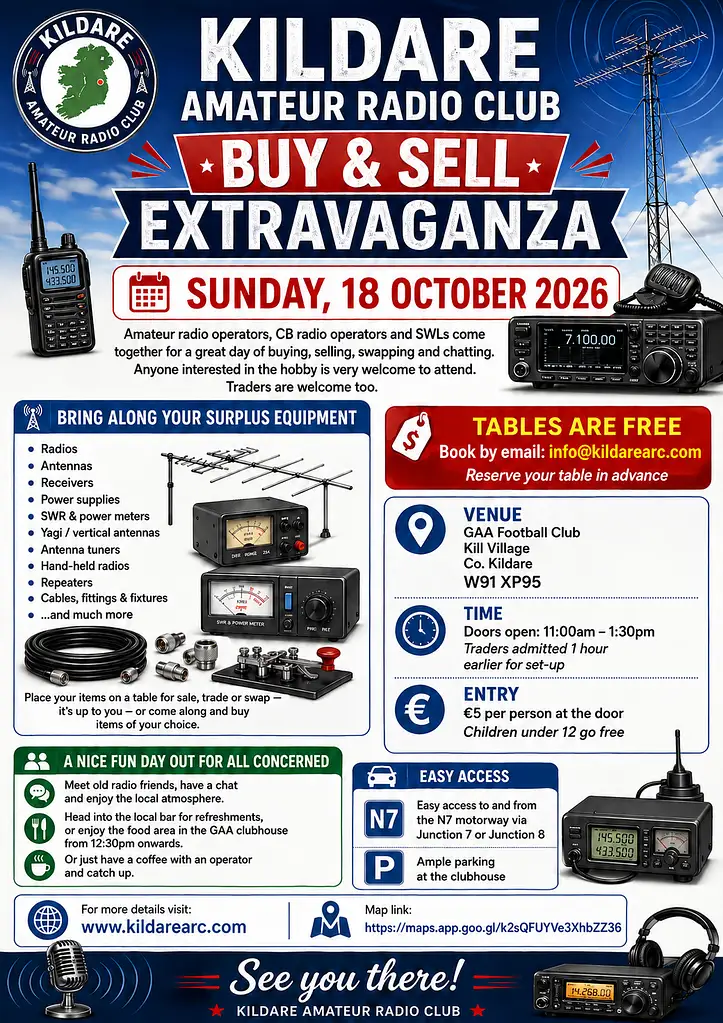
The TOG radio crew will be heading to County Kildare on Sunday, 18 October, for the Kildare Amateur Radio Club Buy & Sell Extravaganza.

We will have a TOG and EI0TOG table at the event, so come over and say hello. We will be happy to chat about the hackerspace, our radio shack, our amateur radio activities and the projects our members have been working on.

The event brings together amateur radio operators, CB operators, shortwave listeners, clubs and traders from across the island of Ireland. It is an opportunity to buy, sell or swap surplus radio equipment—or simply meet old friends and talk radio.

There should be a wide range of equipment available, including radios, antennas, receivers, power supplies, SWR and power meters, antenna tuners, handheld radios, repeaters, cables, fittings and plenty more.

Event details

Date: Sunday, 18 October 2026
Time: 11am to 1:30pm
Venue: Kill GAA Football Club, Kill Village, Co. Kildare
Eircode: W91 XP95
Admission: €5 per person; children under 12 go free

There is ample parking at the clubhouse, with easy access from the N7 and M7.

The clubhouse bar will open at 12 noon for refreshments, with lunches available from 12:30pm onwards.

Anyone who has surplus equipment to sell can book a table free of charge by emailing info@kildarearc.com. Traders will be admitted from 10am to allow time to set up.

Further details are available from the Kildare Amateur Radio Club:

We are looking forward to meeting everyone on the day. We will also try not to return to TOG with more radio equipment than we brought—but no promises.

The Autumn Reset: Repair Café in Clondalkin

We are taking the TOG repair tools on the road again.

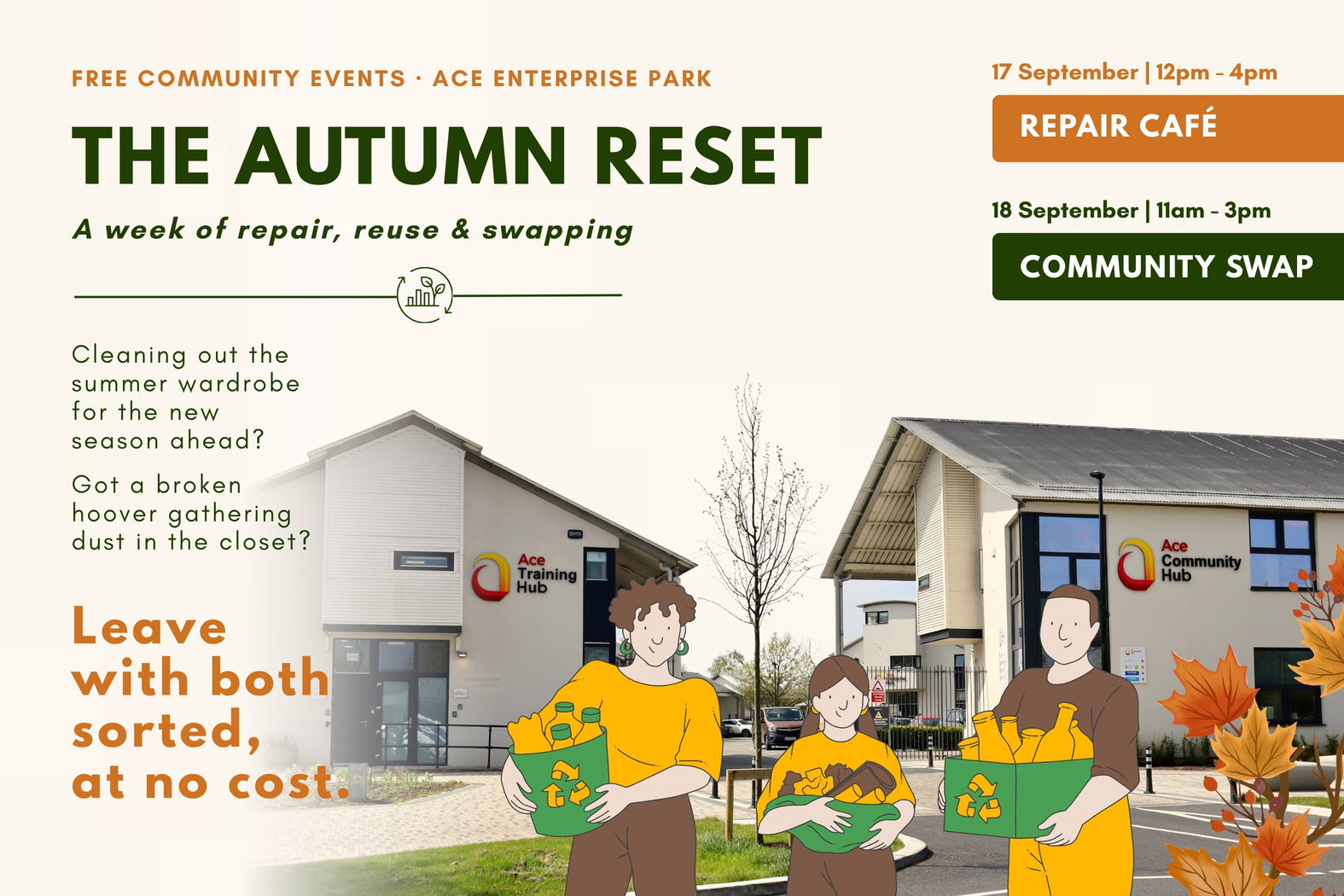
On Thursday 17 September, TOG volunteers will be at Ace Enterprise Park in Bawnogue for a free Repair Café. The event is part of The Autumn Reset, Ace Enterprise Park’s Circular Economy Week.

Do you have a broken household item sitting at home? Bring it along and see if we can help give it another chance.

At a Repair Café, the idea is not simply to hand something over to be fixed. You sit down with a volunteer repairer, open it up together and try to work out what has gone wrong. We cannot promise that everything can be repaired, but we will give it a good look and hopefully share some useful skills along the way.

Repair Cafés help keep useful items in service for longer, reduce waste and make repair a little less mysterious.

Event details

  • Date: Thursday 17 September 2026
  • Time: 12:00 to 16:00
  • Location: Ace Enterprise Park, Bawnogue, Dublin 22
  • Eircode: D22 P6E8
  • Cost: Free
  • Free parking is available on site.

Full details and free registration are available on Eventbrite.

The Autumn Reset continues on Friday 18 September with a Community Clothing Swap.

Thanks to Ace Enterprise Park for inviting us. We look forward to seeing what turns up on the repair tables.

Repair, Radio and a Bicycle: Clonmel to Waterford

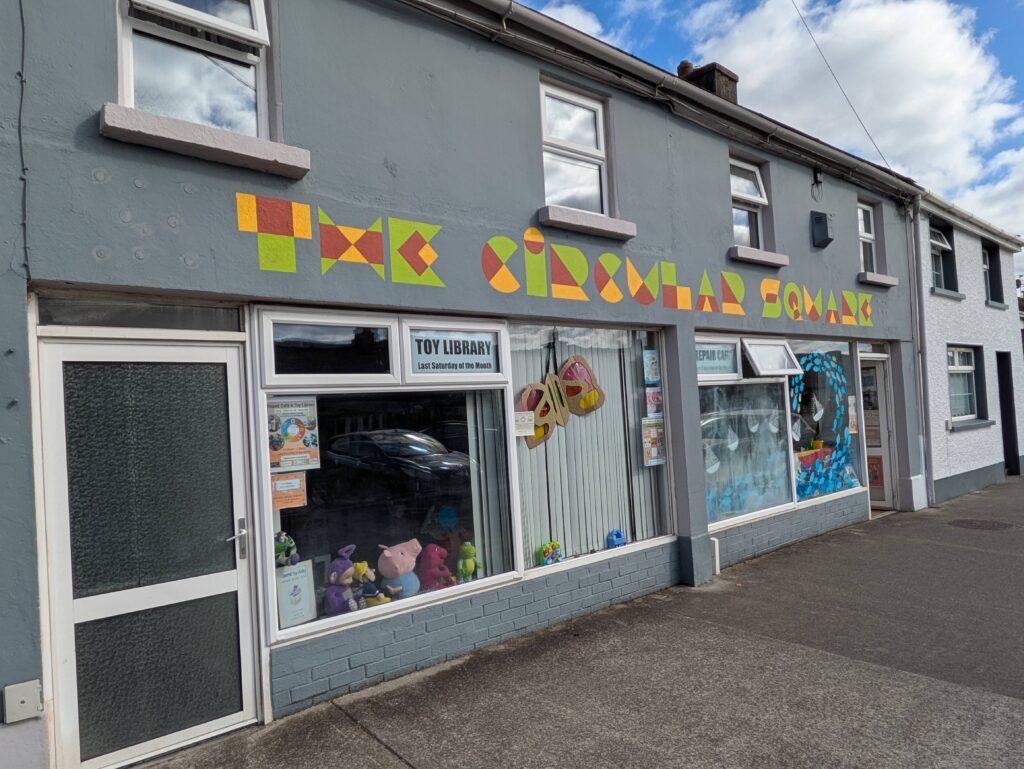
Read all about our member Jeffrey‘s trip to The Circular Square.

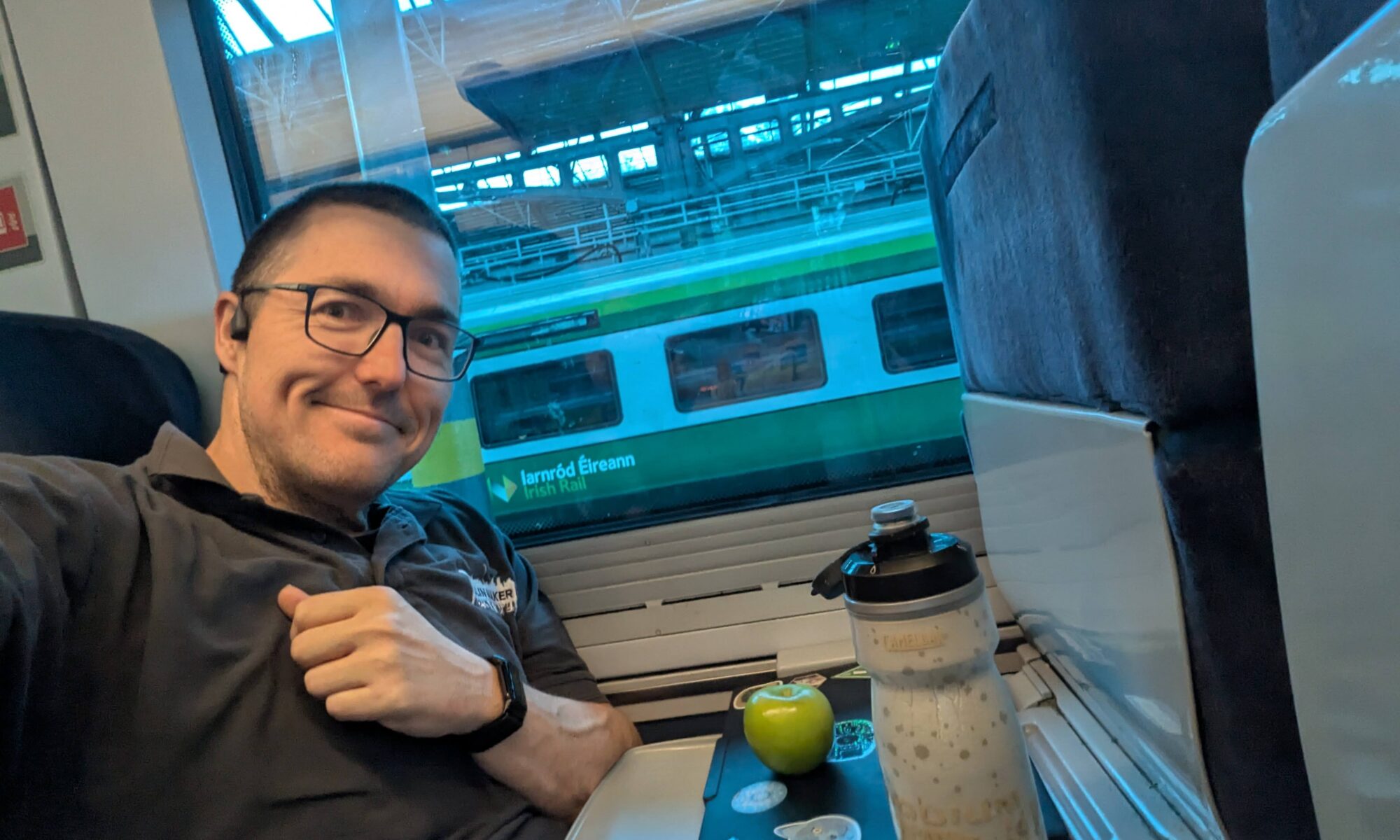
On Saturday 5 September I put my bicycle on an Irish Rail train in Dublin and headed south to Clonmel. With the bike safely in its rack and the panniers packed, it was a pleasantly straightforward start to a three-day trip running through to Monday 7 September.

The main reason for travelling was a weekend of repair and Linux workshops at The Circular Square. Around that, I had plans for some cycling, portable amateur radio and a little monument photography. It sounds like several different weekends packed into one, but they fitted together rather well.

Continue reading “Repair, Radio and a Bicycle: Clonmel to Waterford”

Bringing an Old Test Receiver Back to Life

It was Tuesday Open Night at TOG, and once again there was an interesting bit of equipment sitting on the electronics bench.

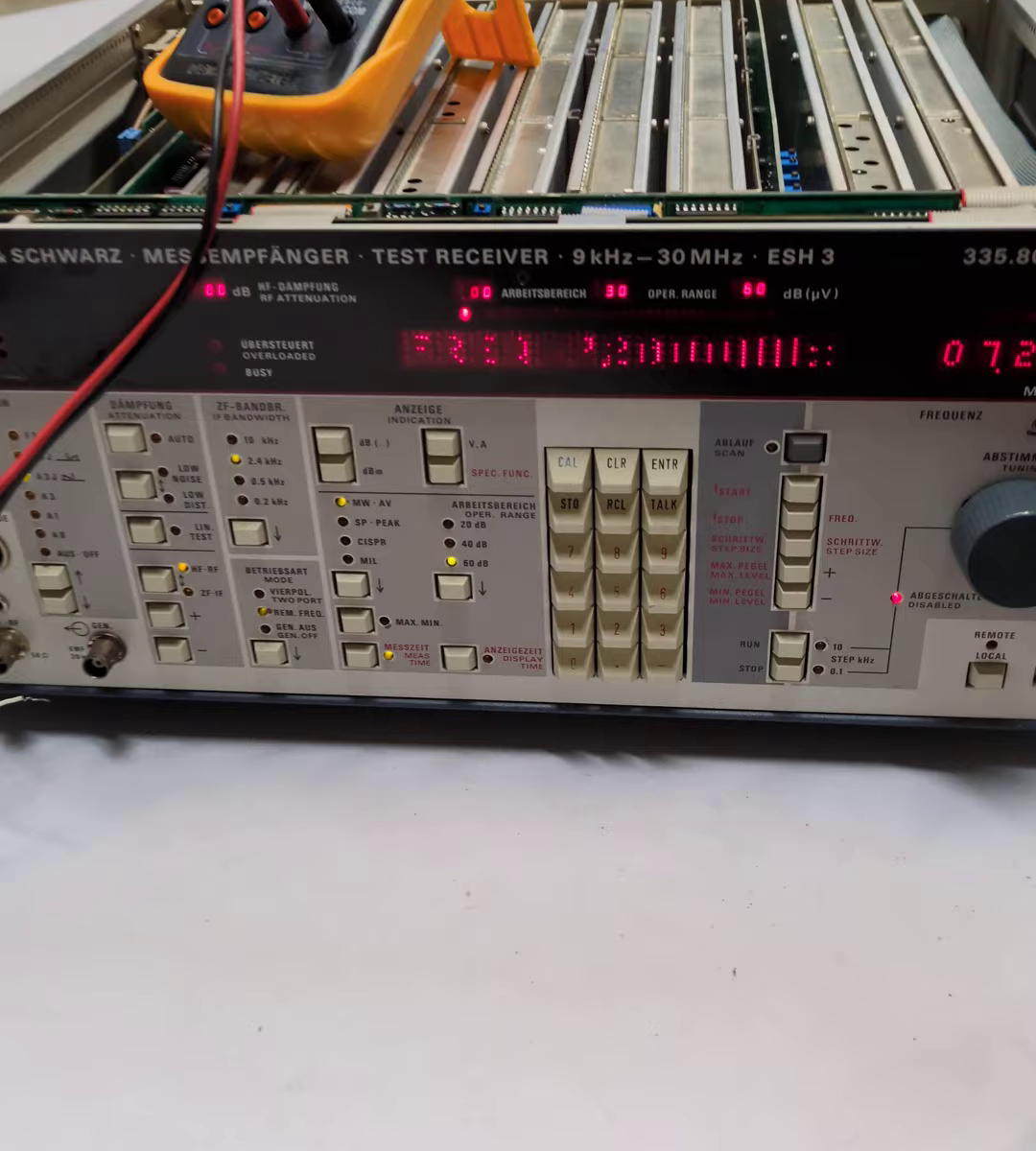
This time it was a Rohde & Schwarz ESH 3 test receiver, part of a recent donation from Testwall. It covers frequencies from 9 kHz to 30 MHz and was designed as a serious piece of test equipment rather than an ordinary radio receiver.

As you may know, TOG also has an amateur radio club, with the callsign EI0TOG. A radio receiver like this is complete overkill for simply listening to amateur radio, which naturally meant that it caught our attention.

We did what any group of makers would do: we took it apart.

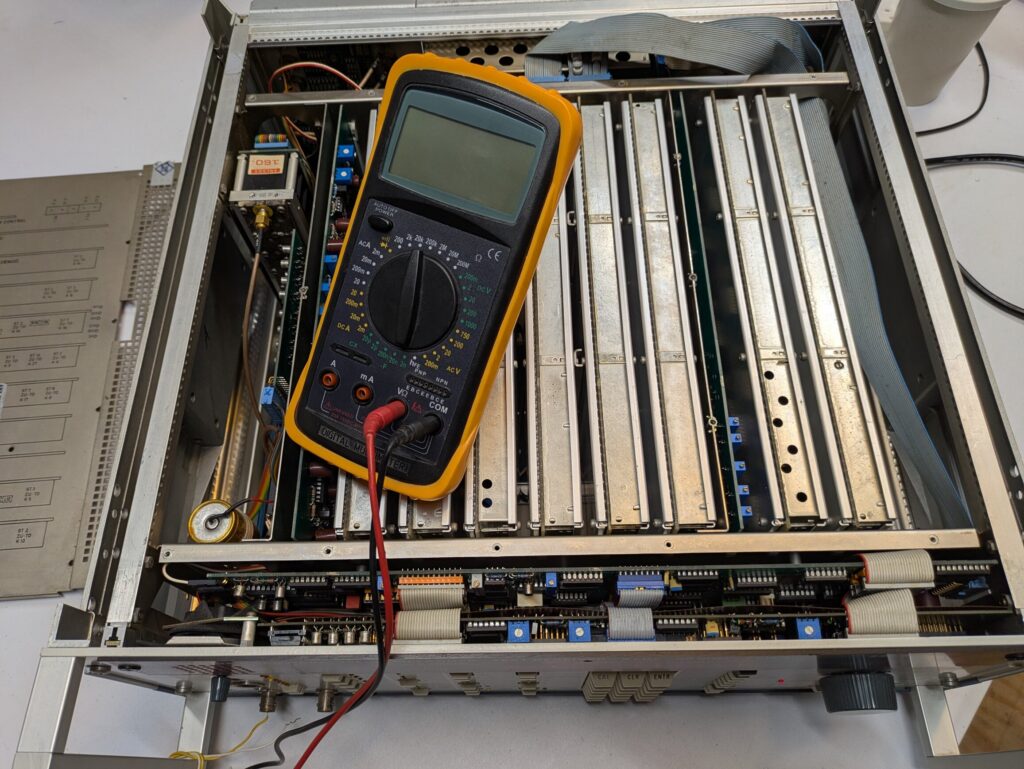
After plenty of poking around, checking voltages and trying to understand the collection of boards inside, we found a few blown fuses, some jammed buttons and a wire from the power supply that appeared to be stopping the unit from turning on when it was plugged in.

We disconnected the troublesome wire, replaced the fuses and tried powering it up again.

There was no magic smoke. Instead, we had lights!

It is not completely repaired yet. The receiver still displays an error message when it starts and is unhappy about some of its calibration settings. That did not stop us from wanting to find out whether it could receive anything.

We connected a length of wire as a very makeshift indoor antenna and tuned to the 40-metre amateur radio band, around 7 MHz. At first, we were not hearing very much. That was hardly surprising given our poor antenna, its position inside the building and all the electrical noise around the space.

Then a station from Italy came booming through the speaker. They must have been putting out a good signal to overcome our antenna arrangement and all the other things working against us.

After a little more experimenting with the front panel, we figured out enough of the interface to select single-sideband reception and tune around properly. Despite its remaining faults, this old piece of test equipment was receiving amateur radio again.

It was a great example of repair and of bringing something back to life rather than simply throwing it away.

We would still like to understand what the ESH 3 was originally used for and how to operate all of its test and measurement functions properly. Does anyone remember using one of these when it first came out, or know their way around this kind of equipment?

Even if we never manage to use every specialised feature, the amateur radio enthusiasts at TOG will find some use for it. Who knows, with a proper HF antenna connected, it might even become genuinely useful.