Further adventures in ink/stitch : the satin stitch

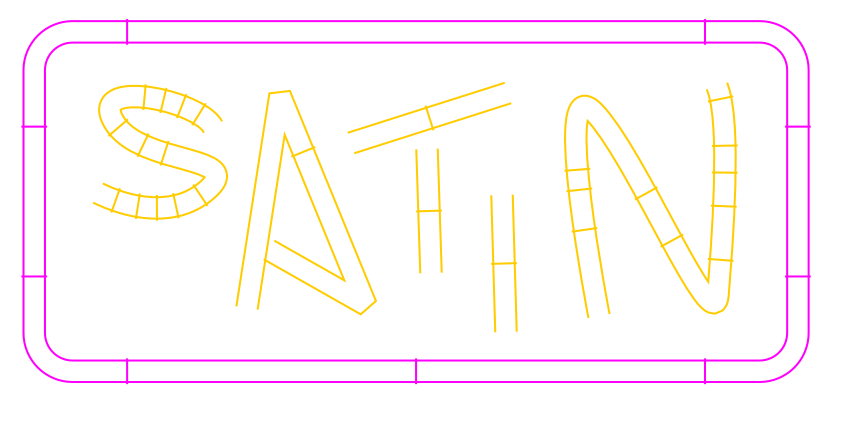
An outline of a rounded rectangle in purple, with the word satin spelled out in yellow ladders inside it.

A great time was had at the monograming workshop, but it’s time to grow our skills further and look at the satin stitch. Satin stitches are like very dense zigzag stitches and are great for outlines, forming letters, and just generally being lines. We’re going to learn how to draw them automatically, how to create custom satins by hand, look at how to manage their overlaps, and eventually embroider our creations onto fabric!
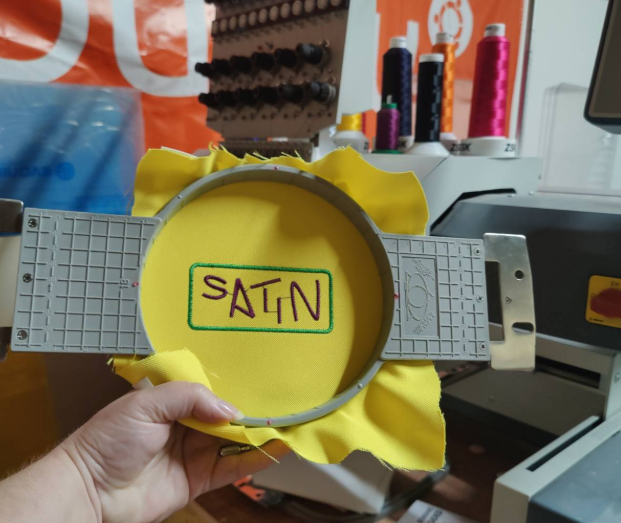
A hand shows up the word satin stitched out, with the fabric still in the hoop in front of the embroidery machine.

If you’re not familiar with ink/stitch or embroidery machines, have no fear, we’re hear to teach you. Before the workshop you should install inkscape, if possible ink/stitch, and have a think about what you might like to embroider. Think simple drawings and shapes, and if you already have the file as an .svg, you’re away to a good start (if you don’t know what .svgs are, don’t fret, we’ll get into that on the day).

All materials will be provided, you’ll just need to bring your laptop. Tickets cost €10 and can be found here: https://www.eventbrite.ie/e/further-adventures-in-inkstitch-satin-stitch-tickets-2004198473586?aff=oddtdtcreator
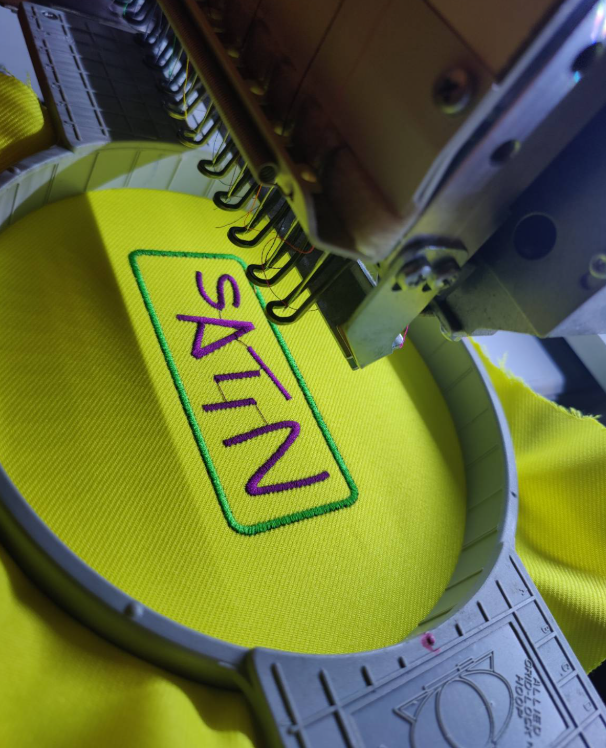
The above satin outlines stitched out on yellow fabric, still loaded on the embroidery machine.

Please note, use of LLMs and other genAI is not permitted during this workshop. If you’re not confident in your design skills, don’t worry, there’s lots of ways to make great looking embroideries from simple pieces.
Making Waves: Exploring the Sea Through Science and Sound

We’re heading to Wicklow for Science Week 2026!

On Sunday, 8th November, TOG Hackerspace will be joining our friends from Dublin Maker, JellyLab and Bloop Groop for Making Waves: Exploring the Sea Through Science and Sound.

What happens when you turn data from the sea into music? Or use electronics and light to explore what’s happening beneath the waves?

Making Waves brings together scientists, musicians and makers for an afternoon of hands-on activities exploring the sea in new and interesting ways.

TOG will be bringing along some interactive electronics projects, including a new version of our water-pouring game. We’re also working on getting live data from the nearby sea back into the hall using a wireless link, giving the Bloop Groop something to turn into music and sound.

There will be plenty more to explore, from marine samples and scientific experiments to music, lights and interactive displays.

Event Details

  • Date: Sunday, 8th November 2026
  • Time: 2pm to 6pm
  • Location: Assembly Hall, Bachelor’s Walk, Wicklow Town
  • Admission: Free!

The event is suitable for all ages, and you don’t need any science background to take part. Drop in anytime during the afternoon.

Book your free tickets on Eventbrite

Making Waves is part of Science Week 2026, supported by Research Ireland.

We hope to see you in Wicklow!

Learn Turtlestitch with our friends CESI

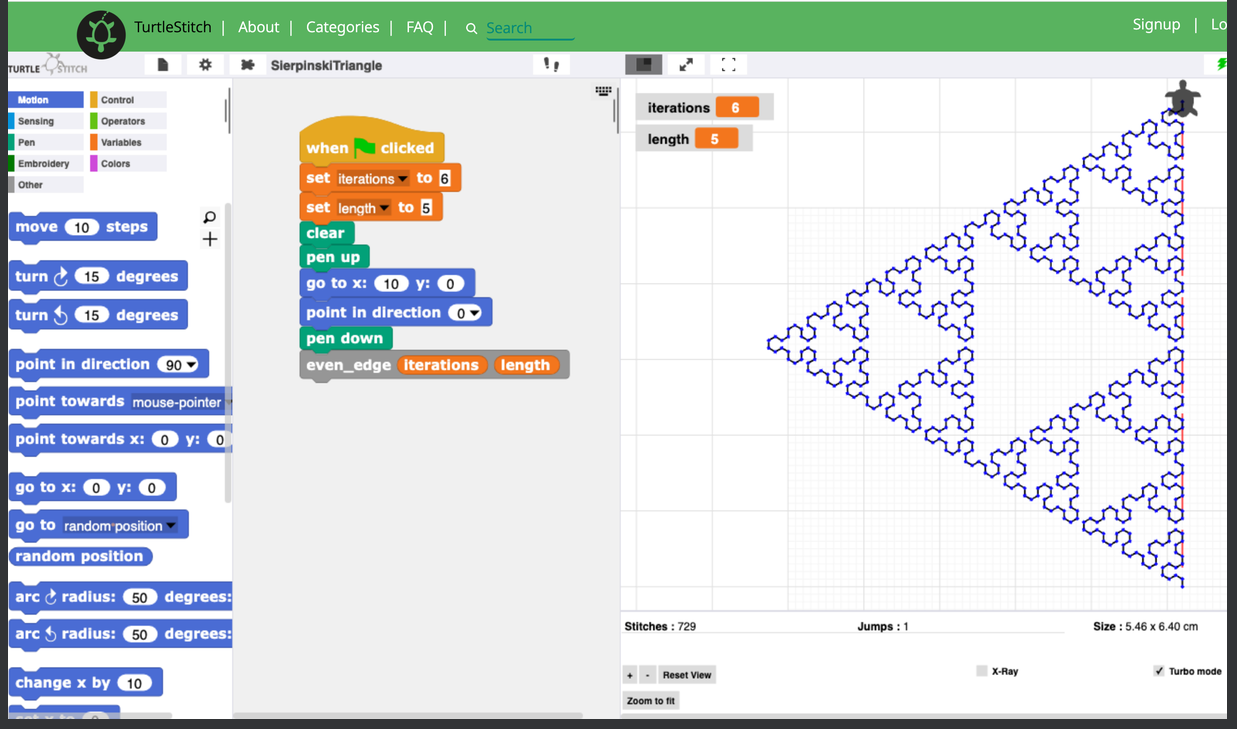
A screenshot of a turtlestitch program for generating a Sierpinski triangle with the generated output

Our friends at CESI will be hosting a Turtlestitch workshop on Saturday 21st of November from 2pm to 5pm. Turtlestitch is a way to code up embroidery patterns using code blocks. It’s often used as a teaching tool for coding, but also a fun way to generate embroidery patterns.

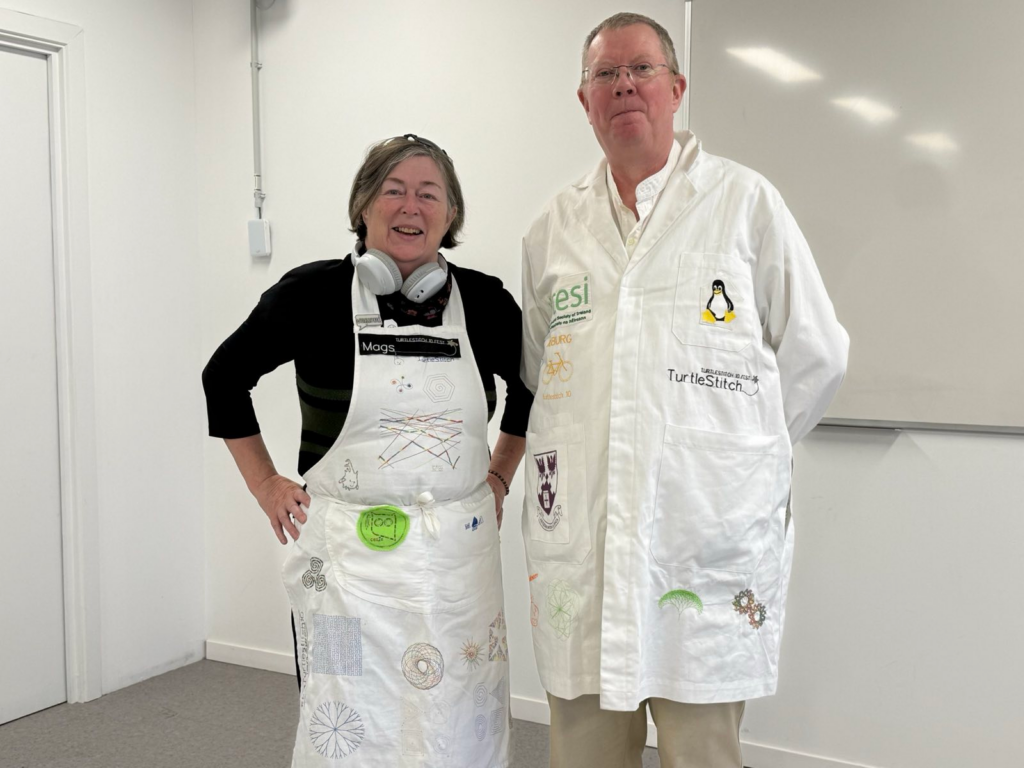
Whether you’re new to coding or new to embroidery, there’ll be plenty to learn. This workshop is aimed at adults interested in embroidery or teaching coding. It will be led by Mags Amond with support from John Hegarty and Helen O’Kelly. You’ll find out about the history of Turtlestitch, learn how to create embroidery designs, and stitch them out on our industrial machine and some of the smaller domestic machines that will be brought on the day.

Mags and John in their Turtlestitch embroidered apron and labcoat.
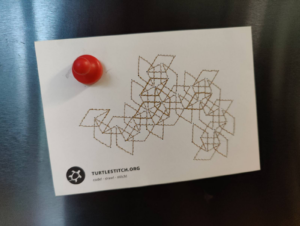
A postcard embroidered with repeating diamonds. In the corner is the turtlestitch website and logo.
An embroidered postcard from Turtlestitch on a fridge.

The workshop will cost €10 and includes materials. Tickets can be bought with this link..

https://www.eventbrite.ie/e/learn-turtlestitch-with-cesi-at-tog-tickets-2003335570620?aff=oddtdtcreator

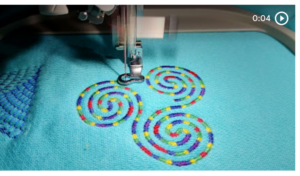
A triskelion embroidred in variegated thread

We’ll be holding our usual open social from 7pm, so stick around if you like homemade pizza from homemade pizza ovens and talking to nerds.

If you don’t know CESI, they’re a group of educators with an interest using information technology in education.

The Power of Repair Cafés – Jeffrey Roe on Book of Leaves

Our member Jeffrey Roe recently joined the Book of Leaves podcast to talk about Repair Cafés, TOG and the wider culture of repair.

The conversation covers TOG’s experience running Repair Cafés, some of the unusual things that have come in for repair, our Repair Café in a Box project, Dublin Maker, and why sharing practical repair skills is so important.

Repair Cafés are about more than fixing broken objects. They are also a chance to learn, share knowledge and give people the confidence to have a go at repairing things themselves.

Thanks to Book of Leaves for having Jeffrey on and giving us the chance to talk about the repair community at TOG.

You can listen to the episode here:

TouchDesigner Dublin Meetup – May Event

We are hosting an open TouchDesigner meetup with demos, hands-on learning, and space to share work with others using the software. This is part of a series of monthly events in collaboration with @noid_lab typically on the last Wednesday each month in the space, so this month it’s 27th May, 7-10pm.

Tickets are free – but registration via Eventbrite is required to secure your place.
https://www.eventbrite.com/e/touchdesigner-meetup-dublin-tickets-1989876226359

Workshops:

In this session we will be hosting two workshops. The first will be run by Dan Kinlay, using MIDI input or keyboard input to manipulate a grid of points generated using Particle Operators and Instancing. This audio reactive animation will be demonstrated using an electric MIDI drum kit which will be open for participants to try themselves.

Following this, Serdar Buhan will be demonstrating how to use TouchDesigner for live coding performances with Strudel. In this workshop we’ll explore ways to connect Strudel and TouchDesigner over MIDI and OSC.

Format:

The session will run for around three hours in a relaxed, hands-on setting. With multiple rooms available at TOG Hackerspace, we can host beginner and advanced activities simultaneously, ensuring everyone gets the most out of the evening. The event will focus on learning, with a combination of scheduled short and long presentations/demonstrations. The last hour will take a more flattened and open approach, allowing the space for people to chat, share, learn, and explore TouchDesigner. Expect an informal, community-driven environment where the format adapts to participants. So if you would like to bring your laptop and learn the basics, share your projects, or connect with other using the software, this meetup offers a welcoming and supportive space to do so.

The event is also a great opportunity to meet other creative technologists and artists, and to continue building the growing TouchDesigner community in Ireland.

Contact us at noidlab.collective@gmail.com to share ideas for future sessions or to express interest in presenting your work.

A special thanks to TOG for allowing us to use the space for these events, and Derivative for supporting the project. The meetups are hosted each month by a group of artists and creative technologists:

https://www.tog.ie

TouchDesigner Meetup Dublin – January

Date: 28th January 2026

Time: 7:00PM – 10:00PM

Tickets are free, but registration via Eventbrite is required to secure your place: 
https://www.eventbrite.com/e/touchdesigner-meetup-dublin-tickets-1980805845606?aff=oddtdtcreator

We are delighted to announce that TouchDesigner Monthly Meetup series in collaboration with TOG Hackerspace will continue heading into 2026. Thanks to the support of Derivative, we will be able to sustain the series for the next six months. In addition to this, we have decided to create a name for our small collective of organisers and practitioners called NóidLab. Please give us a follow, as we aim to promote details about upcoming events and plan on sharing some of the BTS behind the meetups.

We plan on re-using the same structure as last year, as we want to keep the project sustainable and accessible for everyone involved. Each session runs for around three hours in a relaxed, hands-on setting. With multiple rooms available at TOG Hackerspace, we can host beginner and advanced activities simultaneously, ensuring everyone gets the most out of the evening. The first two hours will focus on learning, with a combination of scheduled short and long presentations/demonstrations. The last hour will take a more flattened and open approach, allowing the space for people to chat, share, learn, and explore TouchDesigner. Expect an informal, community-driven environment where the format adapts to participants. So if you would like to bring your laptop and learn the basics, share your projects, or connect with other using the software, this meetup offers a welcoming and supportive space to do so.

The event is also a great opportunity to meet other creative technologists and artists, and to continue building the growing TouchDesigner community in Ireland.

We’ve also set up a Discord server for ongoing discussion and planning. Join us there, or contact us @ noidlab.collective@gmail.com to share ideas for future sessions or to express interest in presenting your work: https://discord.gg/6s3WMdH2

A special thanks to TOG for allowing us to use the space for these events, and Derivative for supporting the project. The meetups are hosted each month by a group of artists and creative technologists:

Workshops:

For the first set of demonstrations will be run by two of our orgainsers—Ciaran & Serdar.

Ciaran will focus on utilising POPs to manipulate 3D models created with 2D images. Following this, Serdar will be demonstrating how to build a digital instrument using TouchDesigner and MediaPipe.