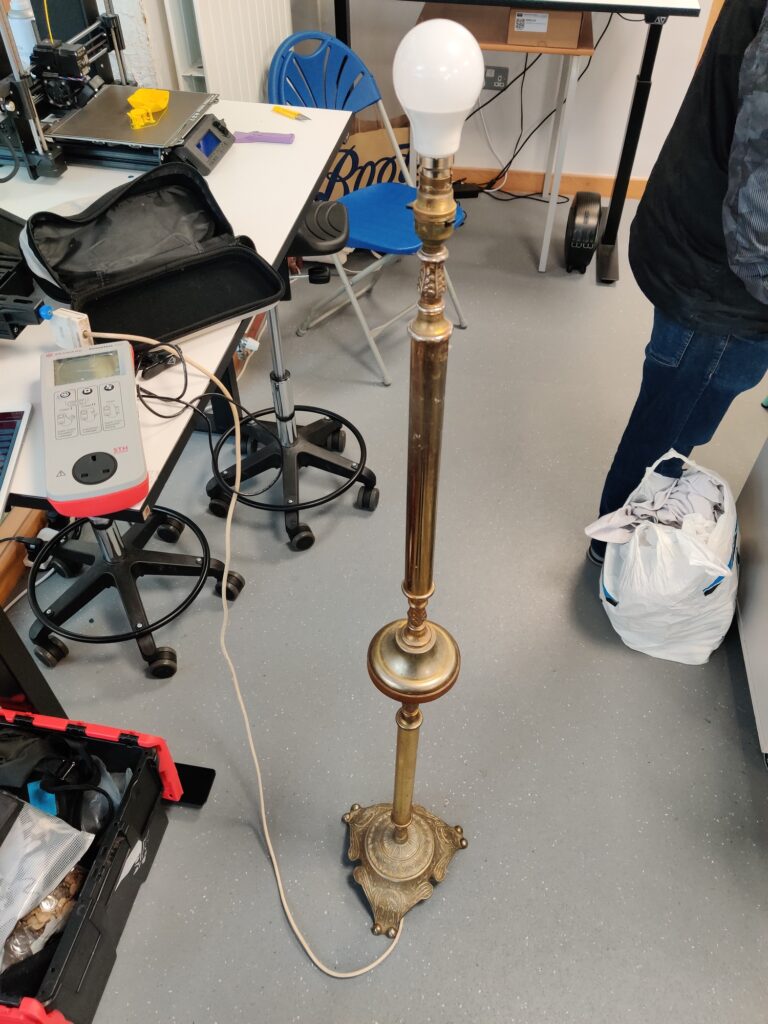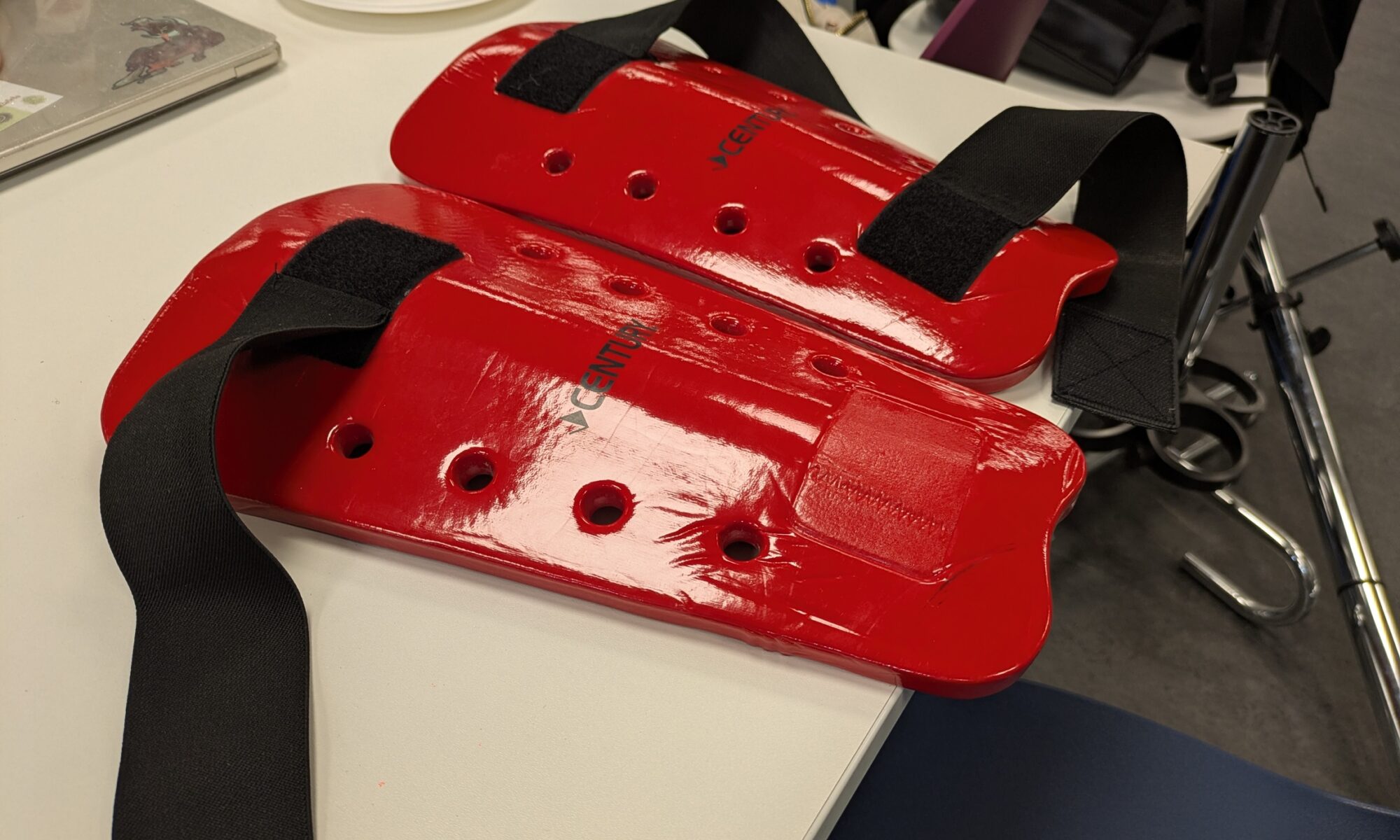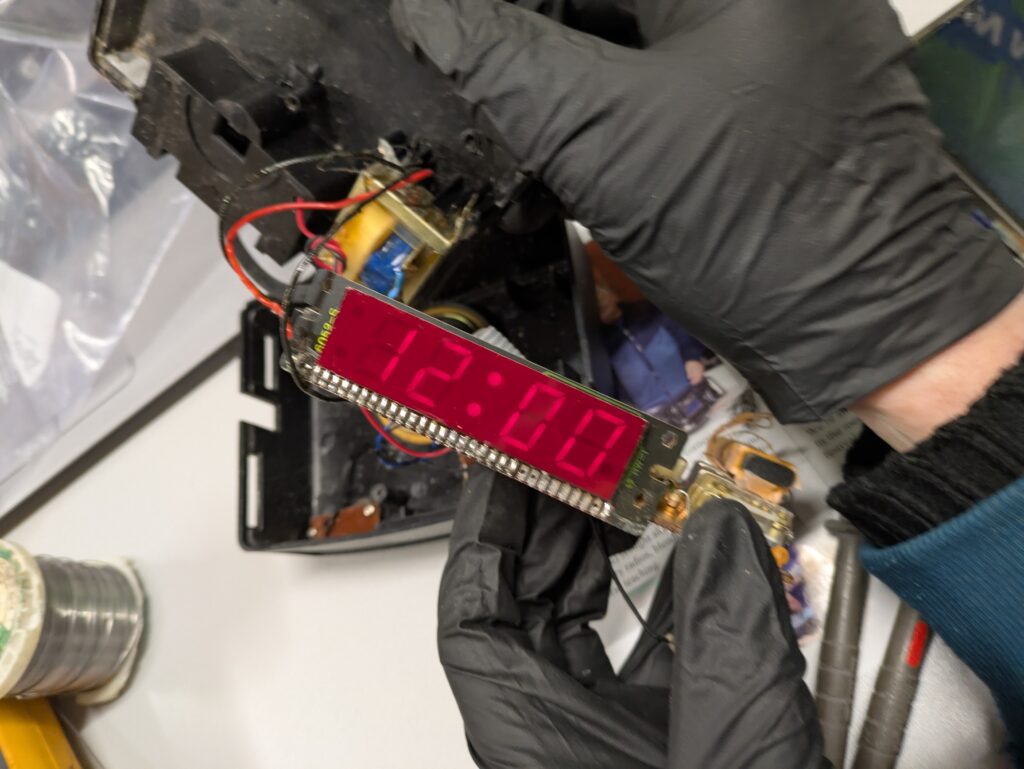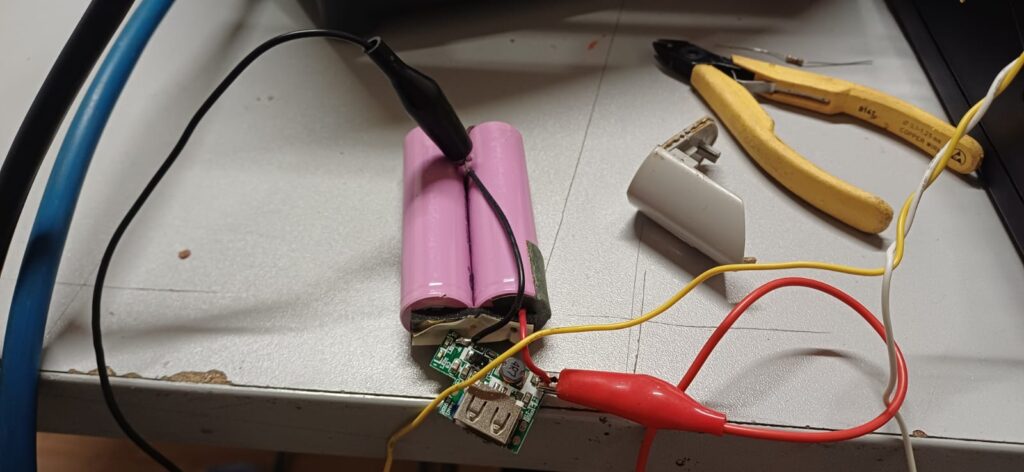
We’re running our Learn to Wire a Plug workshop again at TOG Hackerspace — a practical, confidence-boosting skill that’ll serve you for years. If you’ve ever looked at a broken plug or a dodgy extension lead and thought “I should know how to sort that”… this is the evening for you.
What’s it all about?
This is a hands-on session where we’ll guide you through safely wiring a 13A plug and connecting it to a 4-gang extension lead. No prior experience needed — we’ll go step-by-step and explain the “why” as well as the “how”.
Each participant will:
Wire a 3-core cable into a standard plug
Connect that cable into a 4-way socket block
Learn about fuses, strain relief, polarity, and safe wiring practice
Get their finished lead PAT tested so it’s safe and ready to use at home
Take home a working, tested extension lead they built themselves
All tools and materials are provided.
Note: This workshop is wiring a portable extension lead for personal use and does not fall under Restricted Electrical Works (as per Safe Electric guidance).
Places are limited to keep it properly hands-on — so booking ahead is recommended.
Why Engineers Week?
Engineers Week is all about celebrating engineering in everyday life — and honestly, safe, practical household skills are a brilliant gateway into understanding how things work. You’ll leave with something useful, and a bit more confidence the next time you’re faced with a simple electrical fix.
Workshop details recap
📅 Date: Tuesday, 3rd March ⏰ Time:7:00 pm – 8:30 pm 📍 Location: TOG Hackerspace (see tog.ie for directions) 💶 Cost:€25 + fee (includes all materials + donation to TOG) ✅ Beginner-friendly — no experience needed
Today’s repair is on one of my radios – a Yaesu FT-857. While testing a new headset and tuning around the bands, the select knob twisted its last and came out of the front panel and into my hand: disaster!
This encoder is vital to using the radio, so its breaking rendered it a paperweight. The radio itself has been out of production for a number of years now, but unlike most “consumer” devices, amateur radios have very good technical documentation available to end users.
I dug up a PDF copy of the technical supplement, which contains a complete readout of the internals, block and circuit diagrams and servicing information. Reviewing the parts layout showed the front panel PCB and revealed the encoder pinout .
Searching for the Yaesu part number returned a number of retailers offering the part for 30 EUR a piece, and further digging revealed that the original part is an ALPS EC12E24244A4, which is appears to be out of production, but thankfully not an issue.
Breaking down the encoder specification – the replacement part needs to be:
Horizontal Mount
24 Detents, 24 Pulses per revolution
30mm shaft
with a push momentary switch.
Mouser to the rescue! A Bourns PEC12R-4230F-S0024 meets these requirements, and comparing it on the data sheet with the layout shows that it is a drop-in replacement.
I ordered 25 to make the shipping worthwhile, but the satisfaction of paying about a euro for a replacement part made up for it and ensured that I have a good supply for when I break it again!
I zeroed in on the exploded parts diagram and planned the repair; only a few screws were in the way.
After removing it, you can see the remains of the shaft inside the encoder body.
Unfortunately, I did not take any further photos after this point – I was in a rush to make and test the repair. Thankfully, it worked without a hitch, and I’m now back on air at home.
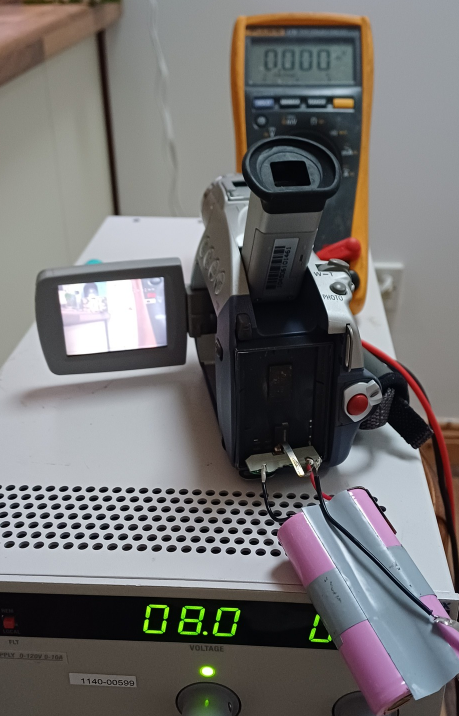
Having recently fixed the Philips boombox CD player, we decided to review the battery compartment mod, done at least 20 years ago, and still working.
The original idea was to fill the battery compartment with 8x rechargeable D cells and arrange that they would be constantly trickle-charged while the mains lead was plugged in. The battery compartment’s positive terminal was connected via a current-limiting resistor to the power supply section of the PCB. This trickle charges the cells at about 10mA. This is enough to charge them up over a few days, but not enough to cook them.
Good quality branded rechargeable D-cells are relatively expensive…. about €10 a pop for a ~10Ah cell, so it’s about €80 to fill the battery compartment. Given that the thing is not used that often on battery, this was a bit much. So instead, 8x AA cells were used in holders, and soldered to the existing connections in the battery compartment. The cells were NiMH made by GP and rated at 1.2V, 1500mAHr. This mod was done, we guess sometime around 2000.
So today, ~25 years later, new cells were fitted and we measured the capacity of the original cells. Discharging at 200mA to a cutoff voltage of 0.9V, the original cells tested at 599mAHr…. about 40% of their original nameplate capacity. The new cells fitted are from Lidl and are rated at 2500mAHr.
Bring your broken tech and trinkets to get them fixed by the skilled volunteers at TOG Hackerspace – with a bit of help from our friends at Dublin Maker!
On Sunday, 18 January 2026, between 12 pm and 4 pm, TOG Hackerspace will host the first Repair Cafe of the new year in our own space. At this event, volunteers will share their expertise and passion for repair, helping you fix your broken items and breathe new life into them. Whether it’s a malfunctioning gadget, a piece of clothing in need of mending, or a household item that’s seen better days, bring it along and let the team work their magic.
What can you bring in?
Clothes and accessories
Toys
Small electrical appliances and electronics
Small furniture
… and many other things!
Safety testing (PAT) for electrical devices will be available.
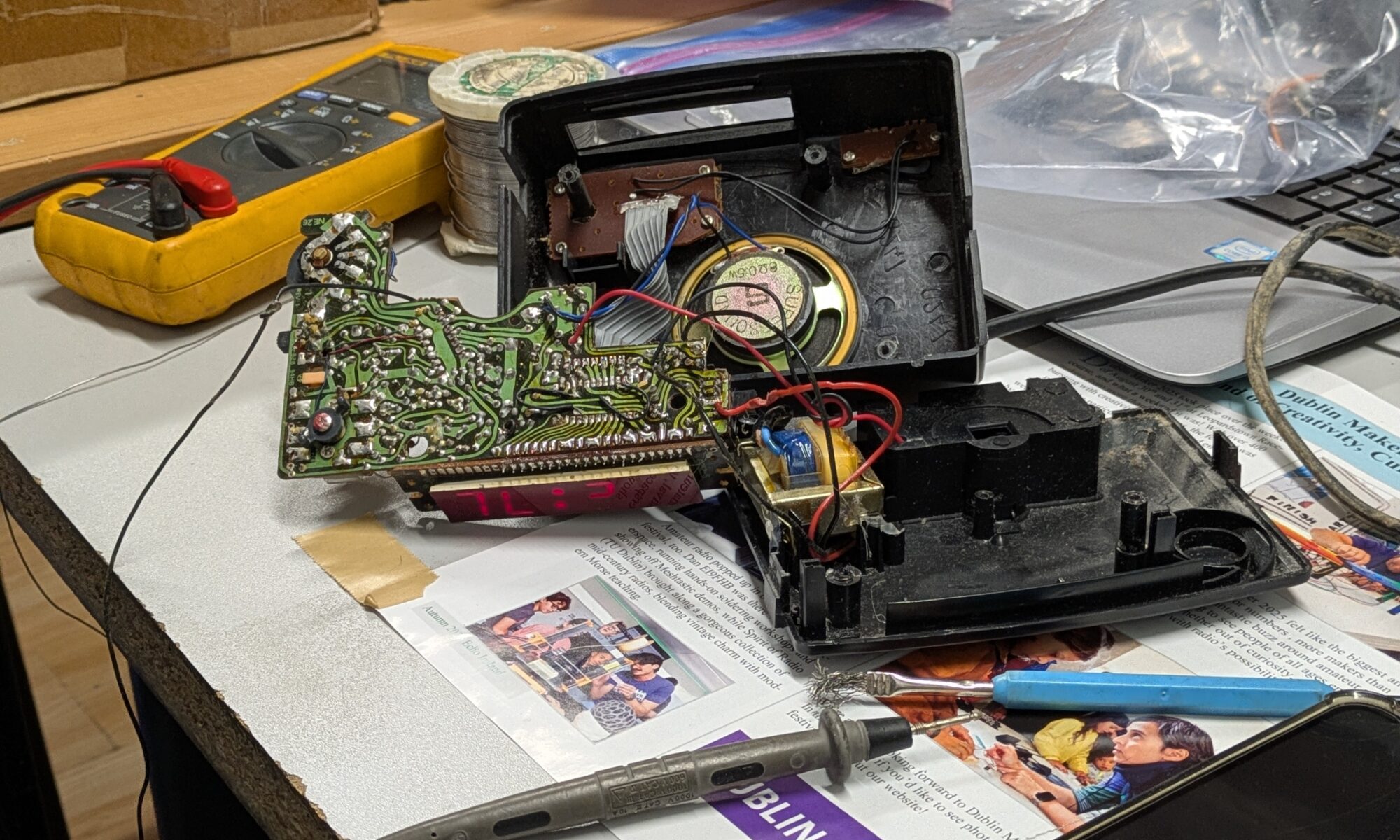
OK, so not quite as old as that 1970s tape recorder that we fixed last week, but a 1996-vintage Philips AZ8640 Radio-Tape-CD boombox. The CD had stopped working, but the tape and radio were still fine.
Opening up, these things are not meant to be easily disassembled. They tend to be built from the inside out, with not much thought about future disassembly or serviceability.
When we fix old electronics, there are a few “usual suspects”, which quite often give us a fix. Old electrolytic caps are one…. they dry out after a decade or two of service. Another is bad connections or solder joints.
Solder joints, cracked or so-called “dry”, can be hard to see sometimes. Wiggling the component legs can help you see them, or simply re-touching all joints with fresh solder can do the trick. This one was quite spectacular, however.
A 3-legged power transistor that supplies power to the CD mechanism, looks like it had moved on its heat sink, and the 3 solder joints had completely detached from the PCB. Re-soldering the 3 joints brought the CD back to life. The transistor looks like it’s held to the heatsink by a spring clip rather than a screw. Perhaps the spring has failed. It’s very hard to see, and it’s a nightmare to remove the circuit board to check.
Interestingly, the transistor, a BD236, is still available new from Farnell at €0.72! Here’s hoping for another 30 years of service.
We got a message in the run-up to Christmas with a simple ask. Could we pull off a last-minute repair of a vintage tape recorder and save the day?
When the request came from our long-time friend Claire Downey, the person who first introduced us to Repair Cafés over ten years ago, we knew we had to give it a proper go.
The patient from a charity shop on the bench was an ITT Schaub-Lorenz SL54 Automatic, a Taiwanese-made radio cassette recorder from the mid 1970s, roughly 1974 to 1976. A proper bit of kit, and the kind of thing you do not want to see quietly written off and binned because “sure it’s old”.
Ambrose stepped up to take on the challenge.
If you have ever opened up something like this, the first suspect is nearly always the belts. Those rubber belts drive the moving parts, and after decades they tend to stretch, go shiny, or crumble into sticky bits. You open the case expecting the usual mess, then you cross your fingers that you have a belt in the right size somewhere in the spares box.
This time we got a surprise.
Instead of a belt that had perished with age, we found… a hair bobbin.
Somebody, at some point, had tried to get it going again using whatever they had to hand. Fair play for the creativity, but a hair bobbin is not going to keep the timing and tension right, so the tape speed was off and the audio came out warped.
The good news is we did have the right belt to hand. A straightforward swap, and while we had it open, it turned into a lovely teaching moment. That is a big part of what we do at TOG. It is not only about fixing the thing; it is about sharing repair skills and helping the owner understand what is going on inside their device.
Half an hour later, with the belt fitted and everything buttoned back up, it was time for the real test.
Out came a vintage Beatles mixtape. We hit play. Clean sound through the little speaker. Job done.
Another repair complete, another device saved from landfill, and Christmas officially rescued.
If something breaks over the Christmas stretch, or you unwrap a “project” by accident, do not panic. Bring it along to our next Repair Café on Sunday, 18 January 2026.